How to Celebrate Enkutatash (Ethiopian New Year) in the US
On September 11, 2026, Ethiopia enters the year 2019. Enkutatash, the Ethiopian New Year, means "gift of jewels" and marks the end of the rainy season with yellow flowers, doro wot feasts, and coffee ceremonies that fill the house with frankincense smoke. Here's how the 200,000+ Ethiopian-Americans in the DC area and communities nationwide keep the tradition alive.
On September 11, 2026, Ethiopia enters the year 2019. If that math confuses you, welcome to the Ethiopian calendar, which runs roughly 7 to 8 years behind the Gregorian system and has 13 months (twelve 30-day months plus a short 13th month called Pagume). Enkutatash, the Ethiopian New Year, marks the end of the rainy season and the beginning of spring, and it's one of the most joyful celebrations in Ethiopian culture.
The word Enkutatash means "gift of jewels" in Amharic. According to Ethiopian tradition, when the Queen of Sheba (Makeda) returned from visiting King Solomon in Jerusalem nearly 3,000 years ago, the leaders of her kingdom greeted her with an abundance of precious jewels to refill her treasury. That gesture of generosity and homecoming is the spirit that defines the holiday: gratitude, renewal, and coming together.
For the 200,000+ Ethiopian-Americans in the DC metro area alone, plus communities in Seattle, Minneapolis, Dallas, Columbus, Atlanta, and Denver, Enkutatash is one of the strongest annual connections to home. Here's how to celebrate it properly, whether you're hosting a gathering, attending a community event, or introducing the tradition to friends who've never heard of it.
Learn more about Enkutatash traditions and when it falls this year.
What Happens on Enkutatash
In Ethiopia, the celebration begins the night before with families attending church for prayers. On the morning of Enkutatash, people attend Ethiopian Orthodox Tewahedo Church services (though the holiday is celebrated across religions, including by Muslim and other communities). After church, the real festivities begin.
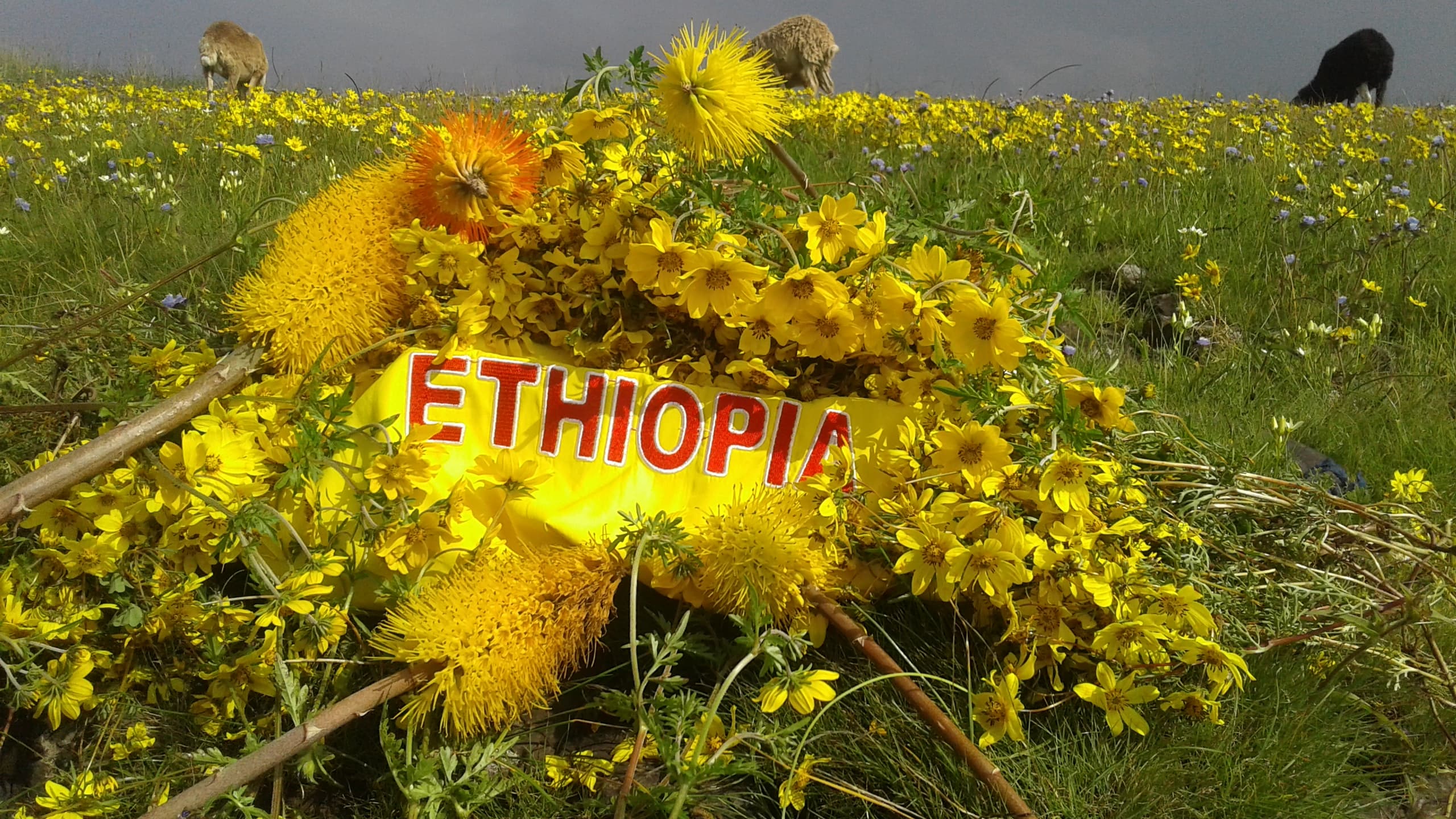
The flowers. Enkutatash coincides with the blooming of the bright yellow adey abeba (meskel daisies) that carpet the Ethiopian highlands after the rains. Children gather bouquets of these flowers and go door to door in their neighborhoods, singing traditional Enkutatash songs and reciting poems. In return, adults give them small gifts, coins, or roasted grain. This tradition, called "abebayehosh," is one of the most beloved elements of the holiday and creates a sense of community that extends far beyond individual households.
New clothes. Families wear new clothing on Enkutatash, symbolizing fresh beginnings. Traditional white cotton garments with colorful embroidered borders (habesha kemis for women, traditional suits for men) are the standard, though modern celebrations also include new everyday clothing.
The feast. Families gather for an elaborate meal. The centerpiece is doro wot (spicy chicken stew), served on injera (the spongy fermented flatbread). Kitfo (seasoned minced beef), tibs (sauteed meat), various lentil and vegetable dishes, and tej (honey wine) round out the spread. In many families, a sheep or chicken is slaughtered specifically for the celebration. The meal is communal, eaten from shared platters, with gorsha (hand-feeding loved ones) as a gesture of affection.
The coffee ceremony. A jebena buna ceremony is central to the Enkutatash gathering. The roasting, grinding, and brewing of coffee, the frankincense smoke, and the three rounds of service (abol, tona, baraka) create the meditative, connective rhythm that anchors the day. If you need a full guide on setting up the ceremony, we wrote a detailed one: How to Set Up an Ethiopian Coffee Ceremony for Your Wedding or Celebration. Everything in that guide applies to an Enkutatash celebration.
How the Diaspora Celebrates in the US
Ethiopian communities across the US have adapted Enkutatash to their American context while keeping the cultural heart intact.
Community festivals. In Washington DC (home to the largest Ethiopian community in the US), Seattle, San Jose, Minneapolis, and other cities, Ethiopian community organizations host Enkutatash festivals with traditional food, live music, eskista dancing, fashion shows featuring habesha kemis, and children's activities. These public events are open to everyone, not just the Ethiopian community, and they've become a way of introducing Ethiopian culture to a broader American audience. Ethiopian activists have been working to make Enkutatash as recognizable in America as Cinco de Mayo or Lunar New Year.
Home gatherings. The most traditional way to celebrate is at home with family. The structure mirrors what happens in Ethiopia: church in the morning (Ethiopian Orthodox churches in the US hold special Enkutatash services), then a gathering at someone's home for the feast, the coffee ceremony, music, and community. Many families invite non-Ethiopian friends and neighbors, making it an introduction to the culture.
Restaurant celebrations. Ethiopian restaurants across the US often host special Enkutatash dinners and events in September. These are a great option if you want to experience the food and atmosphere without hosting your own gathering. Check Ethiopian restaurants in your city for Enkutatash menus and events.
How to Host Your Own Enkutatash Gathering
You don't need to be Ethiopian to celebrate Enkutatash, especially if you've been invited into the tradition by Ethiopian friends or family. Here's what you need:
The food. Doro wot is the star. If you've never made it, the sauce requires berbere spice, niter kibbeh (Ethiopian spiced butter), onions slow-cooked for hours, and hard-boiled eggs. It's a labor of love. Injera requires teff flour and a 2 to 3 day fermentation process, so plan ahead or buy it fresh from an Ethiopian grocery store or restaurant. Side dishes like misir wot (lentil stew), shiro (chickpea stew), gomen (collard greens), and tikil gomen (cabbage and carrots) fill out the spread.
If cooking from scratch isn't realistic, Ethiopian caterers and restaurants can provide platters. In the DC/Maryland/Virginia area, Dallas, Minneapolis, Seattle, and Columbus, Ethiopian catering is readily available. Many restaurants offer party-sized injera platters with assorted wots that feed 10 to 20 people, typically priced at $100 to $300 depending on size and variety.
The coffee ceremony. Set up a jebena buna station with green coffee beans, frankincense, sini cups, and a rekebot tray. Our Ethiopian coffee ceremony guide has the full equipment list and sourcing information for the US.
The flowers. Yellow flowers are the symbol of Enkutatash. Sunflowers, yellow chrysanthemums, or daisies from your local florist or grocery store are perfect substitutes for the adey abeba that bloom across the Ethiopian highlands. Place them throughout your home and on the dining table.
The music. Create a playlist that spans traditional Ethiopian music (Tilahun Gessesse, Aster Aweke, Mahmoud Ahmed) and contemporary Ethiopian artists (Teddy Afro, Rophnan, Zeritu Kebede). If you want to go deeper, search for traditional Enkutatash songs on YouTube or Spotify. Eskista dancing is encouraged.
The greeting. The traditional Enkutatash greeting is "Enquan aderesachihu lemelkam addis amet" in Amharic, which translates to "Congratulations on reaching the new year." A shorter version: "Melkam addis amet" (Happy New Year).
We’re growing the Ethiopian music and entertainment community on EventAtlas.
Why It Matters in the Diaspora
For Ethiopian-Americans, Enkutatash is one of the few days each year where the calendar itself belongs to them. September 11 carries a very different meaning in the US than it does in Ethiopian culture, and celebrating Enkutatash on that date is a quiet act of cultural reclamation: holding space for joy on a day that America associates with grief.
The holiday also serves a practical purpose in the diaspora: it keeps the Ethiopian calendar alive in a country that runs on the Gregorian system, it gives children born in the US a direct experience of their parents' and grandparents' traditions, and it creates a gathering point for a community that can feel scattered across American suburbs.
Whether you celebrate with a full feast and a coffee ceremony or simply call your family and say "Melkam addis amet," Enkutatash is a reminder that new beginnings are worth marking, and that the best way to mark them is together.
For more on Ethiopian traditions, check out our guides on Ethiopian and Eritrean wedding traditions and setting up a coffee ceremony. To find Ethiopian event vendors, visit EventAtlas or reach out at hello@tryeventatlas.com.
Header image: "Ethiopian New Year Landscape. Photo Taken on September 11 2010 Ethiopian Calendar. Ethiopian indigenous flower 'Adey Abeba' Sheeps seen grazing.jpg" by Tewodros Kassa, via Wikimedia Commons, licensed under CC BY-SA 4.0. Cropped/resized for this article.
Related Posts
More reading on themes you might be exploring.
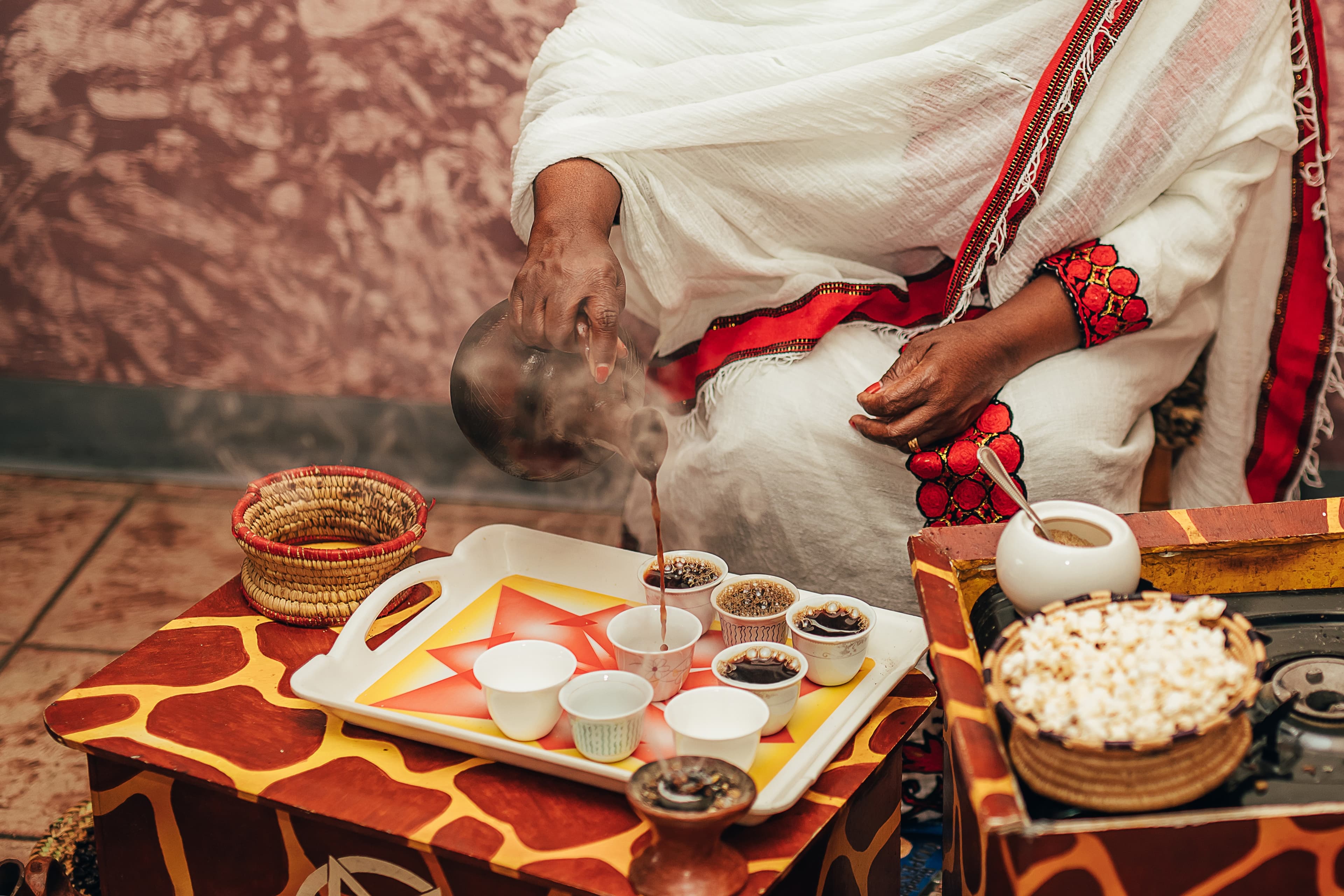
How to Set Up an Ethiopian Coffee Ceremony for Your Wedding or Celebration
The frankincense is lit, the green beans are roasting, and for 30 minutes nobody in the room is checking their phone. Here's exactly how to set up a traditional jebena buna ceremony at your wedding or celebration, from sourcing the clay pot and green beans to handling venue fire codes.
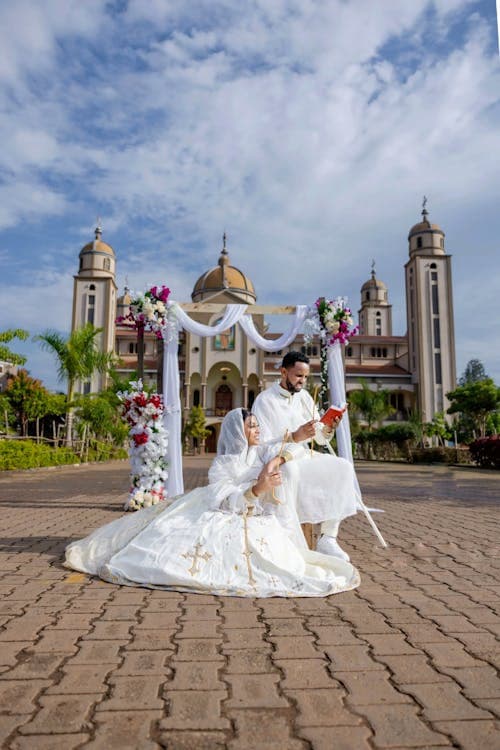
A Guide to Eritrean and Ethiopian Wedding Traditions in the US
It's not a one-day event. It's a 72-hour transformation: the telosh gift ceremony on Friday, the church crowning and reception on Saturday, and the melsi on Sunday where everything shifts to habesha kemis, braided hair, eskista dancing, and coffee poured from a jebena. Here's how diaspora families make every stage work in the US.

How to Plan a Nigerian Naming Ceremony in the US
A Nigerian child doesn't fully arrive until they've been named before the community, blessed by elders, and tasted honey, salt, and kola nut for the first time. Here's how to plan a naming ceremony in the US: the seven symbolic items and what each prayer means, the naming order, the food spread, and how diaspora families adapt the eighth-day tradition to American work schedules.
Planning a Cultural Celebration?
Find vendors who understand your traditions and can make your event truly special.
Find Vendors