
How to Set Up an Ethiopian Coffee Ceremony for Your Wedding or Celebration
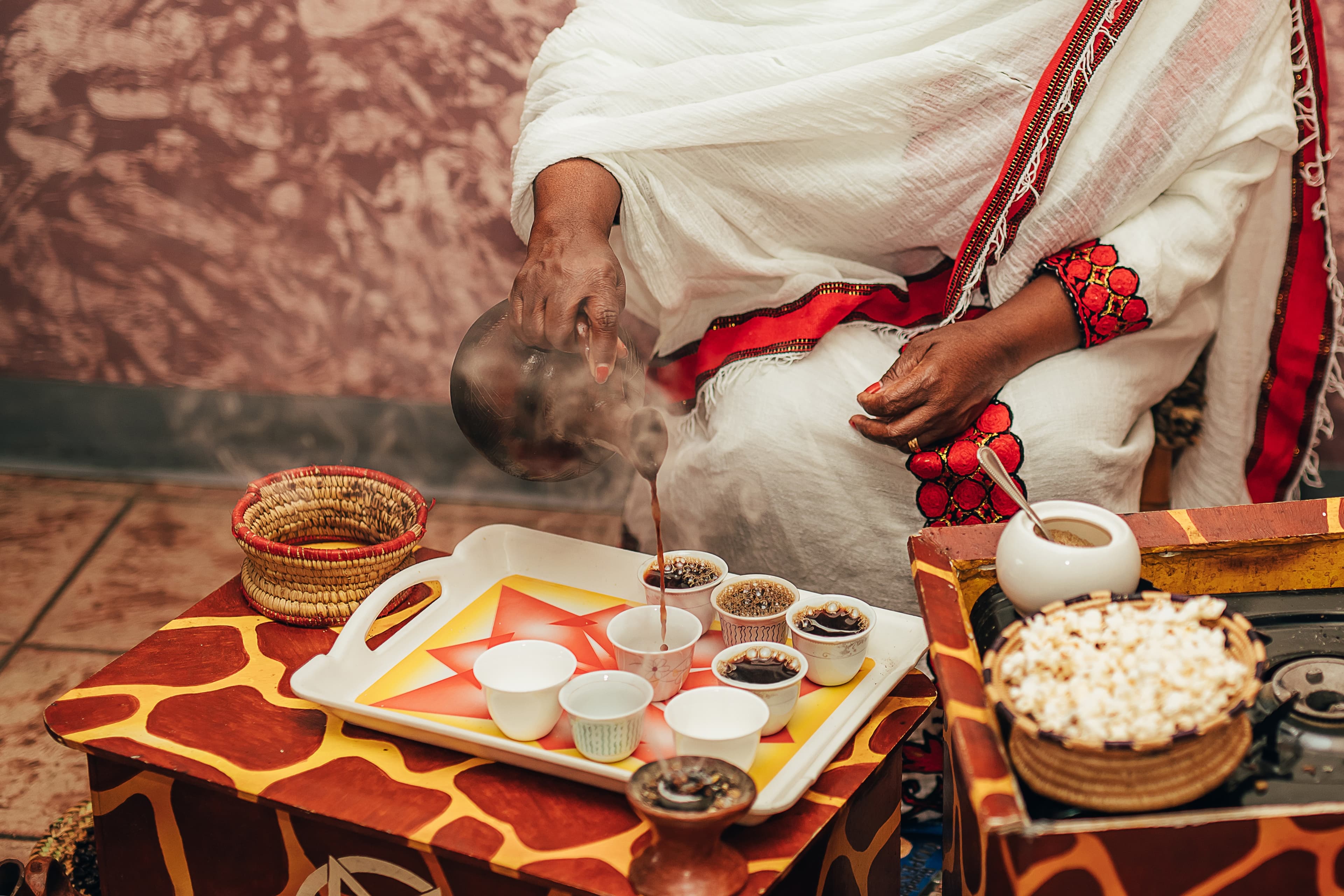
The frankincense is lit, the green beans are roasting, and for 30 minutes nobody in the room is checking their phone. Here's exactly how to set up a traditional jebena buna ceremony at your wedding or celebration, from sourcing the clay pot and green beans to handling venue fire codes.
If you've ever attended an Ethiopian event and watched someone roast green coffee beans over a small flame while frankincense smoke curled through the room, you've witnessed jebena buna. It's not just coffee. It's a ritual that's been at the center of Ethiopian social life for centuries, a practice so embedded in the culture that an Ethiopian proverb says "buna dabo naw," which translates to "coffee is our bread."
For Ethiopian diaspora families in the US, incorporating a coffee ceremony into a wedding, engagement party, or milestone celebration is one of the most meaningful ways to honor heritage. It slows everything down. It fills the room with an aroma that instantly feels like home. And it connects your guests, Ethiopian and non-Ethiopian alike, to a tradition that predates every coffee shop on earth.
Here's how to set one up properly, whether you're doing it yourself or hiring someone to perform it at your event.
What the Ceremony Actually Involves
The Ethiopian coffee ceremony is a multi-sensory experience that typically takes 30 minutes to an hour. It's traditionally performed by a woman, often the matriarch of the household, who considers it an honor. At a wedding or celebration, the ceremony is usually performed by the bride, a family elder, or a hired specialist.
The ceremony follows a specific sequence. First, the host spreads fresh long grasses and sometimes small flowers on the floor or table where the ceremony will take place. This is called the "green bed" and symbolizes abundance and the connection to the land. Next, she lights etan (frankincense) or another incense in a small clay burner. The fragrant smoke is meant to cleanse the space and set a calm, welcoming atmosphere.
Then the coffee preparation begins. Raw green coffee beans are washed in the roasting pan, then roasted slowly over a small charcoal stove or flame. The host stirs the beans continuously as they darken and their oils begin to release, filling the room with that unmistakable roasted coffee smell. Once the beans are black and shiny, the host carries the pan around the room so guests can lean in and smell the freshly roasted beans. This moment is one of the ceremony's most intimate gestures, a way of sharing the experience before anyone takes a single sip.
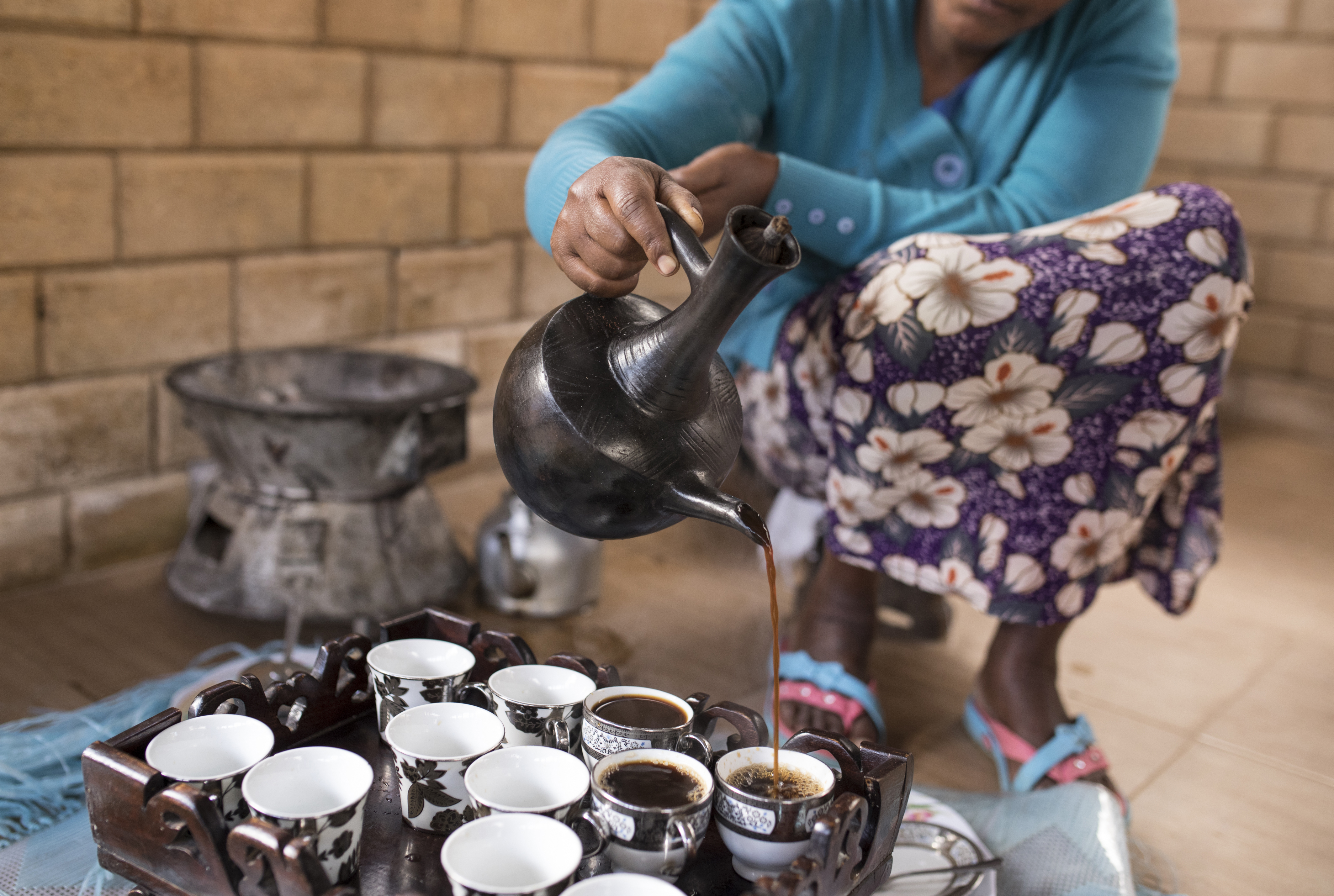
The roasted beans are ground using a mukecha (wooden mortar) and zenezena (pestle), then added to the jebena (the iconic clay coffee pot with its spherical base and long neck). Water is added, and the jebena is placed on the heat to brew. When the coffee is ready, the host pours it from about a foot above into small handleless cups called sini or cini, in a single continuous stream. Pouring from that height without spilling takes practice and is considered an art form.
The Three Rounds
Coffee is served in three rounds, each brewed from the same grounds with additional water. Each round has a name and a meaning:
Abol is the first round and the strongest. This is when the coffee is at its most potent, and it's traditionally a time for more serious conversation or reflection.
Tona is the second round. More water is added to the grounds in the jebena and brewed again, producing a milder cup. The mood is typically lighter by this point.
Baraka is the third and final round, and the most significant. The word means "to be blessed." Drinking the third cup is considered a blessing, and it's considered disrespectful to leave before this round. At a wedding, the baraka round carries extra weight because the blessing extends to the couple's union.
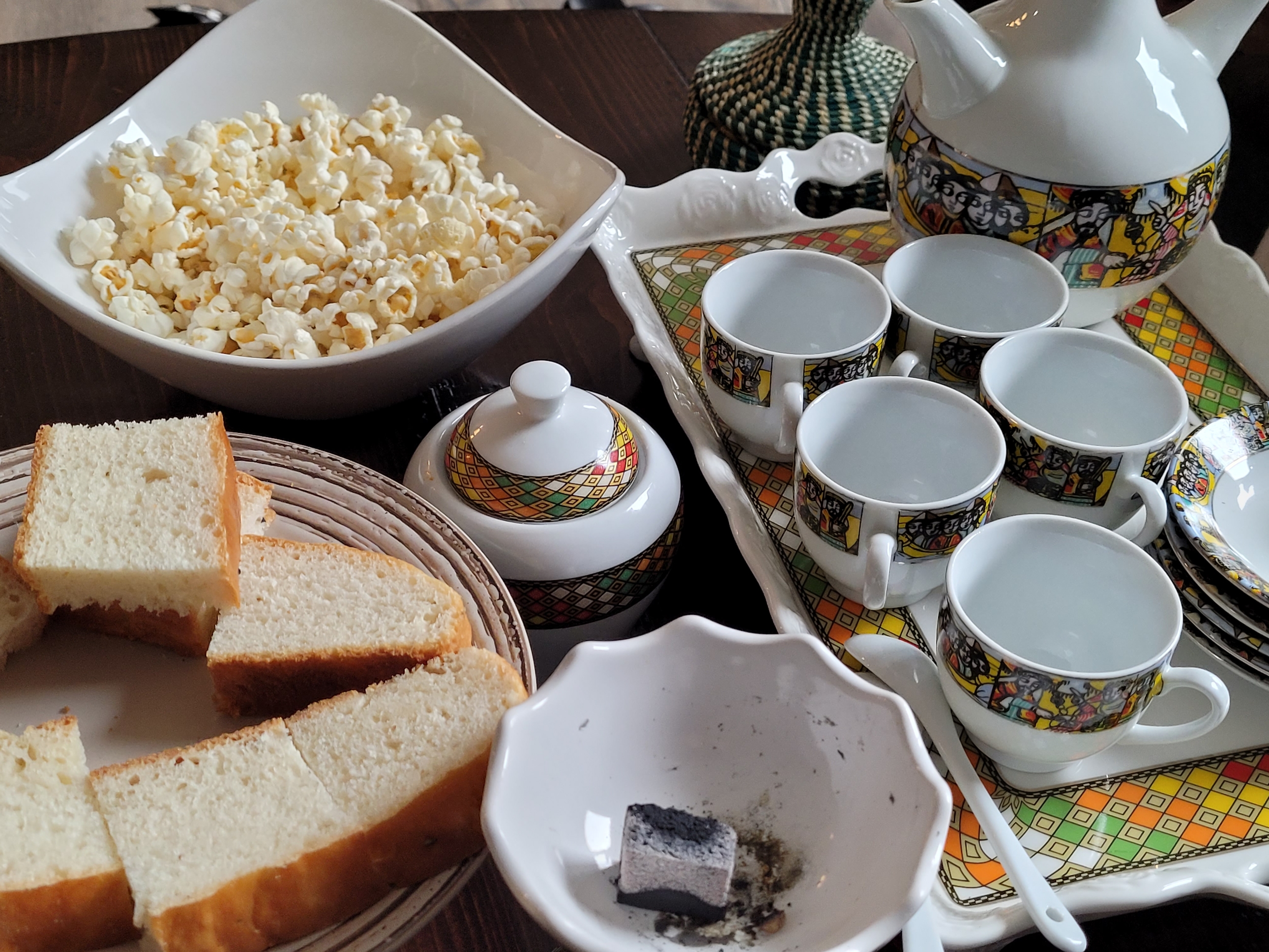
The coffee is traditionally served with sugar (or in some rural areas, salt or butter). It's always accompanied by snacks: popcorn is the most common, along with himbasha (a lightly sweet, cardamom-spiced bread), roasted barley, or peanuts.
What You Need: The Equipment List
Setting up a proper coffee ceremony requires specific equipment. Here's what you'll need and where to find it in the US.
Jebena (coffee pot). The black clay pot is the centerpiece. Traditional handmade jebena are available on Amazon, Etsy, and from Ethiopian specialty retailers like The Habesha Web (thehabeshaweb.com, based in Dallas) and Kibeb (kibeb.com). Prices range from $15 to $40 for a standard clay jebena. If you're performing the ceremony at a large event, consider having two or three jebena to serve more guests efficiently.
Rekebot (serving tray/table). This is the tiered tray or small table where the sini cups, jebena, sugar bowl, and incense burner sit during the ceremony. Modern rekebot sets in stainless steel with decorative crystal details are available from Etege Ethiopia (etegeethiopia.com) and on Amazon and Walmart, typically running $60 to $150 for a full set. A traditional woven basket tray (mesob-style) is another option for a more rustic look.
Sini/Cini (cups). Small, handleless ceramic or porcelain cups. They're typically sold in sets of 6 or 12. You can find them included in rekebot sets or separately on Amazon and Etsy for $15 to $30 per set.
Menkeshkesh (roasting pan). A flat, long-handled pan for roasting the green beans. A small cast-iron skillet works as a substitute if you can't find the traditional pan.
Mukecha and zenezena (mortar and pestle). For grinding the roasted beans by hand. A large wooden mortar with a metal or wooden pestle. If you want convenience without losing the visual, some hosts grind a small portion by hand for the ceremony's presentation, then use pre-ground coffee for the larger batch.
Green coffee beans. You need raw, unroasted Ethiopian coffee for the ceremony. Ethiopian green beans (Yirgacheffe, Sidamo, or Harrar varieties) are available from specialty coffee retailers like Coffee Bean Corral (coffeebeancorral.com), Sweet Maria's, and on Amazon. Ethiopian grocery stores in cities with Habesha communities (DC/Maryland, Dallas, Seattle, Minneapolis, Columbus, Atlanta) will also carry them.
Etan (frankincense/incense). Essential for setting the atmosphere. Ethiopian frankincense resin is sold on Amazon, eBay, and through specialty stores like Kibeb and Sunday Rising (sundayrising.com). A small clay incense burner completes the setup.
Fresh grasses and flowers. Long grasses are spread on the floor or table to create the green bed. In the US, you can substitute with fresh-cut lemongrass, long wheatgrass, or other green grasses from a florist or garden. Small yellow flowers (traditionally tenadam, or rue) are scattered on top.
Incorporating the Ceremony into a Wedding or Event
At an Ethiopian wedding, the coffee ceremony typically takes place during the reception, often as a dedicated 30 to 45 minute segment. Here are a few approaches depending on your event size and format:
Dedicated ceremony station. Set up a coffee ceremony area in one section of the venue with the rekebot, grasses, incense, and all the equipment. A family member or hired performer conducts the full ceremony for guests who gather around. This works well for events with 50 to 150 guests, where not everyone will participate simultaneously but people can rotate through.
Scaled-down ceremony during cocktail hour. Perform a condensed version (one round instead of three) during cocktail hour or between the ceremony and reception. The roasting and pouring are the most visually dramatic parts and work beautifully as a cultural showcase, especially if you have non-Ethiopian guests who've never seen it.
Full ceremony as a reception centerpiece. For a more traditional approach, the ceremony happens during the reception as a formal segment. The bride or a female elder performs it while a DJ or MC explains each step for guests who may not be familiar. This approach works best when the majority of guests are Ethiopian and understand the tradition.
Multiple stations for large weddings. For weddings with 200+ guests, a single jebena won't be enough. Set up two or three ceremony stations, each with its own performer, equipment, and seating area. This allows more guests to participate without creating a bottleneck.
One important logistics note: the ceremony involves open flame (or at minimum, a hot charcoal stove) and produces smoke from both the incense and the roasting. Check with your venue about their fire and smoke policies before you plan. Some hotel ballrooms won't allow open flame or charcoal. In that case, you can use a portable butane stove for the roasting and an electric incense burner, or perform the roasting outdoors and bring the brewed coffee inside for serving.
Hiring a Coffee Ceremony Performer
If nobody in your family is experienced with performing the ceremony (or if the family members who usually do it will be too busy enjoying the wedding), you can hire someone. In cities with established Ethiopian communities, there are individuals and small businesses that specialize in performing coffee ceremonies at events.
Favored by Yodit Events (@favoredbyyodit) is a DC-area event planning company run by an Ethiopian-American planner who specializes in multicultural weddings, including Ethiopian celebrations. Statuesque Events (statuesqueevents.com), also in the DC/Maryland/Virginia area, has over 12 years of experience with Ethiopian weddings alongside Nigerian, Ghanaian, and other cultural celebrations.
For Ethiopian catering that can include a coffee ceremony as part of the service, Konjo Ethiopian Food (konjoethiopianfood.com) offers full-service event catering with authentic Ethiopian cuisine and cultural touches.
In other cities, check local Ethiopian restaurants and community organizations. Many Ethiopian restaurants in the US perform coffee ceremonies on weekends and can recommend someone for private events. Ethiopian community Facebook groups for your city are another good resource.
For help finding Ethiopian event vendors, caterers, and cultural specialists in your area, EventAtlas lets you search by culture, category, and location.
🇪🇹Ethiopian Vendors on EventAtlas


Join the growing Ethiopian vendor community on EventAtlas. with a vendor.
Why It Matters
The coffee ceremony is more than a cultural performance. For Ethiopian families in the diaspora, it's one of the strongest threads connecting daily life abroad to life back home. Researchers have noted that the jebena buna ceremony in exile serves as a foundation for community relationships, helping families share skills and knowledge while managing the ongoing process of settlement and identity in a new country.
At a wedding, the ceremony does something no playlist or centerpiece can do: it stops time. For 30 minutes, everyone in the room is present, breathing in the same frankincense smoke, watching the same careful pour, waiting for the same blessing. That's the baraka your guests will remember.
We’re growing the Ethiopian event-planning community on EventAtlas.
For more help planning an Ethiopian celebration or finding cultural event vendors, visit EventAtlas or reach out at hello@tryeventatlas.com.
Related Posts
More reading on themes you might be exploring.
How to Celebrate Enkutatash (Ethiopian New Year) in the US
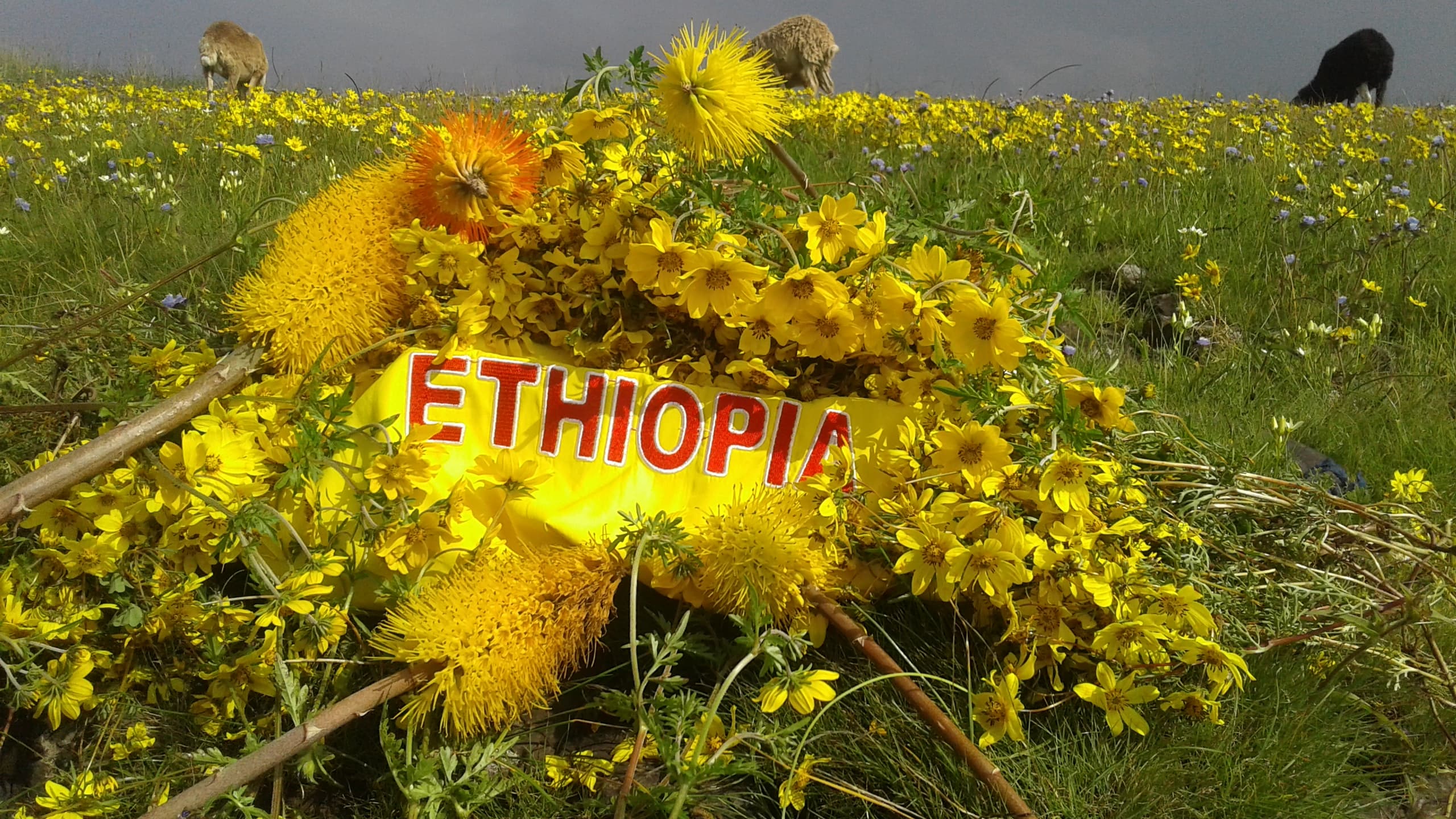
On September 11, 2026, Ethiopia enters the year 2019. Enkutatash, the Ethiopian New Year, means "gift of jewels" and marks the end of the rainy season with yellow flowers, doro wot feasts, and coffee ceremonies that fill the house with frankincense smoke. Here's how the 200,000+ Ethiopian-Americans in the DC area and communities nationwide keep the tradition alive.
A Guide to Eritrean and Ethiopian Wedding Traditions in the US
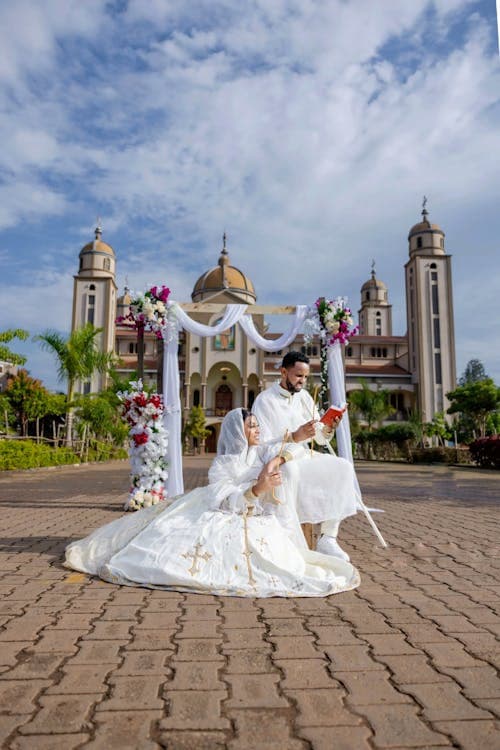
It's not a one-day event. It's a 72-hour transformation: the telosh gift ceremony on Friday, the church crowning and reception on Saturday, and the melsi on Sunday where everything shifts to habesha kemis, braided hair, eskista dancing, and coffee poured from a jebena. Here's how diaspora families make every stage work in the US.

How to Plan a Nigerian Naming Ceremony in the US
A Nigerian child doesn't fully arrive until they've been named before the community, blessed by elders, and tasted honey, salt, and kola nut for the first time. Here's how to plan a naming ceremony in the US: the seven symbolic items and what each prayer means, the naming order, the food spread, and how diaspora families adapt the eighth-day tradition to American work schedules.
Planning a Cultural Celebration?
Find vendors who understand your traditions and can make your event truly special.
Find Vendors