
Planning a Levantine Arab Wedding in the US: Traditions, Music, and the Zaffe You'll Never Forget
The drums are pounding, the dabke dancers are in formation, and your groom is being carried on someone's shoulders through the hotel lobby while your uncle tries to keep the flaming sword away from the ceiling tiles. Here's how to plan a Levantine Arab wedding in the US: the zaffe entrance, the dabke that goes for 45 minutes, and a feast that could feed a small army.
The drums are pounding. The dabke dancers are stomping in formation. Your groom is being carried on someone's shoulders through the hotel lobby while your uncle tries to keep the flaming sword from singeing the ceiling tiles. This is a zaffe, and it's about to make your wedding entrance the most electric 10 minutes of anyone's night.
Levantine Arab weddings, spanning Lebanese, Palestinian, Syrian, and Jordanian traditions, are built around community, generosity, and moments so loud and joyful that the neighbors file noise complaints. They're celebrations where the dabke circle goes for 45 minutes straight, the food could feed a small army (and often does), and the line between "ceremony" and "party" barely exists.
For diaspora families in the US, especially in Dearborn, Paterson, Bay Ridge, Houston, and the Bay Area, these weddings are also an act of cultural persistence. Every zaffe performed in a New Jersey banquet hall is a tradition carried from Beirut, Ramallah, Damascus, or Amman. Here's how to plan one that does justice to all of it.
The Structure: What a Levantine Wedding Looks Like
Levantine Arab weddings typically include two to three main events, though the structure varies by family, religion (Christian or Muslim), and how traditional the couple wants to go.
Laylat al-Henna (Henna Night). Held one to two nights before the wedding, the henna night is a women-centered celebration where the bride's hands and feet are decorated with henna. It's intimate, joyful, and often held at the bride's family home or a smaller venue. Music, singing, and traditional sweets are central. The bride wears a special henna outfit, often green or gold (green is traditional in many Levantine families, symbolizing fertility and new beginnings). In Palestinian tradition, the henna night may also include the "sahra," an evening of traditional singing and folklore.
The Katb el-Kitab (Marriage Contract). For Muslim couples, this is the Islamic marriage ceremony. An imam or sheikh oversees the signing of the marriage contract, the declaration of the mahr (the groom's gift to the bride), and the couple's formal consent. It can be held at a mosque, at the wedding venue, or at the bride's family home. Some families hold the katb el-kitab weeks before the wedding reception as a private family ceremony, then celebrate publicly later. For Christian Levantine couples (Maronite, Orthodox, Melkite, or other denominations), the church ceremony replaces the katb el-kitab, with its own liturgical traditions including crowning ceremonies in Orthodox rites.
The Wedding Reception. This is the main event and where all the traditions converge: the zaffe entrance, the dabke dancing, the multi-course dinner, the cake, and the party that runs until 2 AM. Levantine wedding receptions in the US are typically held at hotel ballrooms or large banquet halls, with guest counts of 200 to 500+. Lebanese weddings in particular are known for their glamour and production value.
The Zaffe: The Heart of the Celebration
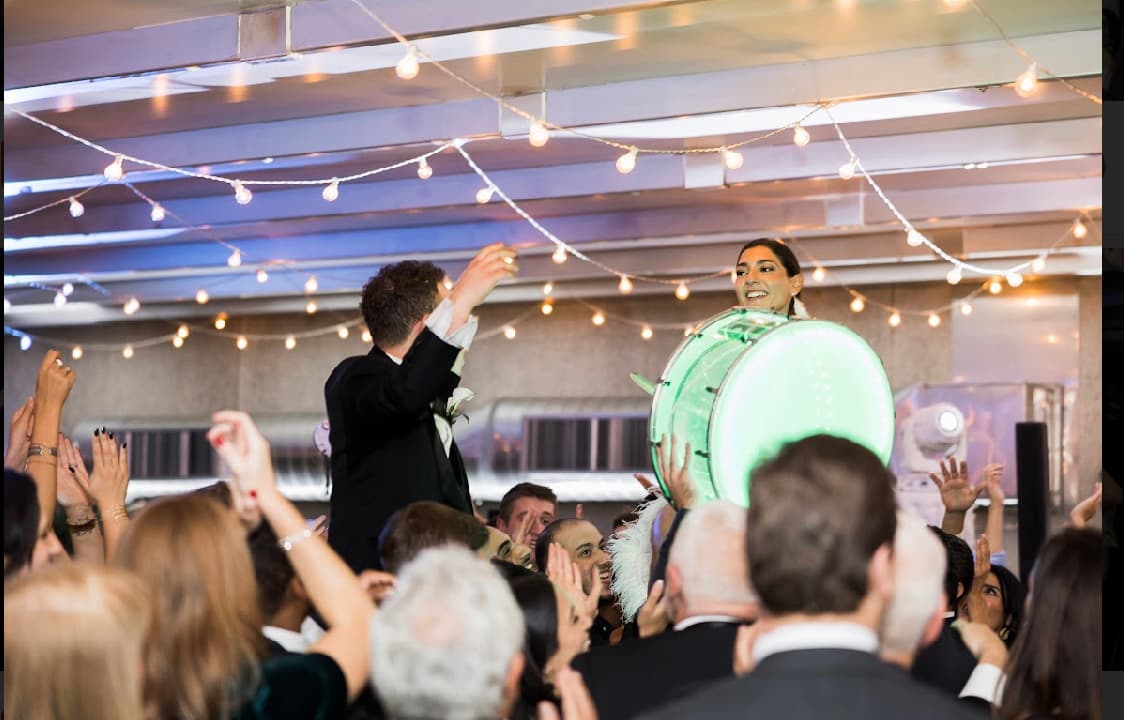
If there's one tradition that defines a Levantine wedding, it's the zaffe (also spelled zaffa or zaffeh). It's the couple's grand entrance to their reception, and it's not a quiet walk through a doorway. It's a full-production procession with professional drummers, dabke dancers, sometimes a belly dancer, and occasionally men carrying flaming swords or candelabras.
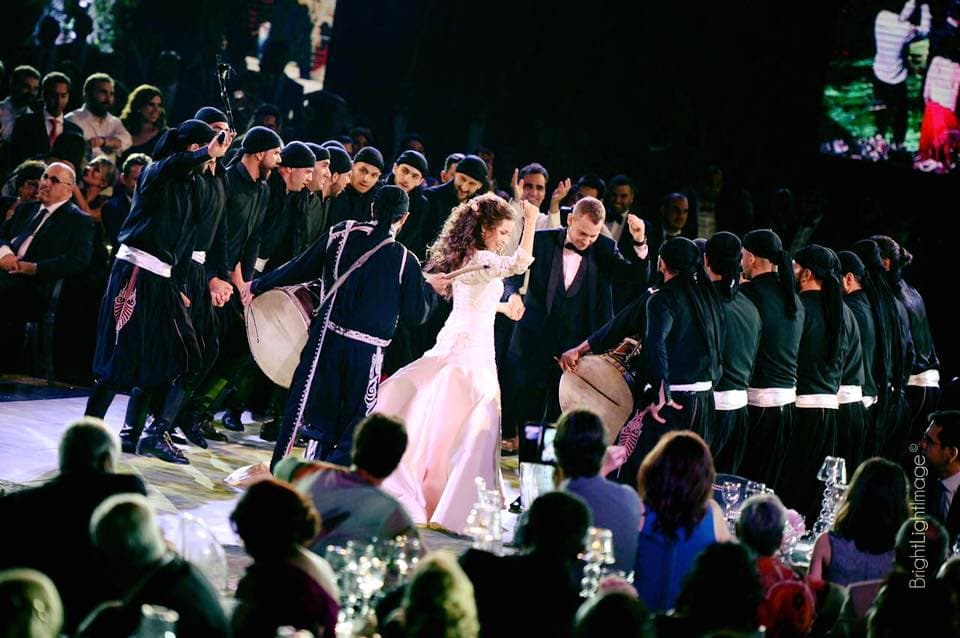
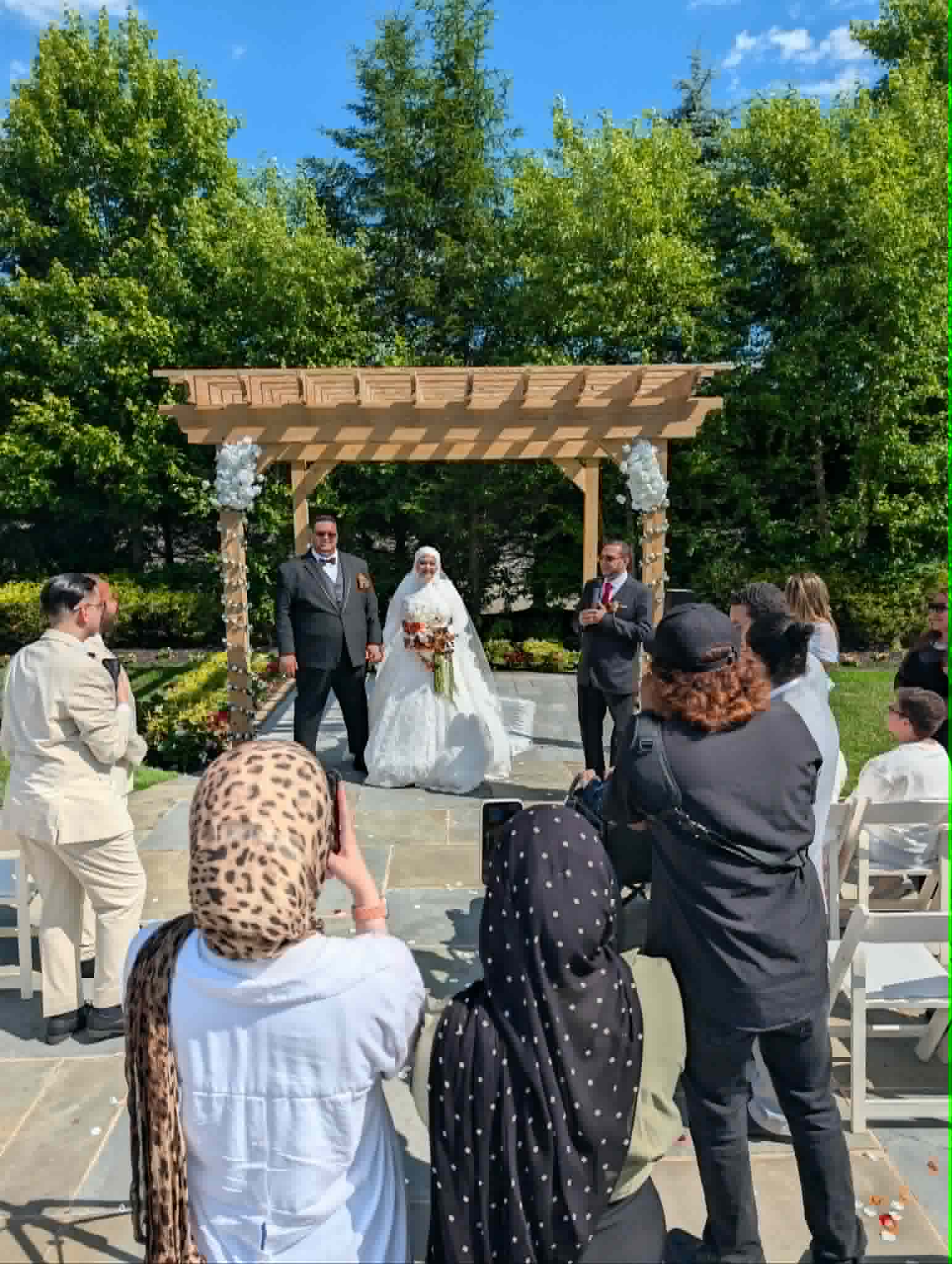
The zaffe typically begins in the hotel lobby or outside the venue. The drums start. The dancers form a formation. The groom enters first, surrounded by his groomsmen and the zaffe performers, dancing and clapping. Then the bride makes her entrance, often showered with flower petals, while the crowd erupts with zaghareet (the high-pitched ululating cheer that Levantine women do at celebrations).
The procession dances its way into the reception hall, circles the dance floor, and delivers the couple to their sweetheart table or stage. The whole thing takes 10 to 15 minutes and sets an energy level that carries the rest of the night. It's the most photographed, most videoed, most replayed moment of any Levantine wedding.
Booking a zaffe group in the US: Professional zaffe and dabke groups operate in every major US metro with a Levantine population. Afrah Events (afrahevents.us) is one of the most established, based in New Jersey but performing across the US. They offer Lebanese, Palestinian, Syrian, and Jordanian zaffe styles with professional dancers and drummers. Yalla USA (yallaus.com) is another well-known option that connects couples with zaffe and dabke performers nationwide. Prices typically run $1,500 to $5,000+ depending on the number of performers, the style, and the location.
Venue coordination is critical. Your venue needs to accommodate the zaffe: a clear entrance path wide enough for a procession, no low-hanging chandeliers if swords are involved, and staff who won't panic when the drums start at full volume in the lobby. Brief your venue coordinator on what the zaffe involves before the wedding day.
🕌Levantine Arab Vendors on EventAtlas

Join the growing Levantine Arab vendor community on EventAtlas. with a vendor.
Dabke: The Dance Everyone Joins
Dabke (literally "stomping of the feet") is a Levantine folk line dance performed at every wedding, engagement, and family celebration. Guests join hands in a line or semicircle, and the leader (the lawweeh) at the front sets the pace with kicks, jumps, and stomps. The music builds, the pace quickens, everyone's feet are pounding the floor in sync, and for 30 to 45 minutes straight, nobody sits down.
At a Levantine wedding, dabke isn't a performance by hired dancers (though the zaffe group may lead a professional dabke set during the entrance). It's a participatory tradition. Your aunts, your cousins, your grandfather who hasn't danced in 10 years, they're all in the circle. The skill level varies wildly and nobody cares. The point is that everyone is together, moving together, celebrating together.
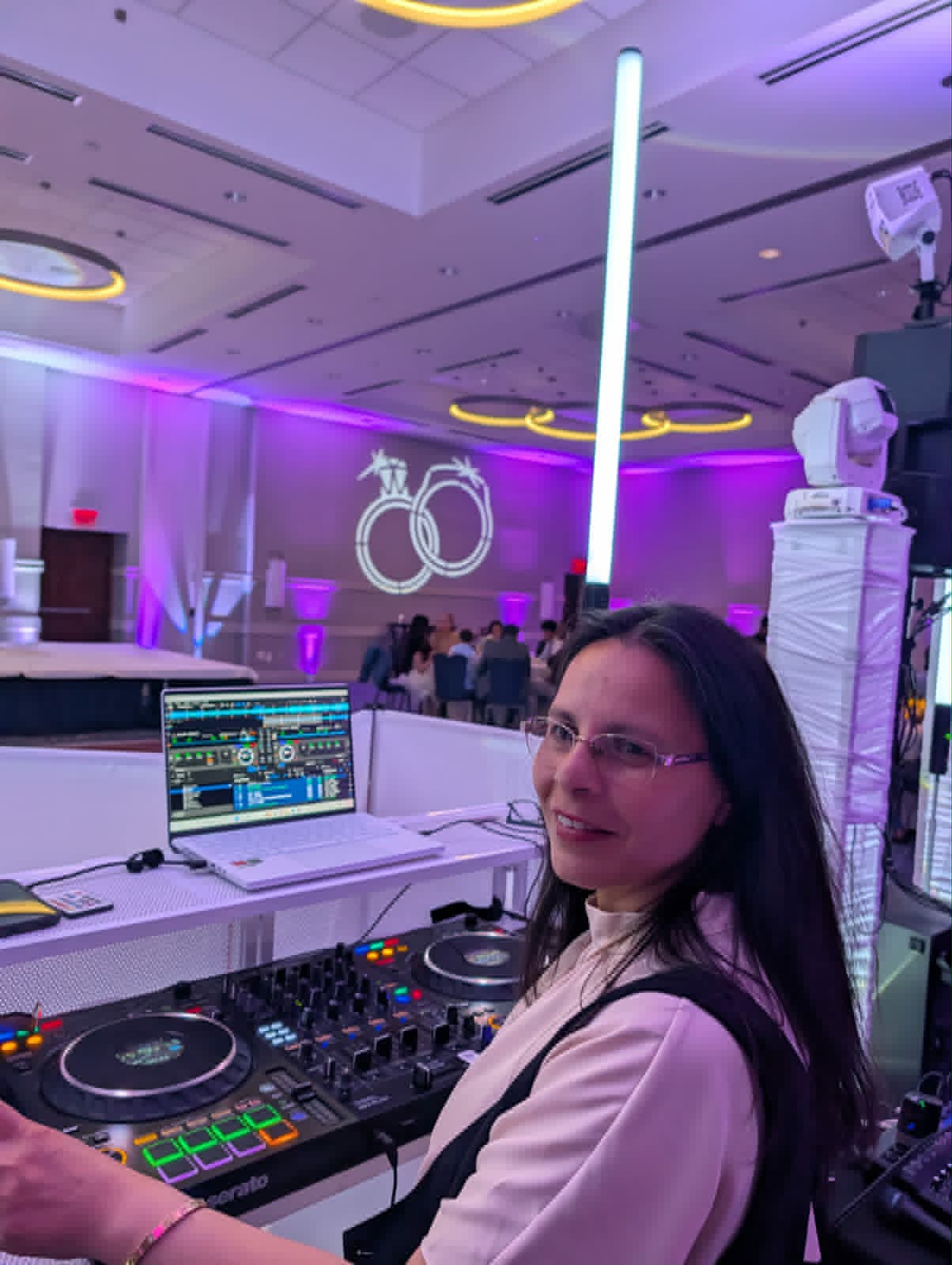
Your DJ needs to know dabke music cold. Classic dabke songs include "Dal Ouna" (the most iconic), "Al Jafra," "Ala Dal Ouna," and regional variations specific to Palestinian, Lebanese, or Syrian traditions. A DJ who doesn't know the difference between Lebanese and Palestinian dabke styles will lose the room. If your DJ isn't Arab, hire a dabke-specific DJ or supplement with a live band or drummer who specializes in this music.
The dabke session typically happens after dinner, once the floor opens up. It can go for an hour or more. Make sure your venue doesn't have a noise curfew that cuts it short; ending the dabke at 10 PM because of a venue rule will genuinely upset your guests.
We’re growing the Levantine Arab music and entertainment community on EventAtlas.
The Food: Generous Doesn't Begin to Cover It
Levantine Arab wedding food is a feast in the most literal sense. The menu is designed to be abundant, because in Levantine culture, running out of food is a reflection on the family's generosity. Expect more food than your guests can eat, and that's the point.
A typical Levantine wedding menu includes a mezze spread to start: hummus, baba ghanoush, tabbouleh, fattoush, labneh, stuffed grape leaves (warak enab), kibbeh (fried and raw), and fresh flatbread. The mezze alone at a Levantine wedding could constitute a full meal at any other event.
The main course typically features grilled meats: lamb chops, chicken tawook (marinated grilled chicken), kafta (ground lamb and beef skewers), and shawarma. Rice dishes, often mansaf (lamb cooked in fermented yogurt sauce served over rice, the national dish of Jordan and a Palestinian wedding staple) or mujaddara (lentils and rice), anchor the meal. Whole roasted lamb is the ultimate centerpiece for larger, more traditional weddings.
Desserts include baklava, knafeh (a cheese pastry soaked in syrup, especially popular at Palestinian weddings), maamoul (date-filled cookies), and sometimes a Western-style wedding cake alongside the traditional sweets.
For catering, look for Lebanese or broader Levantine restaurants in your area that offer event catering. In Dearborn, MI (the largest Arab-American community in the US), options are abundant. In other cities, Middle Eastern restaurants with catering menus can handle wedding-scale events. Budget $40 to $90 per plate for a full mezze-and-mains buffet.
We’re growing the Levantine Arab catering community on EventAtlas.
The Car Convoy (Zaffit el-Aroos)
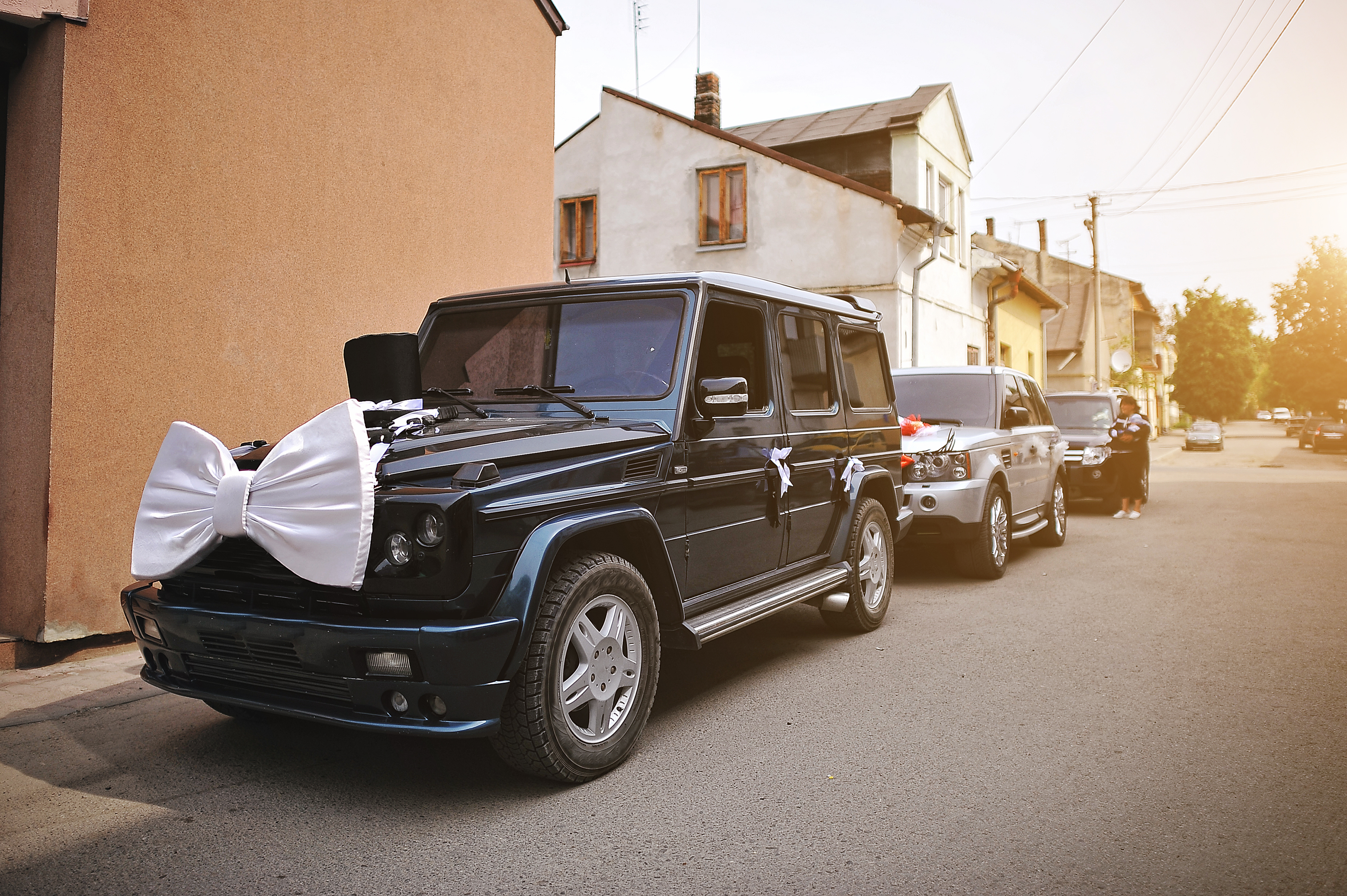
Before the reception, there's often a car convoy tradition. After the church ceremony or katb el-kitab, the wedding party drives through the city in decorated cars, honking horns, waving flags, and celebrating publicly. In Lebanon, Syria, and Palestine, this convoy often stops traffic and winds through the couple's neighborhood. In the US, the convoy is adapted: a line of decorated cars drives from the ceremony to the reception venue, honking and playing music. Some couples add a brief stop at a scenic location for photos.
The convoy is short (15 to 30 minutes) but meaningful. It's a public announcement that a marriage has happened, and the community response (honking back, waving, cheering from sidewalks) is part of the joy.
Adapting for the US
Mixed religious ceremonies. Levantine Arab communities include both Muslim and Christian families, and interfaith marriages are common in the diaspora. Planning a ceremony that honors both traditions requires finding an officiant (or two) willing to collaborate. Some couples hold a civil ceremony and then incorporate cultural elements (the zaffe, the dabke, the food) into the reception without a formal religious ceremony.
Guest count management. Arab weddings are big. 300 guests is modest. 500 is not unusual. In the US, this means you need a venue that can handle the capacity, a catering setup that scales, and a dance floor large enough for a full dabke circle. Plan your guest list early and be realistic about the numbers: if your parents each have 100 people they "must invite," you're already at 200 before you add your own friends.
Finding vendors who understand the culture. The zaffe group, the DJ, and the caterer are the three vendors who absolutely must have Levantine wedding experience. A zaffe group that doesn't know your specific regional style (Palestinian vs. Lebanese vs. Syrian) will feel generic. A DJ who can't transition from dabke to Arabic pop to Western hits will lose the mixed-generation crowd. A caterer who doesn't understand that the mezze is a course, not a snack, will underportion it.
Balancing tradition and modernity. Many US-based Levantine couples blend Arab and American wedding elements. The ceremony might be at a church, the zaffe is at the venue entrance, the first dance is to an English-language song, and then the dabke takes over for the rest of the night. This blend works beautifully when each element is given its full moment rather than being rushed or truncated.
Budgeting
A full Levantine Arab wedding in the US for 300 to 400 guests typically costs $50,000 to $150,000+. The biggest line items:
Venue: $8,000 to $25,000 (hotel ballrooms or large banquet halls). Catering: $15,000 to $40,000 (mezze plus mains for 300+ guests). Zaffe group: $1,500 to $5,000. DJ or live band: $1,500 to $5,000. Photography and videography: $3,000 to $10,000. Decorations and florals: $5,000 to $20,000. Bridal attire: $2,000 to $8,000. Henna night: $2,000 to $8,000 (venue, henna artist, food, entertainment).
The guest count is the primary budget driver. Every 50 additional guests adds $3,000 to $5,000 in catering and venue costs alone.
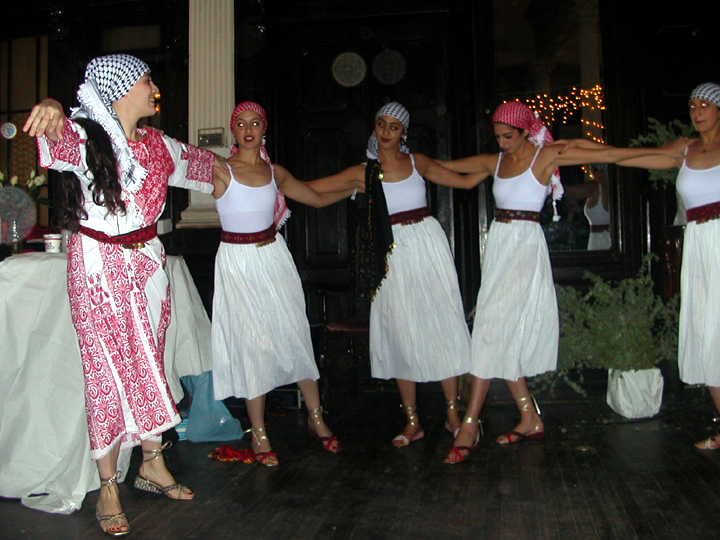
Image: Female_dabke_dancers.jpg by Terrance Lindall, via Wikimedia Commons, licensed under CC BY-SA 3.0.
Making It Yours
A Levantine wedding is a village celebration compressed into a ballroom. The zaffe announces your arrival with the energy of a hundred years of tradition. The dabke circle pulls in three generations. The food says "we have more than enough, and you are welcome." And at the end of the night, when your grandmother is still on the dance floor and the DJ has played "Dal Ouna" for the fourth time and nobody wants to leave, you'll understand why these traditions survive.
Honor what your family brought with them. Give the zaffe its full moment. Let the dabke go as long as it wants. And throw a wedding so good that the venue asks for your caterer's number.
For help finding Levantine Arab wedding vendors, zaffe groups, DJs, caterers, and event planners, visit EventAtlas or reach out at hello@tryeventatlas.com.
Image Credits
Header image: “Arabic wedding Dabkeh Zaffeh.jpg” by Sarah Canbel, via Wikimedia Commons, licensed under CC BY-SA 4.0. Cropped/resized for this article.
Related Posts
More reading on themes you might be exploring.

How to Celebrate Enkutatash (Ethiopian New Year) in the US
On September 11, 2026, Ethiopia enters the year 2019. Enkutatash, the Ethiopian New Year, means "gift of jewels" and marks the end of the rainy season with yellow flowers, doro wot feasts, and coffee ceremonies that fill the house with frankincense smoke. Here's how the 200,000+ Ethiopian-Americans in the DC area and communities nationwide keep the tradition alive.

How to Plan a Nigerian Naming Ceremony in the US
A Nigerian child doesn't fully arrive until they've been named before the community, blessed by elders, and tasted honey, salt, and kola nut for the first time. Here's how to plan a naming ceremony in the US: the seven symbolic items and what each prayer means, the naming order, the food spread, and how diaspora families adapt the eighth-day tradition to American work schedules.
Planning a Jamaican Wedding in the US: Traditions Your Guests Will Never Forget
The black cake has been soaking in rum since you got engaged, your auntie claimed the curry goat, and your DJ knows if he doesn't play "Is This Love" at least once your grandmother will unplug his speakers. Here's how to plan a Jamaican wedding in the US: the cake procession, the money dance, the music arc from reggae to dancehall, and why the party doesn't end until Tun T'anks Sunday.
Planning a Cultural Celebration?
Find vendors who understand your traditions and can make your event truly special.
Find Vendors