
Planning a Jamaican Wedding in the US: Traditions Your Guests Will Never Forget
The black cake has been soaking in rum since you got engaged, your auntie claimed the curry goat, and your DJ knows if he doesn't play "Is This Love" at least once your grandmother will unplug his speakers. Here's how to plan a Jamaican wedding in the US: the cake procession, the money dance, the music arc from reggae to dancehall, and why the party doesn't end until Tun T'anks Sunday.
The black cake has been soaking in rum since you got engaged. Your auntie already claimed the curry goat. And your DJ knows that if he doesn't play Bob Marley's "Is This Love" at least once, your grandmother will personally unplug his speakers.
A Jamaican wedding in the US is a celebration where the food is the centerpiece, the music runs from reggae classics to dancehall, and the community shows up in full force, whether you sent them a formal invitation or not. Jamaican wedding culture is rooted in community, generosity, and the belief that a wedding isn't just two people getting married; it's two families merging while the entire neighborhood eats, drinks, and dances until dawn.
For Jamaican-American families in New York, South Florida, Atlanta, and other cities with strong Caribbean communities, these traditions are how you honor where you come from while celebrating where you are. Here's how to plan one that does justice to both.
The Traditions: What Makes a Jamaican Wedding a Jamaican Wedding
Jamaica is a cultural crossroads, with African, British, Indian, Chinese, and Spanish influences woven into every aspect of life, including weddings. There aren't rigid, universal ceremonies the way some cultures have them. Instead, Jamaican weddings are defined by a set of traditions that families mix and match based on their background, their church, and their personal style.
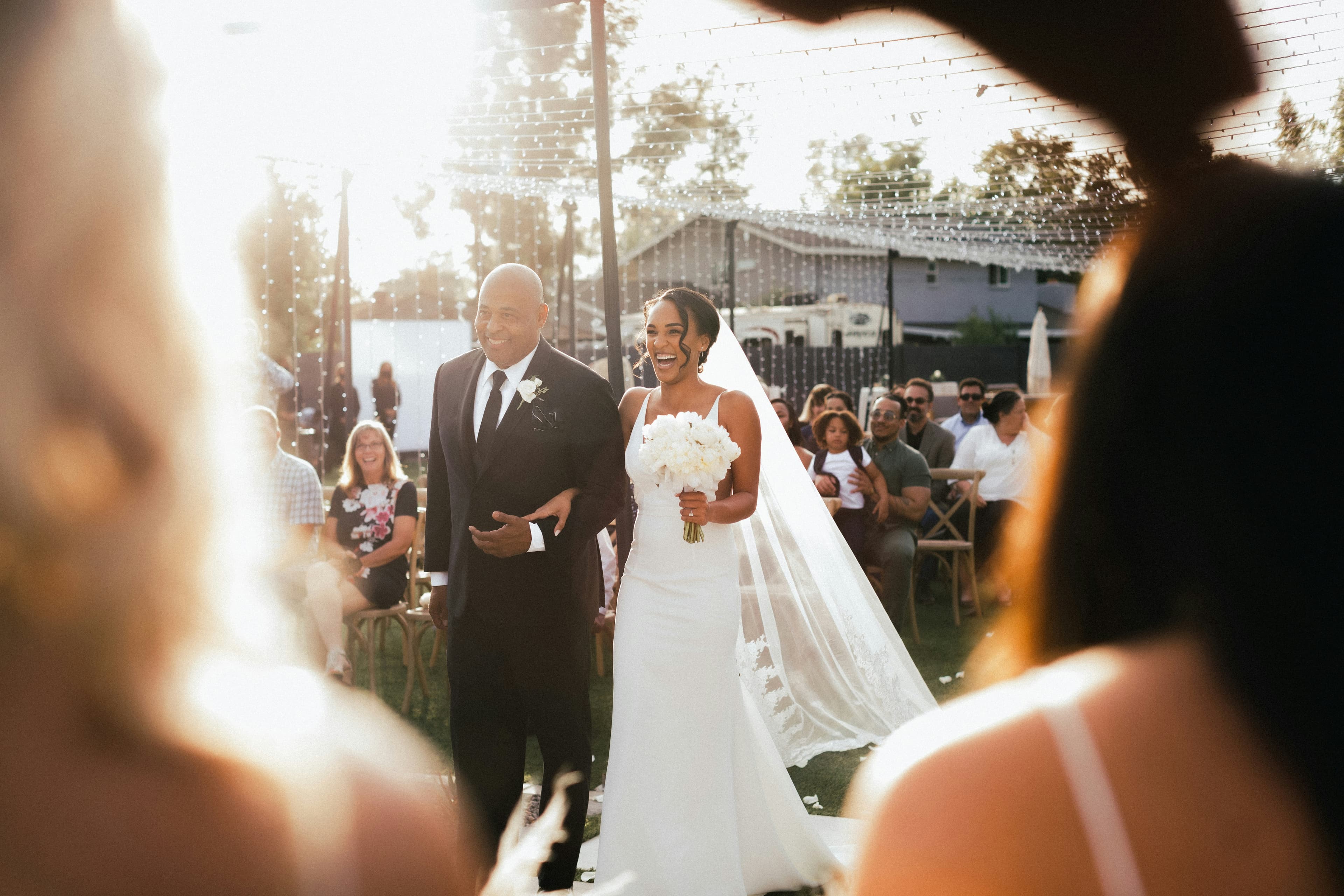
Both parents walk the bride down the aisle. In many Western ceremonies, the father gives the bride away. In Jamaican tradition, both parents escort the bride down the aisle, symbolizing that the responsibility and love of raising her was shared, and so is the act of entrusting her to her partner. This is one of the most emotionally powerful moments of the ceremony, and it sets the tone for how Jamaican weddings treat family: as a collective, not a hierarchy.
The ceremony is typically Christian. Jamaica is a deeply Christian country, and most traditional Jamaican weddings take place in a church. Anglican, Baptist, Catholic, Seventh-day Adventist, and Pentecostal ceremonies are all common, each with their own liturgical style. Church ceremonies in the US follow the same pattern: hymns, scripture readings, vows, and a sermon. If you're having a church wedding, book your parish 8 to 12 months in advance and complete any required pre-marital counseling.
The rum toast. Before or during the reception, the couple shares a sip of Jamaican rum together. This isn't just a toast; it symbolizes unity, good luck, and a harmonious marriage. White overproof rum (like Wray & Nephew) is the traditional choice, though some couples opt for a smoother aged rum. In some families, guests also sprinkle white rum around the venue to ward off bad spirits and bless the space.
The money dance. Similar to Nigerian spraying and Mexican el baile del billete, the Jamaican money dance involves guests pinning cash to the bride's dress (or a special apron) while she dances. The money represents the community's financial support and well-wishes for the couple's future. Come prepared with small bills, and don't be shy about joining the dance floor to participate.
Tun T'anks Sunday. The celebration doesn't end at the reception. The first Sunday after the wedding is Tun T'anks Sunday (Turn Thanks Sunday), when the couple, the wedding party, and guests attend church together at the same church where the ceremony took place. Afterward, everyone gathers at the bride's family home for food, fellowship, and reflection. It's a quieter, more intimate celebration that closes the wedding chapter. In the US, many Jamaican families preserve this tradition by hosting a brunch or casual gathering the Sunday after the wedding.
The Cake: This Is Not Regular Wedding Cake
The Jamaican black cake (also called rum cake or fruit cake) is the single most important food item at a Jamaican wedding, and it deserves its own section because it is that serious.
Here's how it works: as soon as the engagement is announced, the groom's grandmother (traditionally) begins soaking dried fruits, including raisins, prunes, currants, and cherries, in white overproof rum and red wine. The fruits soak for the entire duration of the engagement, absorbing the rum and developing an intense, complex flavor. The longer the engagement, the richer the cake. Some families soak their fruit for a year or more.
The cake is baked by the bride's mother or grandmother (or, in modern practice, a trusted family baker) about a week before the wedding. It's a dense, dark, moist cake heavily spiced with cinnamon, nutmeg, and vanilla, bound together by the rum-soaked fruit. The finished cake is covered in royal icing (a hard white icing) and often decorated with sugar flowers or other adornments.
At the reception, the cake is brought out in a ceremonial procession. Traditionally, a group of married women clothed in white dresses and head-ties carry the veiled cake to the reception table in a solemn, silent procession. The cake stays covered with white lace until the couple is ready to cut it. The unveiling is a moment of anticipation and ceremony.
After the cutting, slices are distributed to every guest. A slice is also saved and sent to anyone who was invited but couldn't attend, because in Jamaican culture, the cake is a blessing to be shared, not just a dessert.
If nobody in your family has a black cake recipe (or the patience for a year-long rum soak), Caribbean bakeries in the US make them to order. In New York, South Florida, and other cities with Jamaican communities, you'll find bakers who specialize in traditional black cake for weddings. Order at least 3 to 4 weeks in advance.
The Food: Curry Goat Is Non-Negotiable
Jamaican wedding food is hearty, flavorful, and served in quantities that would make a Nigerian wedding caterer nod in approval. Running out of food is not an option.
The menu essentials:
Curry goat. This is the king of Jamaican wedding dishes. The goat is slow-cooked in a rich curry sauce with scotch bonnet peppers, allspice, thyme, and garlic until the meat falls off the bone. In traditional Jamaican weddings, the couple selects the goat themselves before the wedding. In the US, your caterer will handle sourcing, but the dish itself is non-negotiable at a proper Jamaican wedding.
Jerk chicken. Marinated in a spicy jerk seasoning (scotch bonnet, allspice, thyme, garlic, ginger) and grilled or smoked until charred and juicy. Jerk chicken is the most universally loved Jamaican dish and the one your non-Caribbean guests will gravitate toward first.
Rice and peas. Not "rice and beans." Rice and peas. The "peas" are kidney beans, cooked in coconut milk with thyme, scallion, and scotch bonnet. This is the standard side dish at every Jamaican celebration.
Oxtail. Braised until fork-tender in a thick, savory gravy with butter beans. Not every wedding has oxtail (it's expensive), but the ones that do become legendary.
Mannish water. A goat soup that's traditionally served as a starter or late-night reviver. It's made from goat head, feet, and tripe, and it's rich, peppery, and not for the faint of heart. Some families serve it; others skip it. If your family expects it, make sure your caterer can handle it.
Fried plantain, festival (fried dumplings), and bammy round out the sides. A fruit punch with rum and sorrel drink (a hibiscus-based drink popular at Jamaican celebrations and Christmas) are standard beverages.
For catering, look for Jamaican or Caribbean caterers in your area. Caribbean Pearl Caterers (caribbeanpearlcaterers.com) in New York is a full-service catering and event planning company with a menu rooted in Caribbean flavors, named a WeddingWire Choice Award winner. Dining With Grace (diningwithgrace.com), also based in New York, specializes in Pan-African and Caribbean fusion cuisine for weddings and events and has over 12 years of experience serving diverse multicultural celebrations. In South Florida, Caribbean caterers are abundant; check local Jamaican community groups for recommendations.
Budget $35 to $80 per plate for a full Jamaican wedding buffet depending on menu complexity and guest count.
The Music: Reggae First, Everything Else Second
Music at a Jamaican wedding follows an arc. The ceremony features hymns and maybe a soloist. The cocktail hour is smooth: reggae classics, lovers rock, a little mento (Jamaica's original folk music). And then the reception turns into a full-blown dance party.
Reggae is sacred. Bob Marley's "Is This Love," "One Love," "Turn Your Lights Down Low," and "Waiting in Vain" are essentially required. Beyond Marley, the reggae rotation should include Dennis Brown, Gregory Isaacs, Beres Hammond, Freddie McGregor, and Chronixx. Reggae sets the romantic, communal tone of the early reception.
Dancehall takes over. Once the formal program ends and the dance floor opens, dancehall brings the energy. Beenie Man, Shabba Ranks, Sean Paul, Shaggy, Vybz Kartel, and Spice should all be in the DJ's rotation. Dancehall at a Jamaican wedding is not background music. It's an invitation to move, and your guests will answer it.
Soca and calypso often make an appearance, especially if your guest list includes Trinidadian, Barbadian, or other Caribbean friends and family. Machel Montano, Bunji Garlin, and Destra Garcia are crowd-pleasers that bridge the Caribbean diaspora.
Your DJ needs to know Caribbean music deeply, not just have a "reggae playlist" on Spotify. In cities with large Jamaican communities (New York, South Florida, Atlanta, the DMV, Hartford, Philadelphia), Caribbean wedding DJs are available and understand the genre transitions. Ask for references from Caribbean couples, and listen to their mixing style before you book.
We’re growing the Jamaican music and entertainment community on EventAtlas.
The Reception: It Goes Late
Jamaican wedding receptions are long. Expect 5 to 7 hours minimum. In traditional Jamaican style, the reception was held in a marquee (a large tent structure) built in the groom's backyard by members of the community. The groom could observe the construction but was forbidden from helping. The party ran until dawn, and guests were encouraged to stay the entire night.
In the US, backyard receptions with marquees are still common for Jamaican families who have the space. Banquet halls and event centers are the alternative, and they work well as long as the venue doesn't have an early noise curfew. A 10 PM cutoff will not work for a Jamaican wedding. Look for venues that allow events to run until at least midnight.
The reception flow typically includes a grand entrance, formal toasts (from the best man, maid of honor, and parents), the cake ceremony (unveiling and cutting), dinner, the money dance, and then the open dance floor. The transition from formal to party is quick, and once the dancehall starts, the floor stays packed.
Adapting for the US
The community invitation. In Jamaica, weddings are often open-door: the entire community is welcome. In the US, you're paying per head at a venue, so a formal guest list is necessary. But the spirit of openness can be preserved: be generous with your numbers, don't stress over plus-ones, and make room for the extended community that makes Jamaican celebrations what they are.
Finding the right caterer. The curry goat has to be right. The jerk chicken has to be right. A non-Caribbean caterer cannot execute these dishes at the level your family expects. Start with Caribbean restaurants and caterers in your area, and always do a tasting. If your venue requires in-house catering, ask whether they can bring in an outside Caribbean chef for the kitchen.
The black cake logistics. If grandma is making the cake, give her enough lead time (the fruit needs to soak, ideally for months). If you're ordering from a bakery, order at least a month in advance. The cake needs to be dense and rum-heavy; a light, airy fruitcake is not the same thing.
Dress code. Jamaican weddings are formal but colorful. Women wear floor-length gowns, cocktail dresses, or dressy two-piece sets. Men wear suits, often with Caribbean flair: a linen suit, a bold tie, or a colorful pocket square. Avoid wearing black (it's associated with mourning in Jamaican culture) and avoid wearing white (that's for the bride).
Budgeting
A Jamaican wedding in the US for 150 to 300 guests typically costs $25,000 to $80,000+. Major line items:
Venue: $3,000 to $15,000. Catering: $8,000 to $25,000. Black cake (if ordered): $200 to $600 depending on size and baker. DJ and entertainment: $1,000 to $3,000. Photography and videography: $2,000 to $8,000. Attire: $1,000 to $5,000. Decorations: $2,000 to $8,000. Church fees and officiant: $200 to $500.
The biggest cost driver is guest count. Jamaican weddings tend to be large, and the community-oriented culture means trimming the guest list feels like cutting off family. Budget honestly for the number of people who will actually show up.
🇯🇲Jamaican Vendors on EventAtlas
Join the growing Jamaican vendor community on EventAtlas. with a vendor.
Making It Yours
A Jamaican wedding is a statement that joy is communal property. The cake that soaked in rum for a year is a declaration that this marriage was worth waiting for. The curry goat that feeds 300 people is a reminder that generosity defines you. And the dancehall that runs until 2 AM is proof that your people know how to celebrate.
Keep the traditions that connect you to your roots. Let the black cake be as rum-heavy as grandma intended. Play Bob Marley during the ceremony and Beenie Man at midnight. And when Tun T'anks Sunday comes around, gather your people one more time to say thank you for a wedding that nobody will forget.
For help finding Jamaican and Caribbean wedding vendors, caterers, DJs, and event planners, visit EventAtlas or reach out at hello@tryeventatlas.com.
Related Posts
More reading on themes you might be exploring.
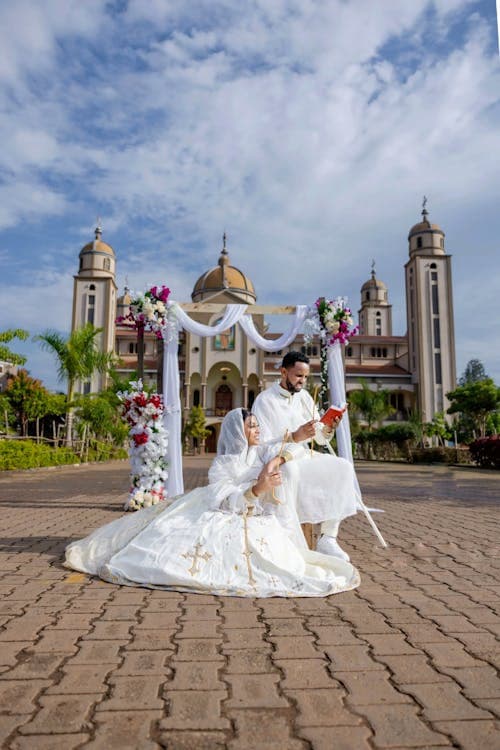
A Guide to Eritrean and Ethiopian Wedding Traditions in the US
It's not a one-day event. It's a 72-hour transformation: the telosh gift ceremony on Friday, the church crowning and reception on Saturday, and the melsi on Sunday where everything shifts to habesha kemis, braided hair, eskista dancing, and coffee poured from a jebena. Here's how diaspora families make every stage work in the US.
How to Celebrate Enkutatash (Ethiopian New Year) in the US
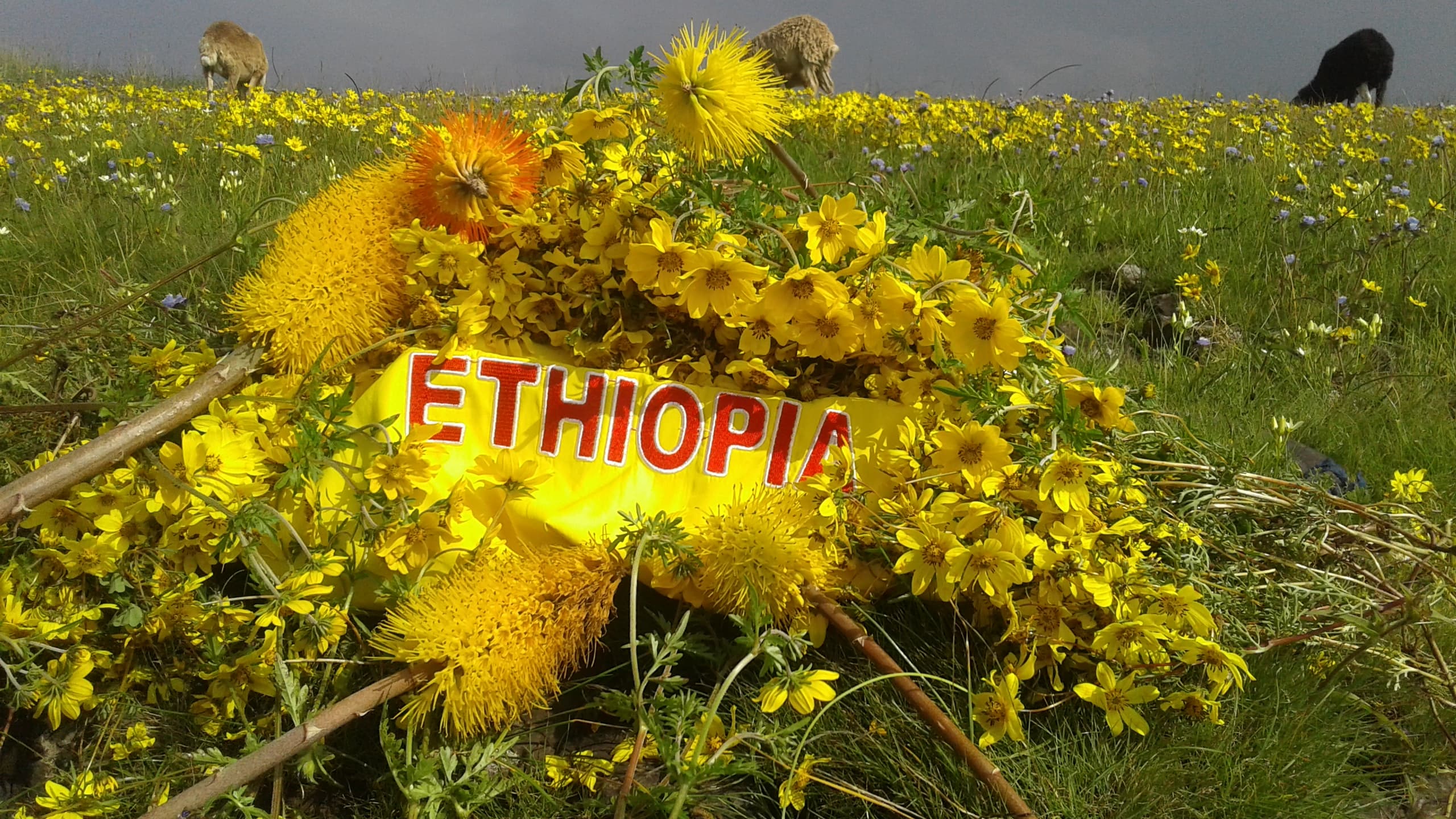
On September 11, 2026, Ethiopia enters the year 2019. Enkutatash, the Ethiopian New Year, means "gift of jewels" and marks the end of the rainy season with yellow flowers, doro wot feasts, and coffee ceremonies that fill the house with frankincense smoke. Here's how the 200,000+ Ethiopian-Americans in the DC area and communities nationwide keep the tradition alive.

How to Plan a Nigerian Naming Ceremony in the US
A Nigerian child doesn't fully arrive until they've been named before the community, blessed by elders, and tasted honey, salt, and kola nut for the first time. Here's how to plan a naming ceremony in the US: the seven symbolic items and what each prayer means, the naming order, the food spread, and how diaspora families adapt the eighth-day tradition to American work schedules.
Planning a Cultural Celebration?
Find vendors who understand your traditions and can make your event truly special.
Find Vendors