
What Goes Into a Traditional Chinese Wedding Tea Ceremony (And How to Set One Up in the US)
Your mom vaguely remembers her own tea ceremony from the '80s and your grandma's instructions are all in rapid-fire Cantonese. Here's exactly how to do it right: who gets served first, what tea and symbolic ingredients to use, where to buy the Double Happiness set, and the red envelope amounts nobody tells you about.
Your parents keep saying "don't forget the tea ceremony," but the details are fuzzy. Your mom vaguely remembers her own from the late '80s. Your grandma has opinions but they're all in Cantonese and delivered at high speed. And you're trying to figure out who gets served first, what kind of tea to use, and whether the Double Happiness tea set on Amazon is actually appropriate or tacky.
The Chinese wedding tea ceremony (cha dao) is probably the single most important Chinese wedding tradition. It dates back over 1,200 years to the Tang Dynasty, and it has survived every modernization of Chinese weddings since. While the banquet, the dress, and the decor have all evolved, the tea ceremony endures because it does something no other part of the wedding does: it lets you personally thank the people who raised you, one cup at a time.
Here's how to do it right, whether you're planning a fully traditional Chinese wedding or incorporating the tea ceremony into a multicultural celebration in the US.
What the Ceremony Means
The tea ceremony is not about the tea. It's about respect, gratitude, and the formal joining of two families.
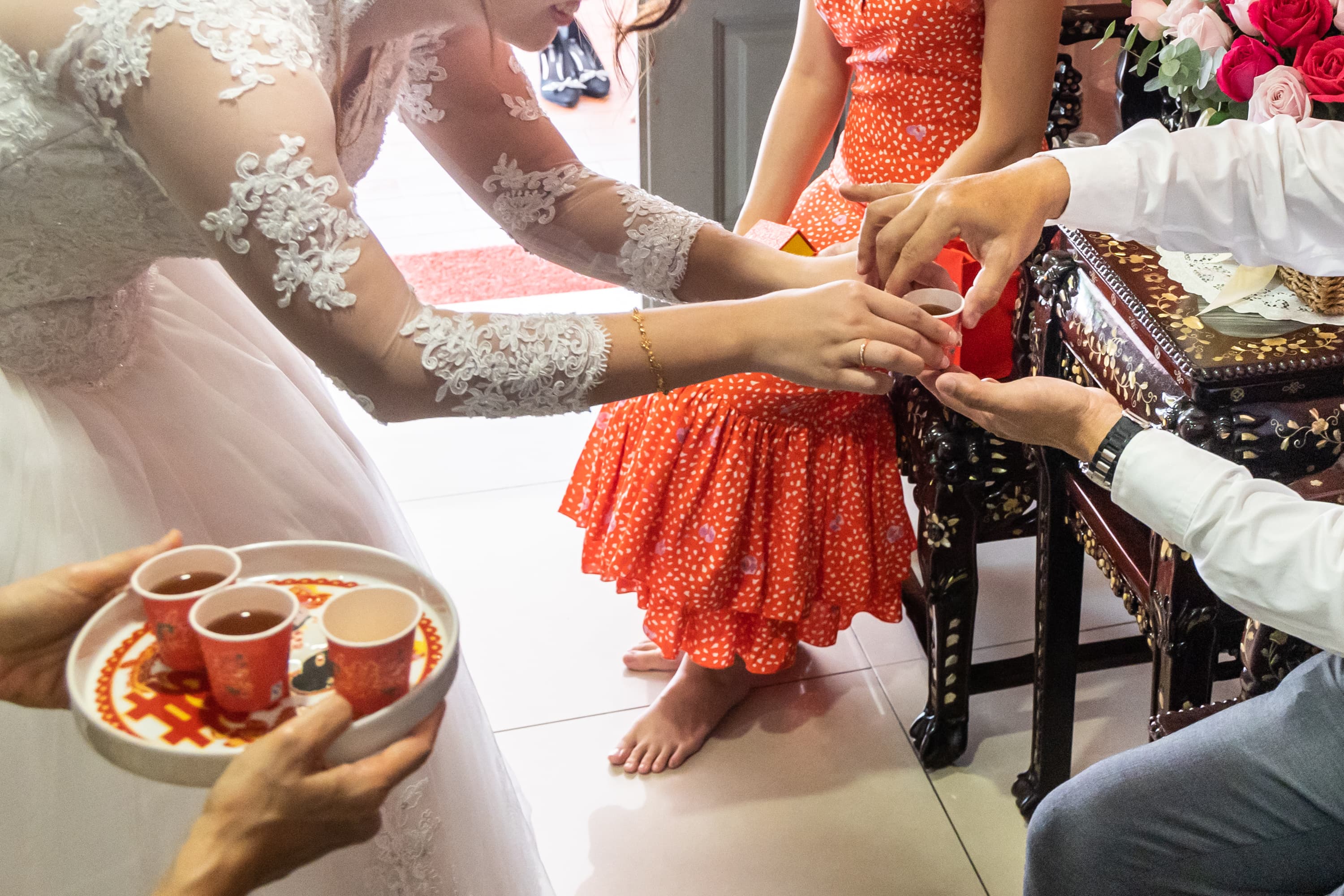
The couple serves tea to their parents, grandparents, and senior relatives. Each person served represents a relationship the couple is honoring and a blessing they're receiving in return. The act of serving, of physically kneeling or bowing and presenting tea with both hands, is an expression of filial piety, the deep respect for elders that sits at the heart of Chinese culture.
In return, elders offer the couple blessings, advice, and gifts, usually in the form of red envelopes (hong bao in Mandarin, lai see in Cantonese) filled with money, or gold jewelry. The gifts are meaningful: gold jewelry passed from mother-in-law to bride carries the weight of acceptance into the family.
The ceremony is typically intimate, with only close family present. It's the quiet emotional core of the wedding day, often held in the morning before the larger banquet or ceremony.
The Order of Service
Who gets served first matters. The traditional order is:
Start with the groom's parents. Traditionally, the bride was being welcomed into the groom's family, so his parents were served first. The couple kneels (or stands, depending on family preference) before the groom's parents. The bride serves the father-in-law, and the groom serves his mother. Tea is presented with both hands on the saucer. The parents drink, offer blessings, and present the couple with red envelopes or jewelry.
Then the groom's grandparents, followed by the groom's aunts and uncles in descending order of seniority. The eldest uncle and aunt are served before younger siblings.
Then the bride's parents, followed by her grandparents, aunts, and uncles in the same order of seniority.
Finally, the couple's older married siblings, if any. Younger or unmarried siblings are not traditionally served tea; instead, the couple may serve them tea casually or they may receive red envelopes from the couple.
A modern note: many US-based couples, especially those in multicultural marriages, adapt this order. Some alternate between families (groom's parents, then bride's parents, then groom's grandparents, then bride's grandparents) for a more balanced feel. Others serve the bride's family first if she's the Chinese partner in a multicultural couple. The key is to discuss the order with both families beforehand so nobody feels slighted. Logistics sometimes dictate the order too. If one side of the family is running late, start with whoever is present.
The Tea: What to Serve
The tea itself carries symbolism. You're not just pouring Lipton.
Base tea: Use a high-quality Chinese tea. Popular choices include Longjing (Dragon Well), Tie Guan Yin (Iron Goddess), Bi Luo Chun, or a classic oolong. Some families use jasmine tea for its fragrance. The specific variety often depends on your family's regional background: Cantonese families may prefer a different tea than Fujianese or Shanghainese families. Ask your parents or grandparents what they'd prefer.
Traditional additions: The tea is sweetened with symbolic ingredients. Lotus seeds (lian zi) represent fertility, as the character for lotus sounds like the word for "continuous" and the character for seed sounds like "children." Red dates (hong zao) symbolize an early and sweet union, since the word for date sounds like "early." Longan (gui yuan) represents completeness and preciousness. Together, these ingredients express the wish for the couple to have children soon and enjoy a sweet, complete life.
Not every family adds all three ingredients. Some use just lotus seeds and red dates. Others skip the additions entirely and serve plain tea. Follow your family's tradition or ask an elder what they remember from past weddings.
Practical tip: Brew the tea strong enough to have flavor but not so hot that elders burn themselves when they drink it. Have someone manage the teapot and keep it warm throughout the ceremony, since the whole process can take 20 to 40 minutes depending on how many relatives you're serving.
The Tea Set
The tea set is the most important physical object in the ceremony, and it becomes a keepsake.
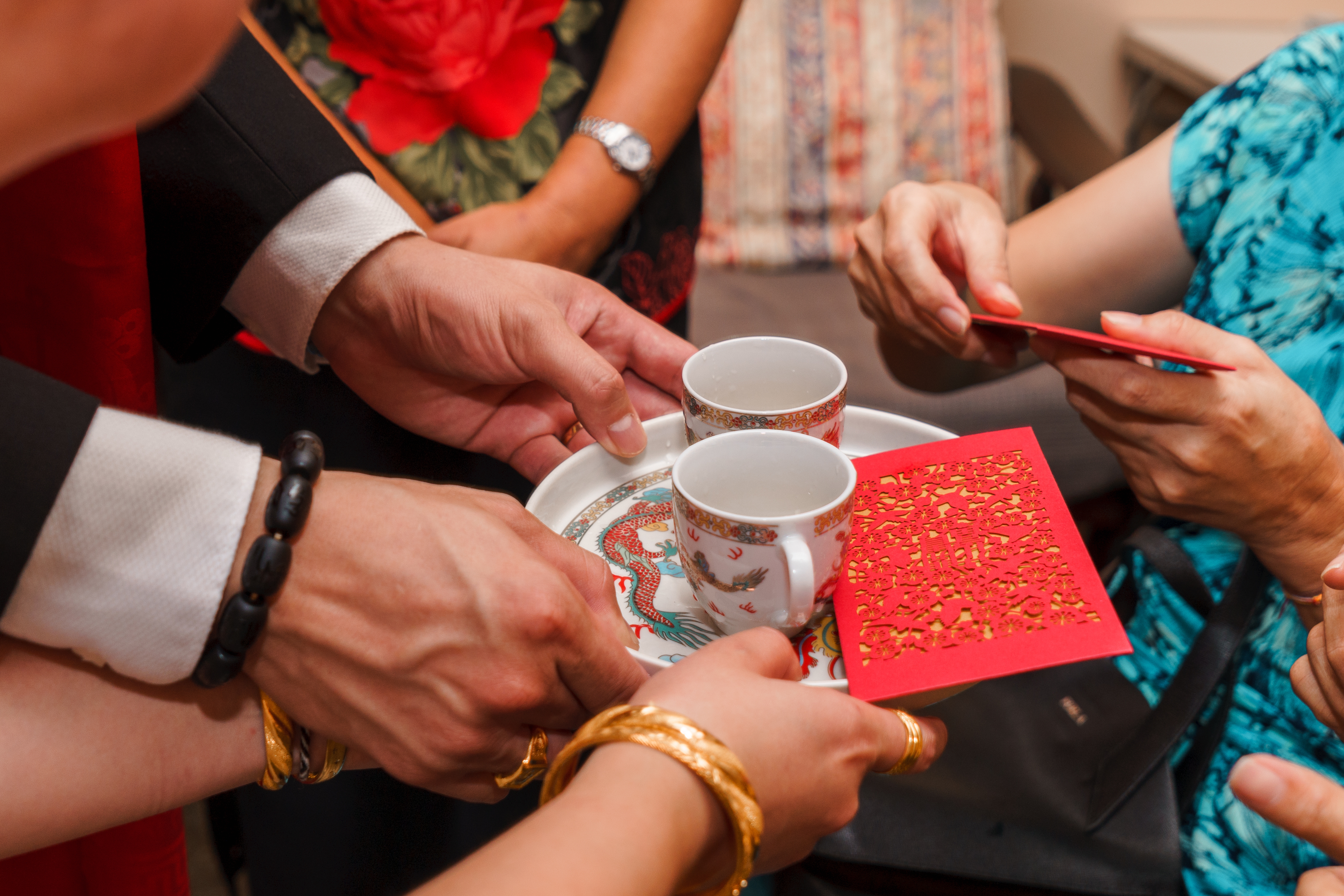
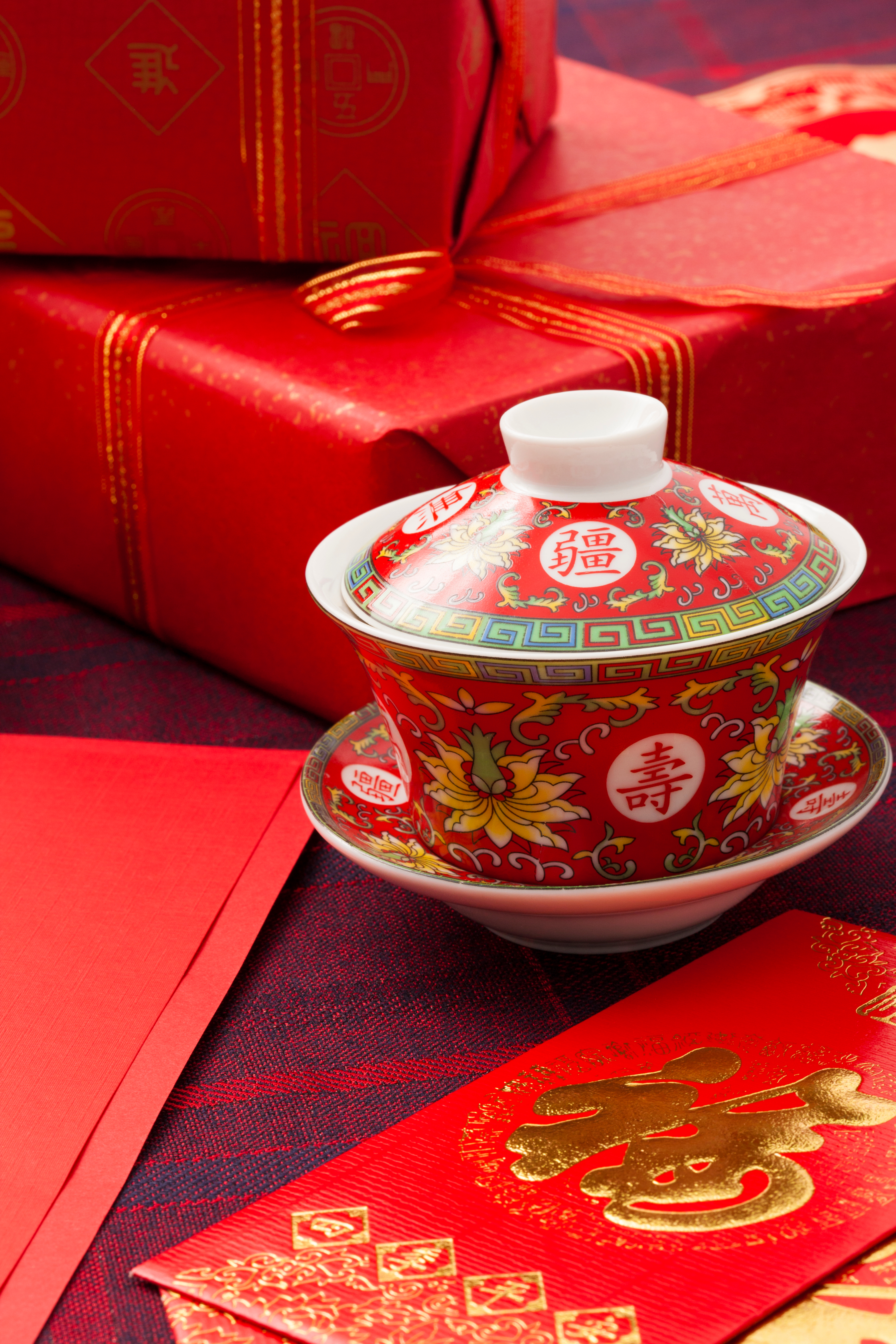
Traditional choice: A red porcelain set with the Double Happiness character (囍) in gold. This is the classic, and it's classic for a reason: the red symbolizes joy and good fortune, and Double Happiness is the iconic Chinese wedding symbol. A standard set includes a teapot and 4 to 6 cups on a tray. Some sets use gaiwan (lidded cups with saucers) instead of a teapot, which is more formal and traditional.
Where to buy in the US: Oriental Me (orientalmestore.com) carries a curated selection of wedding tea sets alongside qun kwa and cheongsam bridal attire, with sets starting around $89 to $128. Umi Tea Sets (umiteasets.com) specializes in Chinese wedding tea sets with both traditional and modern designs. Teasenz (teasenz.com) offers a gaiwan-based wedding set with bowls and chopsticks for about $70 to $100. Amazon and eBay also carry a range of Double Happiness sets from $25 to $80, though quality varies.
Modern alternatives: Some couples opt for a more minimalist ceramic set in muted tones (cream, blush, sage) that fits a modern aesthetic while still honoring the tradition. This works well for multicultural weddings where the tea ceremony is one element of a blended celebration.
How many cups? You need enough cups to serve each pair of elders without washing cups in between (that's considered inauspicious, as it suggests repetition of the marriage). For a ceremony serving both families, 6 to 8 cups is typical. If you're serving a large extended family, have extra cups ready.
What to Wear
The bride traditionally wears a Qun Kwa (裙褂) for the tea ceremony. This is a two-piece ensemble consisting of a fitted jacket and an A-line skirt, heavily embroidered with gold dragons and phoenixes symbolizing the union of husband and wife. A high-quality Qun Kwa can cost $500 to $3,000+ depending on the embroidery density and craftsmanship. Jinza Couture (jinzaoriental.com) and East Meets Dress (eastmeetsdress.com) are popular US-based options for Chinese bridal wear.
A modern alternative is a red Cheongsam or Qipao, a fitted one-piece dress with a mandarin collar that's sleeker and more contemporary. Some brides wear the Qun Kwa for the tea ceremony and change into a Qipao for the banquet, or vice versa.
The groom traditionally wears a Tang suit or a matching embroidered jacket in red or gold. A dark navy or black Tang suit with gold accents is a popular modern choice for grooms who want a traditional feel without full red.
Setting Up the Space
The tea ceremony doesn't require elaborate decor. It's an intimate family moment, not a production. Here's what you need:
Seating for elders. Two chairs placed side by side for each pair of parents/grandparents/aunts and uncles. The couple stands or kneels in front of them.
A table for the tea set. A small table or console where the teapot, cups, and tray are arranged. Some families add a small ancestral altar nearby with photos of deceased grandparents, white flowers, fruit (oranges and tangerines for luck), and incense.
Dragon and phoenix candles. Traditional Chinese wedding candles with dragon and phoenix motifs can be lit at the beginning of the ceremony. The couple may also light a unity candle together, symbolizing the joining of two families.
Red and gold accents. Red tablecloths, Double Happiness banners, and gold details set the tone without requiring a professional decorator.
The kneeling cushion. If your family tradition involves kneeling, have a red cushion for the couple to kneel on. If kneeling isn't part of your family's practice, a slight bow while standing is equally respectful.
The ceremony can happen at a hotel suite, a private room at the venue, the family home, or any quiet space that allows for intimacy. Many US-based couples hold the tea ceremony in a separate room at their wedding venue 1 to 2 hours before the main ceremony or banquet begins.
The Red Envelope Exchange
Red envelopes (hong bao / lai see) are the traditional gifts given to the couple during the tea ceremony. Here's the etiquette:
Parents typically give the largest amounts, often $500 to $2,000+, or significant pieces of gold jewelry (necklaces, bracelets, rings). Gold jewelry from the groom's mother to the bride is one of the most emotionally significant moments of the ceremony. It symbolizes full acceptance into the family.
Grandparents, aunts, and uncles give according to their relationship and means. $100 to $500 is common, though the amount varies widely by family.
The couple should also prepare red envelopes for younger, unmarried siblings or cousins present at the ceremony. These are smaller amounts ($20 to $50) and are a gesture of goodwill.
All amounts should be in even numbers (except the number 4, which sounds like "death" in Chinese and is avoided). Amounts ending in 8 are considered especially lucky.
For Multicultural Couples
The tea ceremony adapts beautifully to multicultural weddings. If one partner is Chinese and the other isn't, the non-Chinese partner participates fully: kneeling, serving tea, and receiving blessings. This act of respect toward their partner's family culture is deeply appreciated and often becomes one of the most emotional parts of the wedding day.
For the non-Chinese family, the couple can serve tea to them as well, framing it as an act of gratitude and respect that transcends any single culture. Brief printed explanations of the tradition handed to non-Chinese family members before the ceremony help everyone feel included and understand the significance of what's happening.
Some multicultural couples pair the Chinese tea ceremony with a tradition from the other partner's culture. A Chinese-Jewish couple might do a tea ceremony followed by a ketubah signing. A Chinese-Indian couple might incorporate the tea ceremony alongside a mehndi or puja. The traditions don't compete; they complement.
We’re growing the Chinese event-planning community on EventAtlas.
Common Mistakes
Forgetting to brief the family. Every elder being served should know the basic flow: sit, receive tea, drink, give blessing, present envelope or gift. A quick 5-minute walkthrough before the ceremony starts prevents awkward pauses.
Rushing through it. Each serving should take 2 to 3 minutes. This is one of the only moments in the wedding where the couple has individual, personal contact with each important family member. Don't rush.
Not having someone manage the logistics. Assign a bridesmaid, coordinator, or family member to manage the teapot (refilling, maintaining temperature), hand the couple clean cups, announce who's being served next, and collect envelopes and jewelry. This person keeps the ceremony flowing smoothly.
Serving tea to the wrong person first. The order of seniority matters. Getting it wrong can offend elders. Write out the serving order beforehand and have your logistics person keep track.
The tea ceremony is 20 to 40 minutes that will stay with you and your family for the rest of your lives. Every cup served is a thank you, a blessing received, and a family bond affirmed. Get the details right, and the emotion takes care of itself.
For help finding Chinese wedding vendors, bridal attire shops, and cultural event specialists in the US, visit EventAtlas or reach out at hello@tryeventatlas.com.
We’re growing the Chinese vendor community on EventAtlas.
Related Posts
More reading on themes you might be exploring.

How to Celebrate Enkutatash (Ethiopian New Year) in the US
On September 11, 2026, Ethiopia enters the year 2019. Enkutatash, the Ethiopian New Year, means "gift of jewels" and marks the end of the rainy season with yellow flowers, doro wot feasts, and coffee ceremonies that fill the house with frankincense smoke. Here's how the 200,000+ Ethiopian-Americans in the DC area and communities nationwide keep the tradition alive.

How to Plan a Nigerian Naming Ceremony in the US
A Nigerian child doesn't fully arrive until they've been named before the community, blessed by elders, and tasted honey, salt, and kola nut for the first time. Here's how to plan a naming ceremony in the US: the seven symbolic items and what each prayer means, the naming order, the food spread, and how diaspora families adapt the eighth-day tradition to American work schedules.
Planning a Jamaican Wedding in the US: Traditions Your Guests Will Never Forget
The black cake has been soaking in rum since you got engaged, your auntie claimed the curry goat, and your DJ knows if he doesn't play "Is This Love" at least once your grandmother will unplug his speakers. Here's how to plan a Jamaican wedding in the US: the cake procession, the money dance, the music arc from reggae to dancehall, and why the party doesn't end until Tun T'anks Sunday.
Planning a Cultural Celebration?
Find vendors who understand your traditions and can make your event truly special.
Find Vendors