
What to Expect at a Nigerian Traditional Wedding: A Guest's Guide
Your coworker just invited you, handed you an aso ebi color swatch, and casually mentioned something about "spraying." Here's everything a first-timer needs to know about attending a Nigerian traditional wedding, from the alaga's comedy routine to the palm wine search to how many singles to bring for the dance floor.
Your coworker just handed you an invitation card with gold foil lettering and a WhatsApp message that says "the aso ebi color is emerald green, I'll send the fabric link." You said congratulations, but privately you're Googling "what happens at a Nigerian traditional wedding" because you have no idea what you just signed up for.
You're in good company. Nigerian traditional weddings are some of the most vibrant, joyful, and culturally rich celebrations you'll ever attend, but they're also very different from a standard American ceremony and reception. The structure is different. The role of guests is different. The energy is different. And yes, you might end up throwing money at the bride and groom while dancing to music you've never heard before, and it will somehow be the most fun you've had all year.
This guide is for anyone attending a Nigerian traditional wedding for the first time, whether you're a non-Nigerian friend, a partner from another culture, or a younger diaspora Nigerian who grew up in the US and hasn't been to many traditional ceremonies. Here's what's actually going to happen and how to be a great guest.
First: Understand What a "Traditional Wedding" Is
A Nigerian traditional wedding (also called an engagement ceremony or introduction) is not the same as the "white wedding." Most Nigerian couples have two separate celebrations: the traditional wedding, which follows the customs of the bride's ethnic group, and the white wedding, which is the Western-style church or civil ceremony with a reception.
The traditional wedding is the cultural ceremony. It's where families formally come together, bride price is negotiated and paid, and the couple is recognized as married in the eyes of their community. In many families, this is considered the "real" wedding, with the white wedding being a more modern addition.
For US-based Nigerian weddings, both events often happen on the same weekend, sometimes on the same day with the traditional ceremony in the morning or early afternoon and the white wedding reception in the evening. The traditional ceremony typically runs about 2 hours.
What to Wear
This is usually the first thing guests worry about, and it matters more than you think. Nigerian weddings are a visual event. Everyone dresses up, and they dress up seriously.
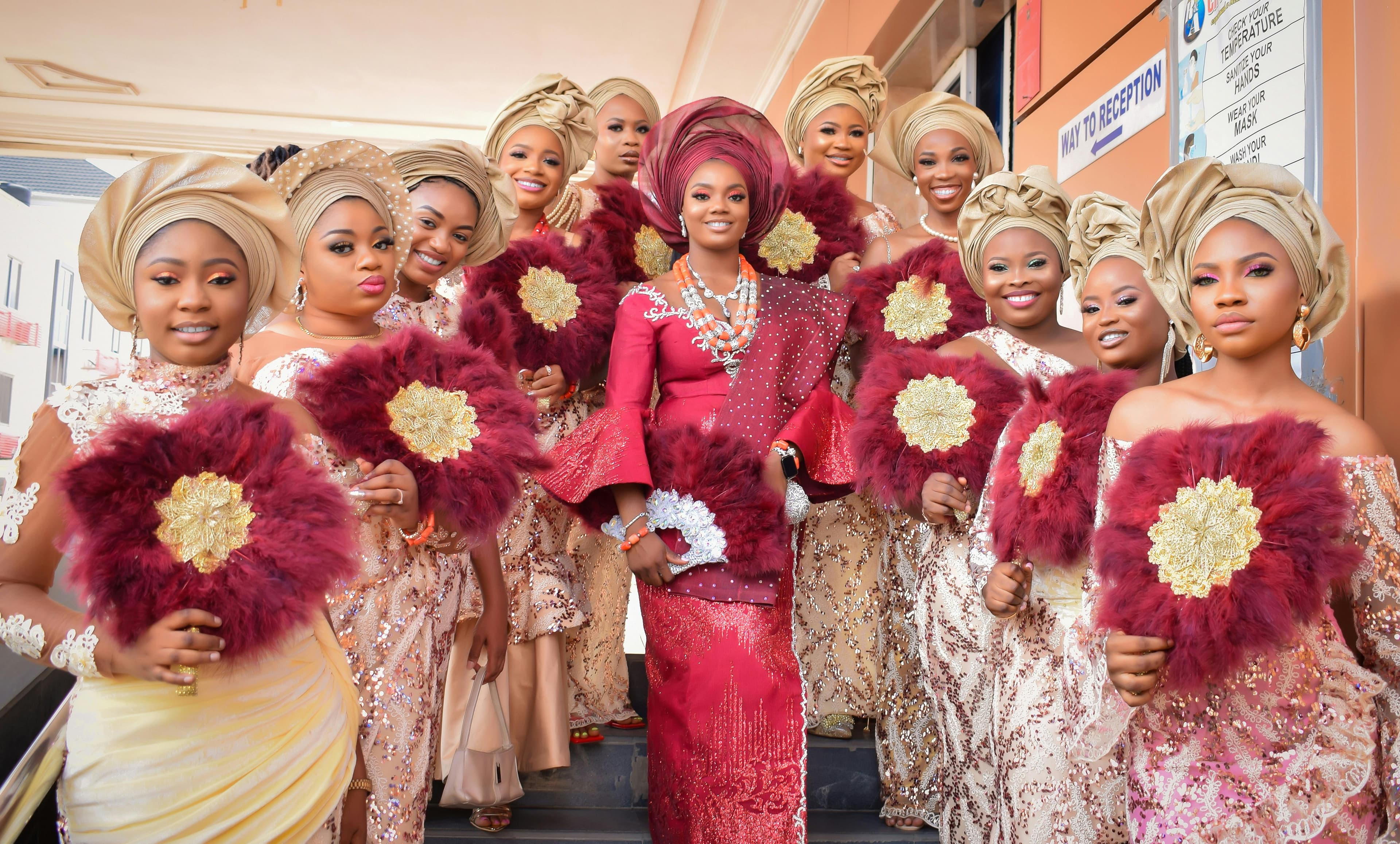
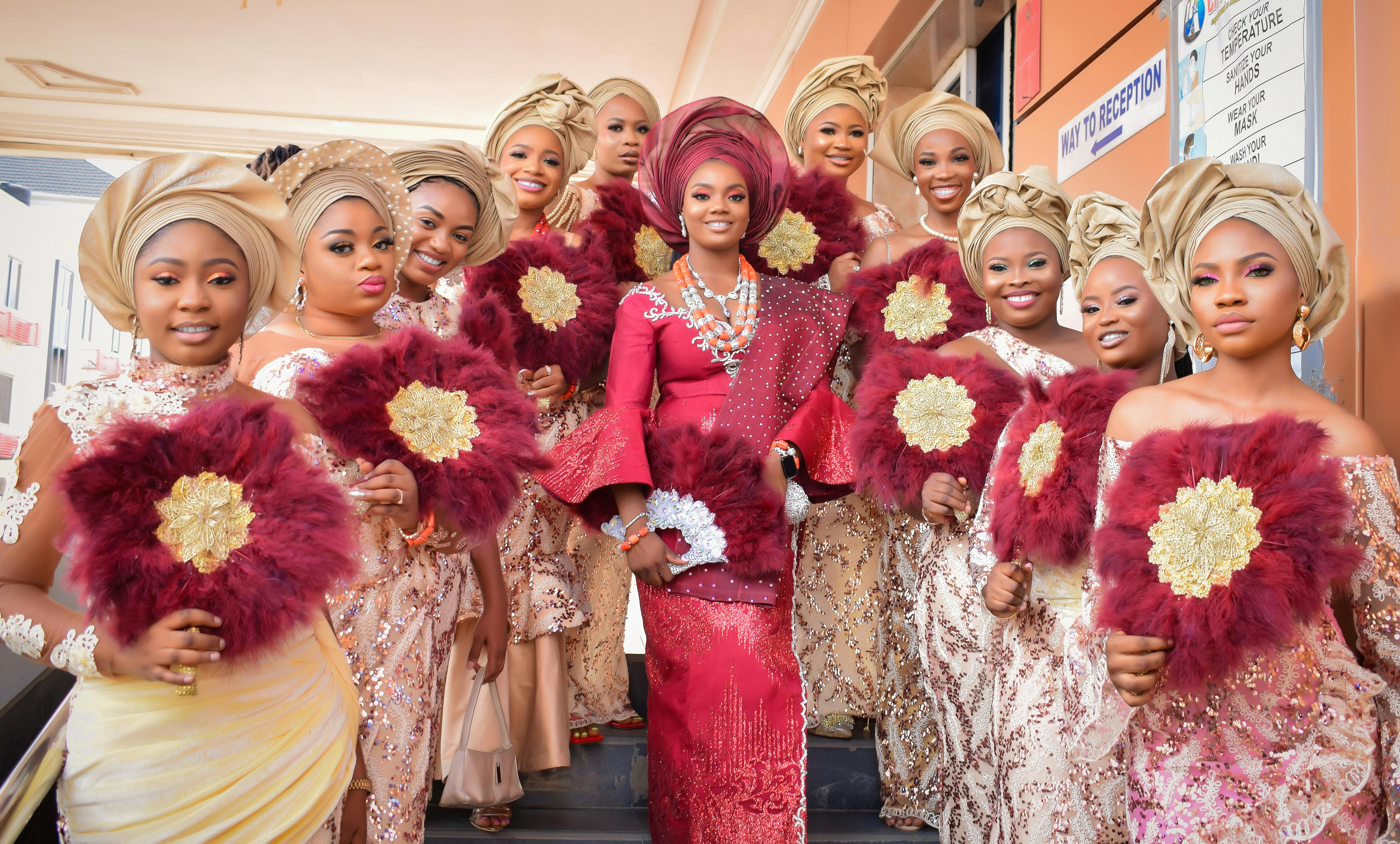
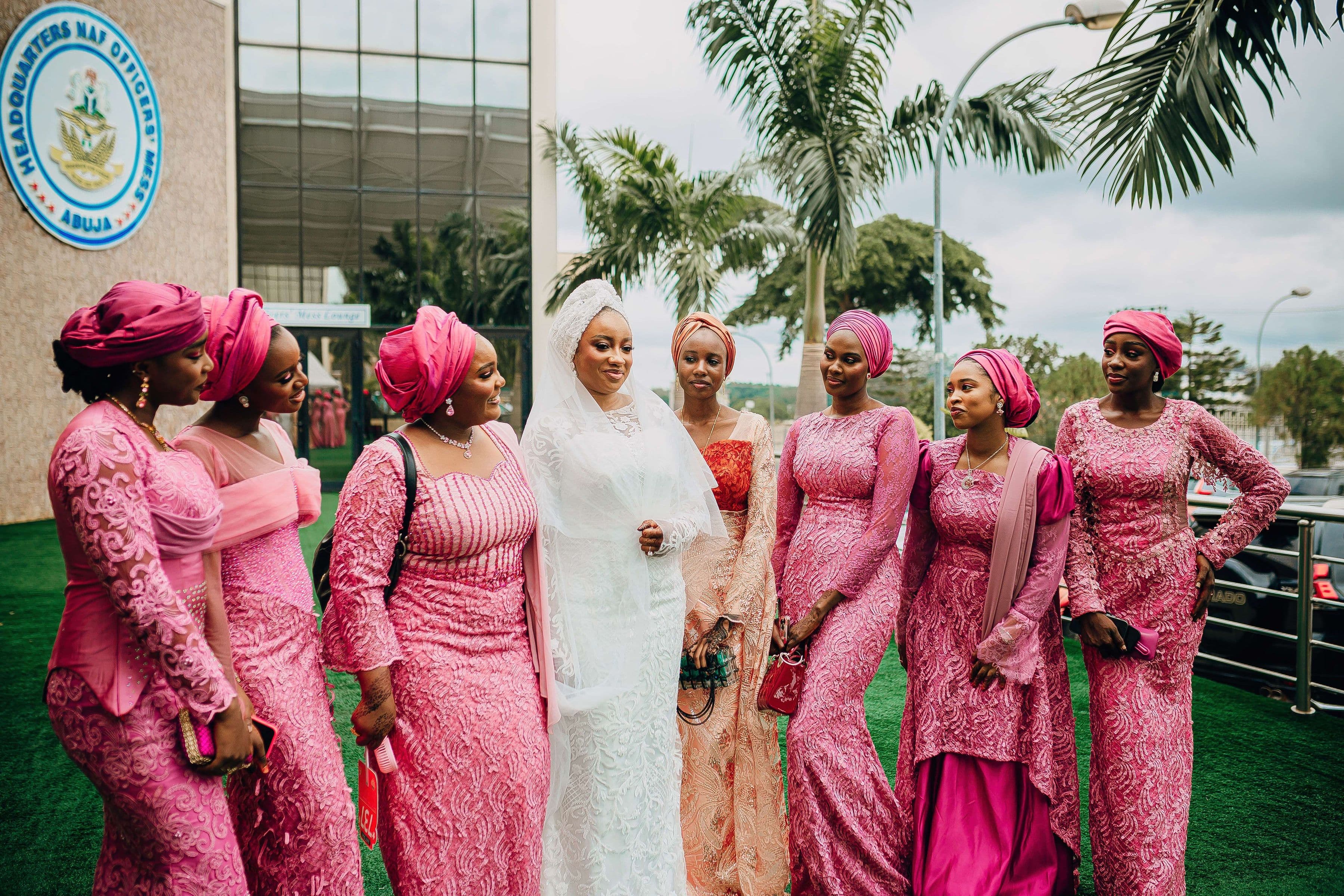
If you were given aso ebi fabric: The bride's family selects a specific fabric and color for guests to wear. If you were invited to buy aso ebi, it means you're considered close to the family. You'll purchase the fabric (usually $30 to $80 for your portion) and take it to a tailor to have an outfit made in whatever style you like. Women typically get iro and buba (wrapper and blouse), a fitted gown, or a modern jumpsuit made from the fabric. Men get a senator suit, kaftan, or agbada. If you don't know a Nigerian tailor, ask the person who invited you for a recommendation. They'll have one.
If you weren't given aso ebi: You're still expected to dress in your best. For women, a colorful formal dress, a nice jumpsuit, or any dressy outfit works. For men, a suit or traditional Nigerian attire if you have access to it. The key rules: dress colorfully (this is not the event for a little black dress), dress modestly (nothing too revealing, especially if there's a religious component), and never wear white or anything that could be mistaken for the bride's colors.
One important rule: don't wear the aso ebi colors if you didn't buy the aso ebi. The matching fabric is a deliberate system that identifies which "side" of the wedding you belong to and signals your closeness to the family. Showing up in the same shade of emerald green without the official fabric can cause confusion and quiet side-eye.
What Happens During the Ceremony
The structure varies depending on whether the couple is Yoruba, Igbo, Hausa, or from another ethnic group. Here's what to expect for the two most common ceremonies you'll encounter at US-based Nigerian weddings.
Yoruba Traditional Wedding
A Yoruba traditional ceremony is run by two women called alaga. The alaga iduro (standing MC) represents the groom's family, and the alaga ijoko (sitting MC) represents the bride's family. These women are part entertainer, part negotiator, part comedian. They're experienced cultural MCs who sing, joke, tease the groom's family, and keep the energy high throughout the ceremony. Don't expect a solemn affair. Expect laughter.
The ceremony usually unfolds like this: the groom's family arrives and is seated on one side, the bride's family on the other. After introductions, the groom's family presents a formal proposal letter, which a young member of the bride's family reads aloud. The bride's family presents an acceptance letter in return.
Then comes the eru iyawo (the bride's list), which is the set of gifts the groom's family must provide. This includes items like kola nuts, a fruit basket, sugar, honey, fabric, and the bride price (which in many Yoruba families is a symbolic amount, sometimes as low as ₦5,000 or about $3 to $6). The alaga inspects the items, often theatrically rejecting them or demanding more as part of the performance.
The groom enters and prostrates before the bride's parents in a gesture called idobale, touching his forehead to the ground. His groomsmen do the same. This is a profound show of respect, not a casual bow.
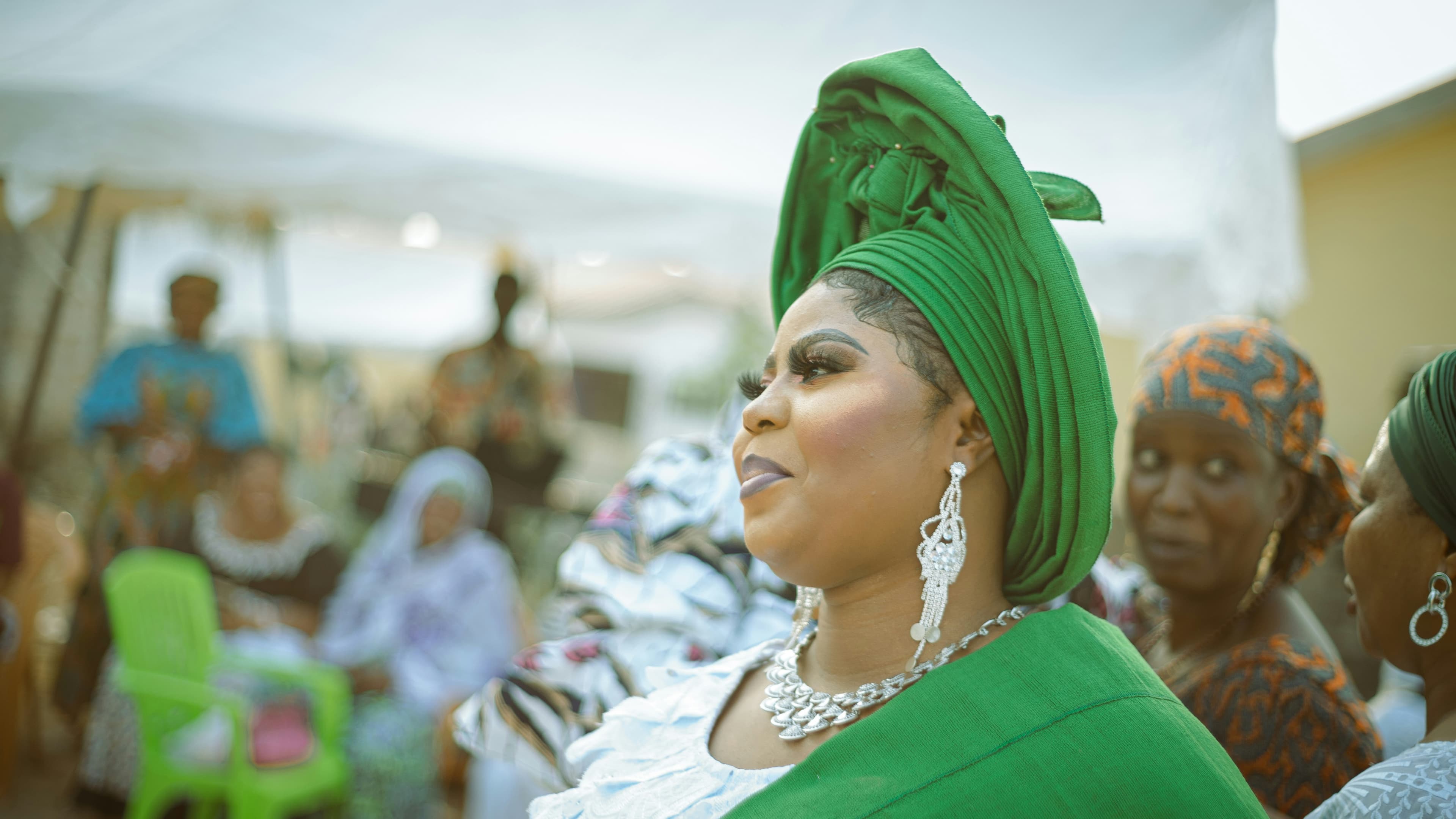
The bride enters later, usually in a stunning aso oke outfit with a dramatic gele. She's asked to select the most important item from the gifts presented. She always chooses the Bible, Quran, or another religious symbol, which contains her engagement ring. The groom places the ring on her finger, the bride price is formally accepted, prayers are offered, and the couple is married.
Igbo Traditional Wedding (Igba Nkwu)
The Igbo traditional ceremony centers on the wine-carrying ceremony. An MC (usually a male elder or professional MC) moderates the event.
The highlight of the Igbo ceremony is this: after the groom's family has presented their gifts and the bride price has been negotiated, the bride leaves the room. The groom hides among the seated guests. The bride reenters carrying a cup of palm wine given to her by her father. She then dances through the crowd searching for her groom while guests try to distract her, redirect her, or playfully block her path. When she finds him, she kneels, sips the palm wine, and offers him the rest. He drinks and places money in the cup. They dance together to the bride's parents for their blessing.
It's one of the most emotionally charged moments you'll witness at any wedding. The room erupts when she finds him.
Igbo grooms typically wear isiagu (a fabric with a lion-head pattern) and a red cap. The bride wears elaborate traditional attire with coral beads, often appearing in multiple outfits throughout the event.
Money Spraying: Yes, You Should Participate
Here's the part that confuses most first-time guests. At some point during the celebration, usually when the couple dances, guests will start approaching them and placing or tossing dollar bills on them. This is called "spraying," and it's one of the most beloved traditions at any Nigerian celebration.
Spraying is an act of blessing. It's a public way of showering the couple with good wishes, prosperity, and communal support. It's joyful, participatory, and yes, it involves actual cash.
How it works in the US: Most guests spray with $1 bills. Some use $5 or $20 bills. The amount doesn't matter nearly as much as the act of participation. Before the reception, someone (often a family member) will be set up to break larger bills into singles so guests can participate. Come prepared with at least $20 to $50 in singles.
When the music starts and the couple dances, you'll see people getting up and moving toward them, placing bills on their heads, shoulders, or around them on the floor. It's not awkward. It's festive. Join in. Dance your way up to the couple, smile, place your money, and dance away. Nobody is judging the denomination.
After the spraying, a designated family member sweeps the money off the floor and collects it in bags. This is normal and expected, not chaotic. Experienced families have this process down to a system.
One etiquette note from Nigerian wedding planners: never pick money up off the floor and "recycle" it by spraying the same bills again. People notice, and it's considered poor form.
The Food
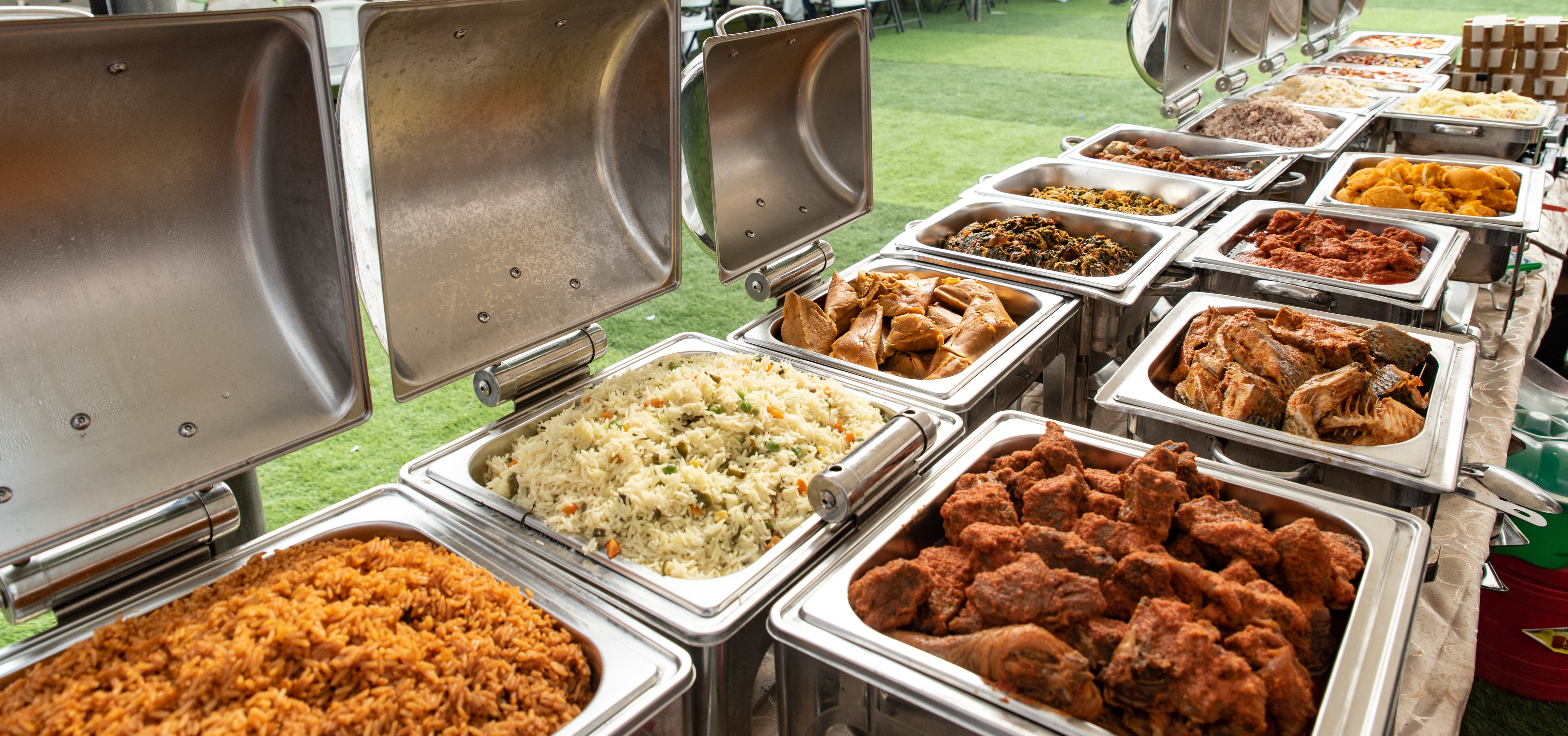
Nigerian wedding food deserves its own article (and we wrote one), but here's the short version: you will eat well. Expect jollof rice, fried rice, assorted meats (chicken, beef, goat), small chops (appetizer platters with puff-puff, spring rolls, samosa, and peppered gizzard), and often a pounded yam or amala station. At Yoruba weddings, an "amala on the spot" station is a crowd favorite where the dish is prepared and assembled right in front of you.
If you're not Nigerian and some of the food is unfamiliar, try everything. Start with the jollof rice and fried rice, which are the most universally approachable. The small chops are essentially appetizers and are universally delicious. If you're adventurous, go for the pepper soup or goat meat. The food is well-seasoned and flavorful; "too spicy" is the only thing to watch for if you have a low heat tolerance.
Don't be shy about eating. At Nigerian celebrations, generous food is a point of pride for the hosting family.
Timing: Be Prepared
Nigerian weddings, particularly traditional ceremonies in the US, are known for starting late. This is a cultural norm, not disorganization. If the invitation says 1 PM, the ceremony may begin at 1:30 or 2. Experienced guests arrive fashionably late, but if it's your first time, arrive at the stated time so you can get oriented and find your seat.
The ceremony itself usually runs 1.5 to 2 hours. The reception (or the party that follows) can go until midnight or later. Pace yourself.
Gift Etiquette
Monetary gifts are the standard at Nigerian weddings. If you're participating in the money spraying, that counts as a gift. If you want to give something additional, cash in a card is always appropriate. Some couples have registries or cash fund links on their wedding website.
Physical gifts (kitchen appliances, home goods) are also accepted, but cash is overwhelmingly preferred at Nigerian celebrations. If you're close to the couple, $100 to $200 in a card is a solid gesture. If you're attending as a plus-one or casual acquaintance, $50 to $100 is fine. There's no strict rule, and nobody will judge you on the amount.
How to Be a Great Guest
Dance. You don't need to know the moves. The DJ will play a mix of Afrobeats, highlife, juju, and whatever's hot on the Nigerian music scene. Move your body. Nobody expects you to be coordinated. They expect you to try.
Greet the parents. Introduce yourself to the bride's and groom's parents if you can. A warm "congratulations, your daughter/son looked beautiful" goes a long way. In Yoruba culture, it's respectful for younger people to greet elders with a slight bow or, for women, a small curtsy.
Don't leave early. Leaving before the money spraying or before the couple's major dances is considered rude. Plan to stay for at least the key moments: the ceremony, the first couple's dance, and the spraying.
Take photos (but read the room). Photos and videos are generally encouraged, especially during the ceremony and spraying. But follow the lead of other guests and the photographer. If a professional photographer is directing a moment, stay out of their shot.
Relax and enjoy it. Nigerian weddings are designed to be fun. The energy is infectious. If you're not sure what's happening, look around at what other guests are doing and follow along. Ask the person sitting next to you. People are happy to explain.
It's Not Just a Wedding
The thing that catches most first-timers off guard is how communal the whole experience feels. This isn't a ceremony where you sit quietly in a pew and watch two people exchange vows. It's a celebration where the entire room is a participant, where families merge publicly and joyfully, and where generosity and community are performed, not just spoken about.
You've been invited because someone wants you to be part of that. Show up, dress well, eat everything, dance badly, spray some dollars, and enjoy one of the best parties you'll ever attend.
For help finding Nigerian wedding planners, caterers, aso ebi vendors, and other cultural event specialists, visit EventAtlas or reach out at hello@tryeventatlas.com.
Related Posts
More reading on themes you might be exploring.

How to Plan a Nigerian Naming Ceremony in the US
A Nigerian child doesn't fully arrive until they've been named before the community, blessed by elders, and tasted honey, salt, and kola nut for the first time. Here's how to plan a naming ceremony in the US: the seven symbolic items and what each prayer means, the naming order, the food spread, and how diaspora families adapt the eighth-day tradition to American work schedules.
The Aso Ebi Tradition: How to Coordinate Fabric for Your Nigerian Wedding Guests
Coordinating matching fabric for dozens of guests scattered across Houston, Atlanta, the DMV, and Lagos is a logistics project that generates more WhatsApp messages than every other wedding decision combined. Here's how to choose the fabric, set pricing, handle distribution, and deal with the sensitive parts like guests who can't afford it.
How to Order Aso Oke for a Nigerian Wedding from the US
You're in the US, the best aso oke weavers are in Iseyin and Lagos, and your wedding is in five months. Here's exactly how to get hand-woven fabric to your doorstep on time, from choosing between sanyan, alaari, and etu to budgeting for a full couple's set at $400 to $2,500.
Planning a Cultural Celebration?
Find vendors who understand your traditions and can make your event truly special.
Find Vendors