
The Indian Wedding Planning Timeline Every US Couple Actually Needs
You're not planning one event, you're planning three to five, each with its own venue, catering, decor, and outfits. This month-by-month timeline covers everything US-based Indian couples actually need to coordinate, from muhurat dates and baraat permits to lehenga lead times and mandap fire codes.
The Indian Wedding Planning Timeline Every US Couple Actually Needs
Your parents have already told half the family. Your phone is blowing up with congratulations. And somewhere between the third "when's the date?" text and your mom forwarding you venue links at midnight, a quiet panic sets in: you're planning not one event, but three to five, across multiple days, with traditions you love but have never personally organized, in a country where most venues have never hosted a baraat.
Generic wedding planning checklists won't cut it here. They don't account for booking a pandit six months out, the lead time on a custom lehenga from India, or the fact that your venue needs to allow open flames for the pheras and have outdoor space (plus permits) for a horse. This timeline is built specifically for Indian couples in the US, whether you're planning a Hindu, Sikh, Muslim, or fusion celebration.
We're working with a 12-month engagement. If you have less time, compress months 12 through 8 into your first few weeks and prioritize the bolded items. If you have more time, lucky you.
Months 12 to 10: The Foundation
This is the most important phase. Every decision you make here determines what the rest of the process looks like.
Decide how many events you're hosting. This is the single biggest variable in Indian wedding planning. A three-event wedding (ceremony, reception, one pre-wedding event) is a fundamentally different project than a five-event wedding (mehndi, haldi, sangeet, ceremony, reception). Each event needs its own venue slot, catering, decor, outfits, and entertainment. Be honest with yourself and your families about scope before you spend a dollar.
Set your budget and have the money conversation. A full Indian wedding in the US for 200 to 300 guests typically runs $100,000 to $250,000. A smaller, more focused celebration can land between $30,000 and $80,000. Those numbers feel enormous because you're paying for multiple events, each with its own catering, decor, and entertainment. The biggest line items are usually venue (30 to 40% of total budget), catering (20 to 30%), and decor including the mandap (10 to 20%). Sit down with whoever is contributing financially, whether that's both sets of parents, just the couple, or some combination, and agree on a number before you book anything.
Build the guest list. This is where Indian weddings get complicated fast. Your parents' list alone might hit 200. Start with three tiers: must-invite (immediate family, closest friends), should-invite (extended family, family friends), and nice-to-invite (colleagues, distant relatives). Get both families' lists early so you can size your venue and catering accurately. A 150-person wedding and a 400-person wedding are completely different animals in terms of venue options and budget.
Check auspicious dates. If your family follows Hindu or Sikh traditions, consult a pandit or granthi for muhurat (auspicious dates). Do this before venue shopping, because your date options may be narrow. Wedding season for many Hindu families falls between October and February, and popular muhurat dates book up fast.
Start venue shopping. Here's where the US-specific challenges hit. You need a venue that can handle all of the following: large guest counts (most Indian weddings run 200+), outdoor space or parking lot access for a baraat procession, open flame allowance for the havan (sacred fire) during pheras, kitchen facilities or space for an external caterer to set up (hotel kitchens often can't accommodate Indian menu prep), late-night noise allowance (receptions can run past midnight), and ideally multiple spaces so you can host the ceremony and reception in one location without a long turnaround.
Hotels with large ballrooms are the default choice for a reason. Chains like Hilton, Marriott, Hyatt, and JW Marriott in cities with large South Asian populations (Houston, Dallas, New Jersey, the Bay Area, Chicago, Atlanta) often have experience hosting Indian weddings and understand the requirements. Dedicated South Asian wedding venues and banquet halls are another strong option, especially in New Jersey and Texas.
Ask every venue these specific questions: Do you allow open flames? Do you allow outside catering, or must we use your in-house kitchen? Is there space for a baraat horse or vehicle procession? What are your noise curfew hours? Can we have multiple events across multiple days at a reduced rate?
Months 10 to 8: Lock In Your Core Vendors
Once your venue is secured, you can start booking vendors. Indian wedding vendors in popular markets book 8 to 12 months out, so don't delay.
Wedding planner. For an Indian wedding, this isn't a luxury; it's close to a necessity. You need someone who understands the flow of multi-day Indian celebrations, has relationships with South Asian vendors, and knows things like how much time to allow between the baraat and the ceremony (usually 30 to 45 minutes, but it depends on the milni). A planner experienced with Indian weddings typically costs $5,000 to $25,000+ depending on scope, and good ones will save you that much by negotiating vendor rates and preventing costly mistakes.
Look for planners who specifically list South Asian or Indian wedding experience. CG & Co Events (@cgandcoevents), based in the DC area, has over 13 years of experience planning South Asian weddings. Tum Hi Ho Events, based in New Jersey, is another well-regarded option. In Chicago, JDEventz specializes in South Asian celebrations from the budgeting to the baraat.
Caterer. Indian wedding catering is a specialized skill. You need a caterer who can handle large-volume Indian cooking with authentic flavors, manage multiple food stations (chaat station, main course buffet, dessert spread, possibly a live dosa or paan station), and coordinate across multiple events with different menus. Per-plate costs for Indian wedding catering in the US typically run $40 to $125 per person depending on the menu complexity and service style. For 300 guests, that's $12,000 to $37,500 per event just for food.
If your venue requires in-house catering, confirm that their kitchen can execute Indian food properly. Many hotel kitchens outsource to an Indian caterer or bring in a specialized chef for the wedding weekend. If they can't accommodate this, you may need a different venue.
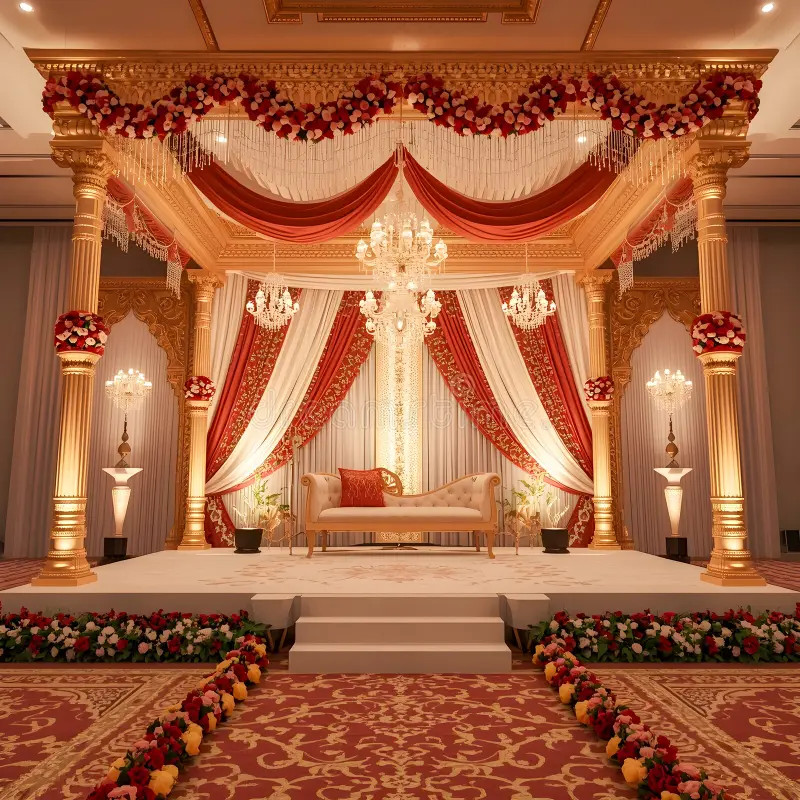
Decorator and mandap designer. The mandap is the sacred canopy under which the wedding ceremony takes place, and it's the visual centerpiece of the entire event. Mandap design ranges from traditional (four pillars with red and gold fabric, marigold garlands) to modern (all-white floral installations, acrylic structures, hanging greenery). Decor budgets for Indian weddings span a wide range: $10,000 to $20,000 for simpler setups, $30,000 to $50,000 for mid-tier, and $50,000 to $100,000+ for luxury floral-heavy designs across multiple events. Mandap Creations (@mandapcreations) is well-known in the Texas market. Your decorator should also handle sangeet staging, mehndi decor, and reception design.
Photographer and videographer. Book these early; the best South Asian wedding photographers are booked a year or more in advance. Indian weddings are long (8 to 14 hours on the main day alone), visually rich, and involve multiple outfit changes, so you need someone who knows the rituals, can anticipate key moments (the jaimala garland exchange, the pheras, the vidaai), and has the stamina for a full day. Budget $5,000 to $15,000+ for photography and similar for cinematography.
DJ and entertainment. Your DJ needs to handle everything from the dhol beats during the baraat to Bollywood bangers at the sangeet to a mix of Hindi, Punjabi, and English music at the reception. Many Indian wedding DJs bring their own dhol players. Book your DJ early, especially if you want someone experienced with South Asian weddings.
🇮🇳Indian Event Planning on EventAtlas


Join the growing Indian event-planning community on EventAtlas. with a vendor.
Months 8 to 6: Attire, Invitations, and Pre-Wedding Planning
Bridal and groom's outfits. This is where lead times can surprise you. If you're ordering a custom lehenga from a designer in India (Sabyasachi, Manish Malhotra, Anita Dongre, or others), you're looking at 3 to 6 months for production and delivery. If you're shopping at US-based South Asian boutiques (Edison, NJ; Jackson Heights, NY; Houston; Bay Area), you'll have more options off the rack, but custom pieces still take time. You need multiple outfits: ceremony, reception, sangeet, and possibly mehndi and haldi. The groom needs a sherwani for the ceremony and suits or kurta sets for other events.
Budget varies wildly: a lehenga can cost anywhere from $500 at a mid-range boutique to $5,000+ for a designer piece, and $15,000 or more for top Indian designers. Sherwanis typically run $300 to $2,000.
Invitations. Indian wedding invitations are their own art form. Many families opt for elaborate boxed invitations with multiple inserts (one for each event), though digital invitations and wedding websites are increasingly common, especially for younger couples. Order physical invitations 5 to 6 months before the wedding so you have time for printing, addressing, and mailing. Send them out 2 to 3 months before the wedding.
Plan pre-wedding events. Start mapping out your mehndi, haldi, and sangeet. These events feel more casual but still require real planning:
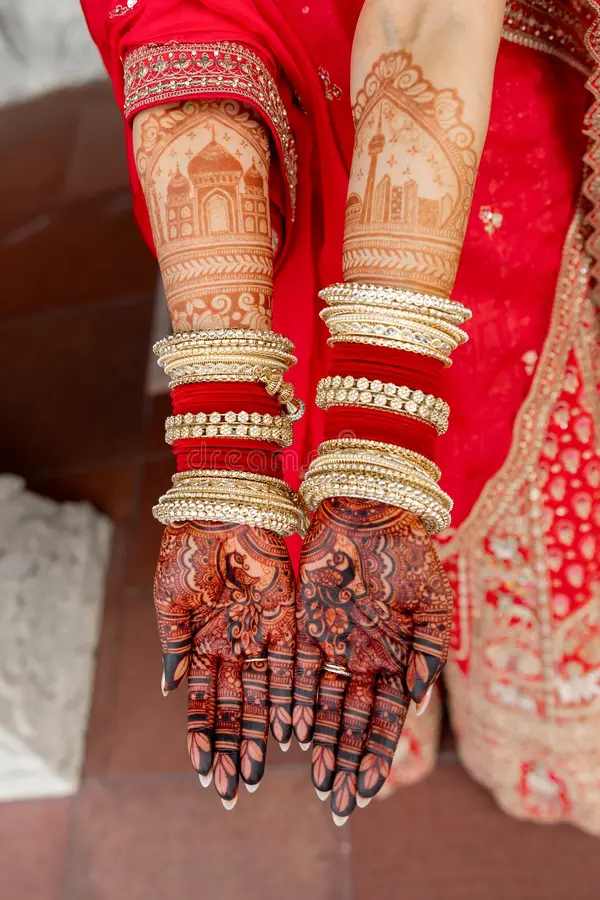
The mehndi (or mehendi) is the henna application ceremony, typically held 1 to 2 days before the wedding. You'll need a mehndi artist (book one who specializes in bridal mehndi, as bridal henna is far more detailed and time-intensive than guest henna), a venue or home setup, and light catering.
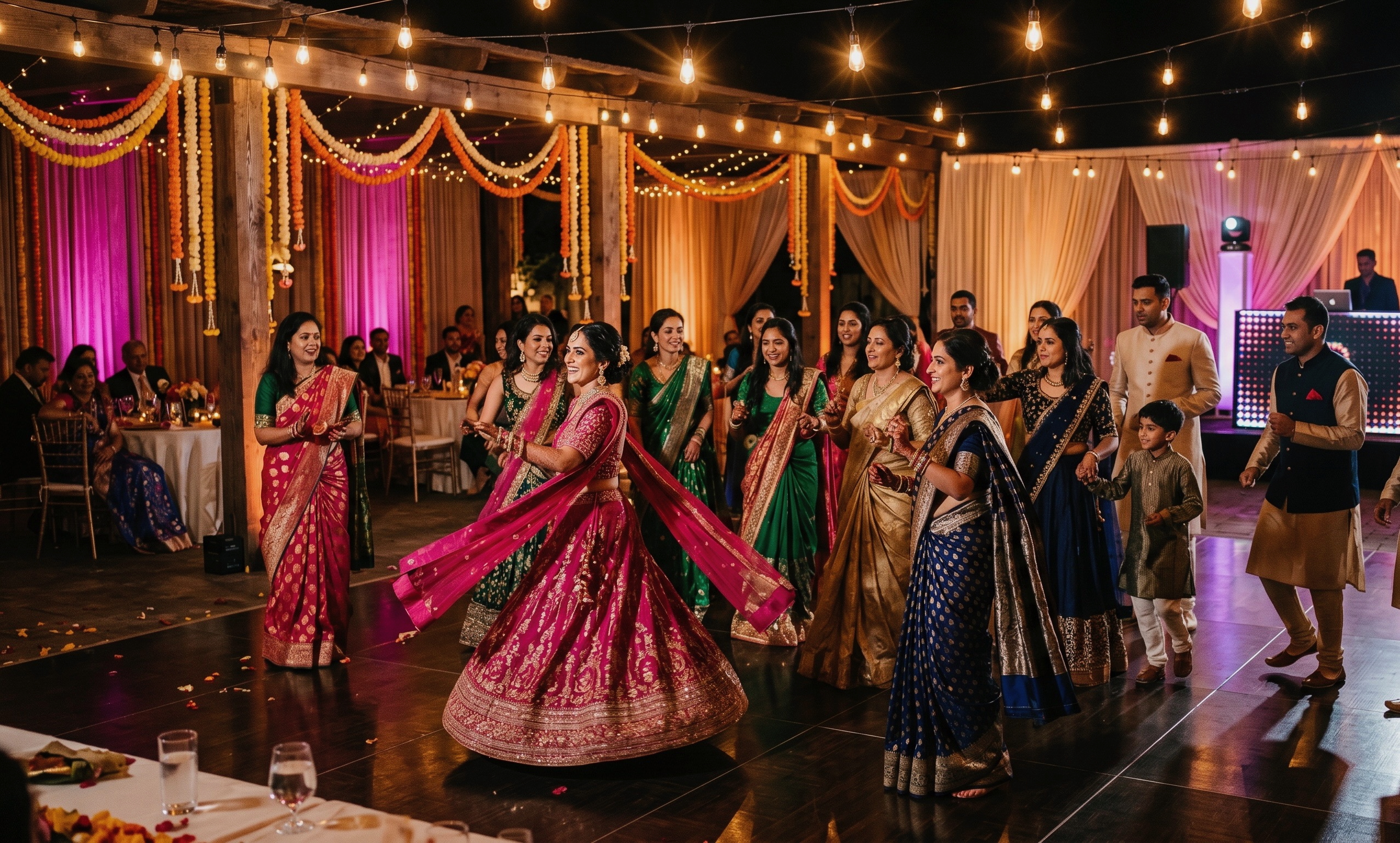
The sangeet is the music and dance night, often the most fun event of the wedding week. If your family is doing choreographed performances (and they probably are), dancers need to start rehearsing now. You'll need a venue with a dance floor, sound system, lighting, and a stage.
The haldi (or pithi) ceremony involves applying turmeric paste to the bride and groom for purification and good luck. It's usually intimate, held at home or a smaller venue, with bright yellow decor and a relaxed vibe.
We’re growing the Indian photography community on EventAtlas.
Months 6 to 4: Details and Coordination
Book your priest or officiant. Whether you need a Hindu pandit, Sikh granthi, Muslim imam, or officiant for a fusion ceremony, book them now. Confirm the ritual format, duration (Hindu ceremonies can run 1 to 3 hours depending on how many rituals you include), and any requirements they have for the setup (fire pit placement, seating arrangement, sound system for mantras).
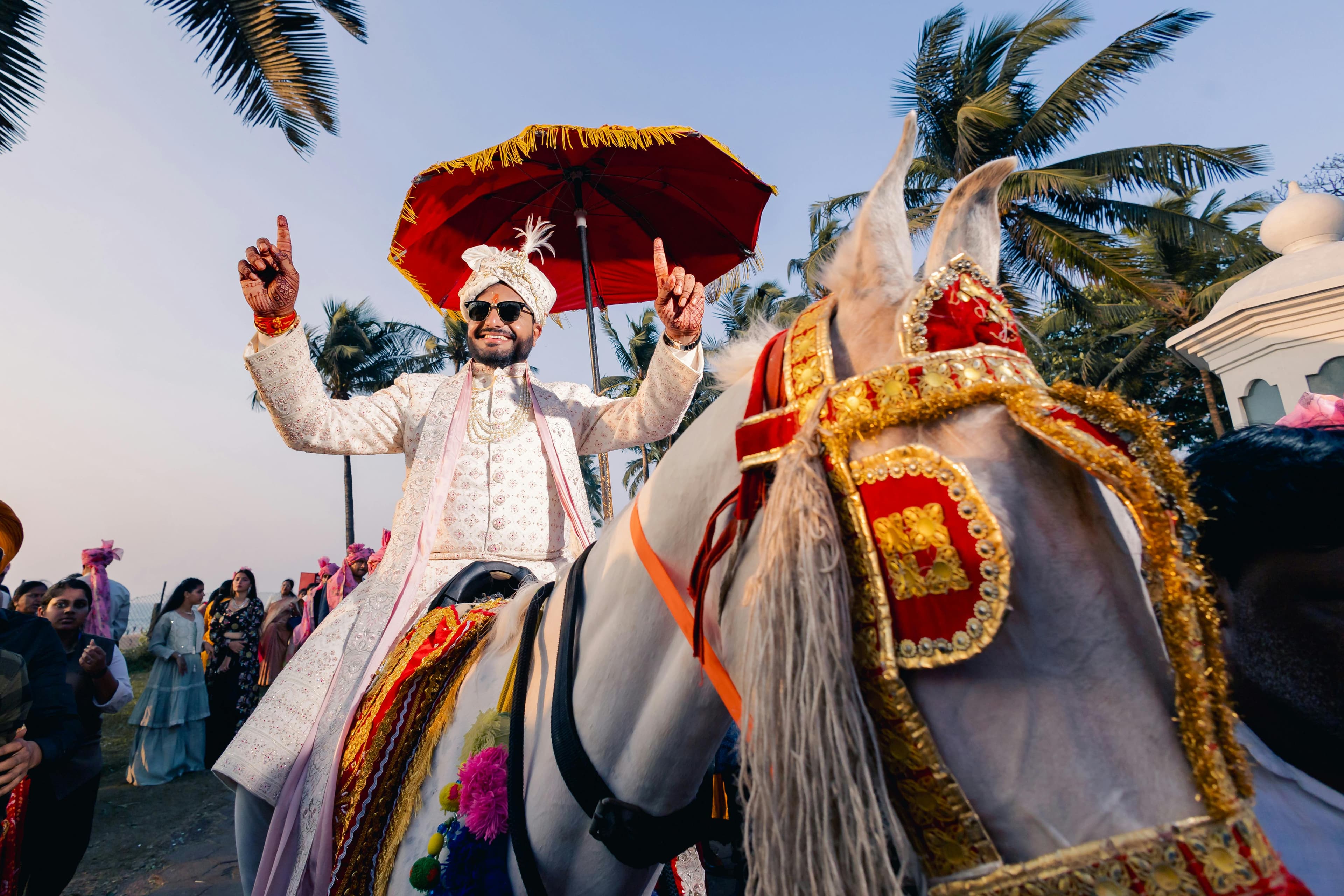
Arrange the baraat logistics. If the groom is arriving on a horse, book the baraat horse company now. Costs typically run $800 to $1,500 in most US markets. Confirm with your venue that they allow horses on the property and check whether you need a local permit for the procession. Many venues in suburban areas require advance coordination with local authorities for a baraat, especially if it involves street access. If a horse isn't practical, vintage cars and luxury vehicles are popular modern alternatives.
Finalize your mehndi artist. Bridal mehndi takes 4 to 6 hours for a full design (both hands and feet), so your artist's schedule matters. Many couples hire one artist for the bride and additional artists for guests who want henna.
Hair and makeup trials. Indian bridal makeup is its own specialty. You need an artist experienced with South Asian skin tones, heavy jewelry, and the specific look required for each event (traditional for the ceremony, glam for the reception). Book trials now so you have time to adjust.
Wedding website and registry. Build a wedding website with details for each event: dates, times, dress codes, parking information, hotel blocks, and cultural context for non-Indian guests. A brief note explaining the significance of the baraat or what happens during the pheras goes a long way for friends who haven't attended an Indian wedding before. Registries are becoming more common at Indian weddings in the US, though cash gifts in envelopes (shagun) remain traditional.
Months 4 to 2: Final Pushes
Confirm all vendors in writing. Go through every contract. Confirm dates, times, arrival schedules, payment timelines, and cancellation terms. Create a master timeline document that maps out every vendor's arrival time for every event.
Finalize menus for all events. Work with your caterer on menus for each function. The sangeet might be more casual (chaat, small plates, cocktails), while the wedding day meal is the main event. Don't forget special dietary needs, and consider having a few non-Indian options available if you have a mixed guest list.
Outfit fittings and alterations. If anything was ordered from India, it should be in hand by now with time for alterations. Don't wait until the last week.
Rehearse sangeet performances. If your family has been "planning to rehearse" for months, this is when it actually needs to happen. Book rehearsal space if needed.
Coordinate family logistics. If family is traveling from India or other countries, make sure visa applications were submitted on time (US tourist visa processing for Indian nationals can take weeks to months), hotel blocks are reserved, and airport pickups are arranged.
Month 1: The Home Stretch
Final headcount to all vendors. Caterers need final numbers. Venues need final room setups. Decorators need final floor plans.
Assign day-of responsibilities. Even with a wedding planner, you'll want family members assigned to specific tasks: someone to manage the baraat timing, someone to coordinate guest transportation between events, someone to handle the gift table.
Prepare ceremony items. Gather everything needed for the religious ceremony: coconut, rice, flowers, garlands for the jaimala, items for the havan kund (fire pit). Your pandit will provide a list; don't leave this to the last day.
Bridal skin and wellness prep. If you're doing any pre-wedding skincare routines, facials, or other wellness prep, this is the window. Don't try anything new on your skin closer than two weeks before the wedding.
Pack for the wedding weekend. You'll have multiple outfits, jewelry sets, shoes, and accessories across multiple days. Create a labeled system so nothing gets lost in the chaos of a multi-day celebration.
The Budget Reality Check
Here's a rough allocation framework for a 300-guest Indian wedding in the US:
Venue and rentals: 30 to 35% of your total budget. Catering and beverages: 20 to 25%. Decor, mandap, and florals: 10 to 15%. Photography and videography: 8 to 10%. Attire and jewelry: 5 to 10%. Entertainment (DJ, dhol, performers): 3 to 5%. Wedding planner: 5 to 8%. Invitations, favors, and miscellaneous: 5 to 10%.
These percentages shift depending on your priorities. Some couples spend more on decor and less on entertainment. Others put the money into a world-class photographer and keep the decor simple. The point is to set your percentages before you start spending, not after.
What Generic Guides Get Wrong
Most wedding planning advice assumes you're hosting one event on one day in one venue. Indian weddings break every one of those assumptions. The biggest planning mistakes US-based Indian couples make aren't about forgetting to order flowers. They're structural: underestimating how long the ceremony takes (and losing evening reception time), not confirming open-flame policies until the mandap is designed, forgetting that the baraat needs 30+ minutes of buffer before the ceremony starts, or assuming their parents' guest list will "stay around 100" when it inevitably triples.
Plan for the wedding you're actually having, not the one that fits neatly into a Pinterest template. If you need help finding vendors who specialize in Indian weddings, EventAtlas lets you filter by culture and category to find caterers, decorators, planners, and mehndi artists who know the traditions.
The best Indian weddings feel like a celebration that could only belong to your family. That takes planning, patience, and a very detailed spreadsheet. Start early, communicate with both families, and give yourself permission to enjoy the process. Your shaadi is going to be beautiful.
For more help with vendor sourcing and cultural event planning, explore EventAtlas or reach out to us at hello@tryeventatlas.com.
Related Posts
More reading on themes you might be exploring.

How to Plan a Sangeet Night That Your Guests Actually Enjoy
Fifteen choreographed performances, a stage that needs pro lighting, a sound system that can handle Bollywood and your uncle's acoustic number, and a dinner that feeds 200 without interrupting the show. Here's how to plan a sangeet that's a night, not just a three-hour talent show with awkward gaps between acts.
Planning a Pakistani Wedding in the US: What to Know and How It Differs from an Indian Wedding
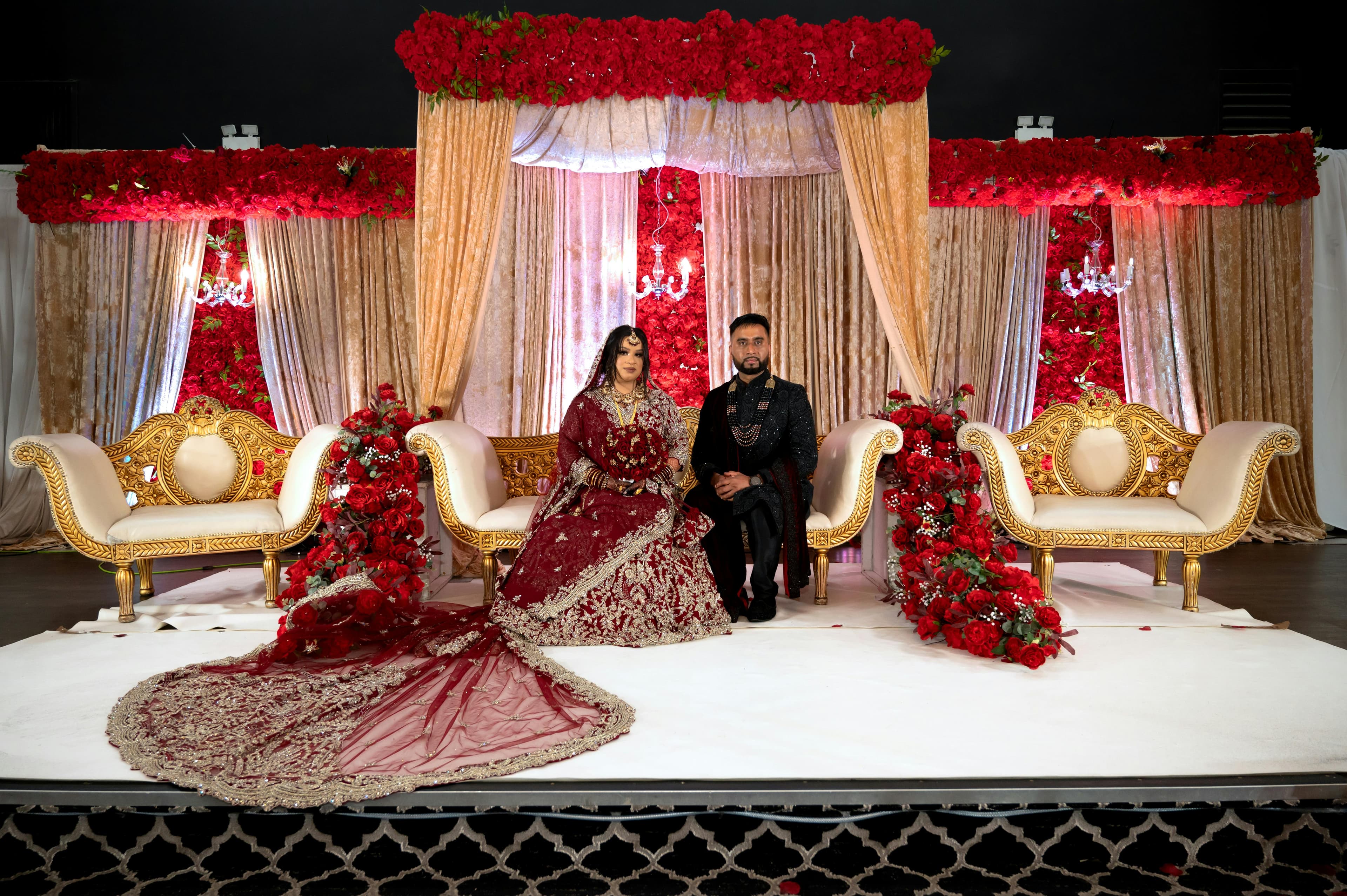
So is it basically the same as an Indian wedding?" No, not really. Here's the full structure of a Pakistani wedding in the US: from the dholki's geet circles to the nikah contract, the baraat procession, the emotional rukhsati, and the walima. Plus how to budget for 300+ guests across multiple events and where to find vendors who actually know the difference.
What to Wear to an Indian Wedding as a Non-Indian Guest
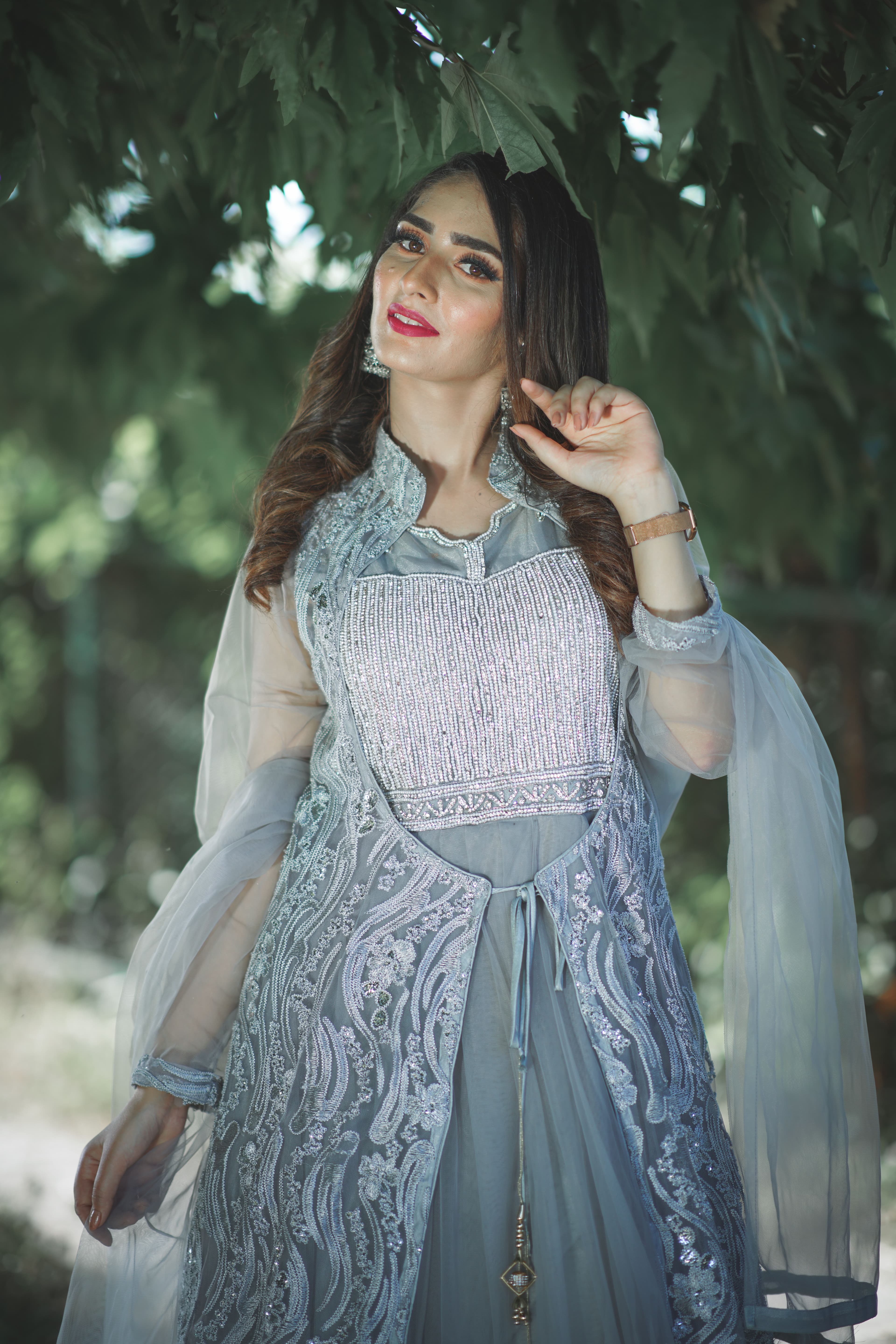
You own exactly zero Indian outfits and your entire frame of reference is Instagram. Here's what you actually need to know: the three colors to avoid (red, white, black), what to wear to each event from the mehndi to the reception, why wearing Indian clothing is welcomed and not appropriation, and where to find a stunning anarkali for under $150 in the US.
Planning a Cultural Celebration?
Find vendors who understand your traditions and can make your event truly special.
Find Vendors