
Planning a Ghanaian Traditional Wedding (Knocking Ceremony) in the US
The ceremony was designed for a family compound in Kumasi, but you're making it work in a split-level in Silver Spring. Here's the full process of a Ghanaian traditional wedding in the US: the kokooko knocking ceremony, the bride price list and what it actually costs, kente cloth sourcing, and how diaspora families adapt every stage.
Your boyfriend told his parents he's found the woman he wants to marry. His uncle is already asking about the "knocking" date. Your mom wants to know what's on the bride price list. And you're in a two-bedroom apartment in Silver Spring, Maryland, trying to figure out how to host a ceremony that was designed for a family compound in Kumasi.
Welcome to planning a Ghanaian traditional wedding in the US. It's a celebration with layers: the knocking ceremony (kokooko), the engagement/traditional marriage, and potentially a white wedding after that. Each stage has its own protocols, its own wardrobe, and its own emotional weight. The traditions are centuries old, deeply intentional, and absolutely adaptable to your living room, your uncle's backyard, or a rented banquet hall in suburban Maryland.
This guide covers the full process, from the first knock to the final dance, with specific attention to how US-based Ghanaian families make it all work.
Understanding the Structure: Three Acts, Not One
A Ghanaian wedding isn't one event. It's a sequence with distinct stages:
The Knocking Ceremony (Kokooko) is the first official step. The groom's family "knocks on the door" of the bride's family to formally announce his intention to marry their daughter. Think of it as the engagement before the engagement. It's intimate, usually 20 to 40 people, and sets the tone for everything that follows.
The Traditional Marriage (Engagement) is the main cultural ceremony where the bride price is negotiated and paid, vows are exchanged in front of family, and the couple is considered married in the eyes of Ghanaian custom. This is typically the larger event, with 100 to 300+ guests, kente cloth, drumming, dancing, and a full reception with food and music.
The White Wedding is the Christian church ceremony and reception that many Ghanaian couples add as a spiritual completion of the union. Not every couple does this, but for the majority of Ghanaians, who are Christian, the white wedding is the third act.
In Ghana, there's traditionally a gap of several weeks between the knocking ceremony and the traditional marriage, giving both families time to get acquainted and plan. In the US, many diaspora families compress the timeline, sometimes holding the knocking and the traditional marriage on the same weekend, or even the same day as separate morning and afternoon events. This is acceptable in many families, but check with your elders first; some families still insist on a gap between the two.
The Knocking Ceremony: What Actually Happens
The kokooko is beautiful in its simplicity. It's a formal conversation between two families, moderated by tradition and respect.
The groom does not speak for himself. He arrives with a small delegation, typically led by a spokesperson (Okyeame), his father, an uncle, or a respected elder in the family. The delegation also includes a few close family members. This is not the time for a large entourage; the knocking is intimate by design.
The groom's family brings specific items to present. The exact list varies by ethnic group (Akan, Ewe, Ga, and Northern traditions each have their own requirements), but the standard items for an Akan knocking include:
Two bottles of Schnapps (this is the traditional drink used to formally "knock on the door"; in Ghanaian custom, Schnapps is the drink that opens conversations with elders). An envelope with a cash amount (sometimes called the "knocking fee," typically a modest sum like $50 to $200, not the full bride price). Kola nuts. Soft drinks or additional beverages.
Upon arrival, the spokesperson announces the purpose of the visit. The bride's family asks: "What brings you to our door?" The spokesperson responds that a young man has seen "a beautiful flower in your garden" and wishes to know if it can be plucked.
The bride is then called out. She's asked three times if she knows these visitors and if she consents to the process moving forward. The three-time asking is a deliberate tradition meant to demonstrate that the bride is not being forced into the marriage. Only after she confirms three times does the ceremony proceed.
If the bride's family accepts the gifts, it signals that the knocking has been successful and the families can now plan the traditional marriage. The date for the engagement is typically discussed before the groom's family departs.
The dress code for the knocking is "smart traditional." Most couples wear matching kente outfits, though it's less elaborate than the main engagement day. Think of it as Sunday-best traditional wear, not full ceremonial regalia.
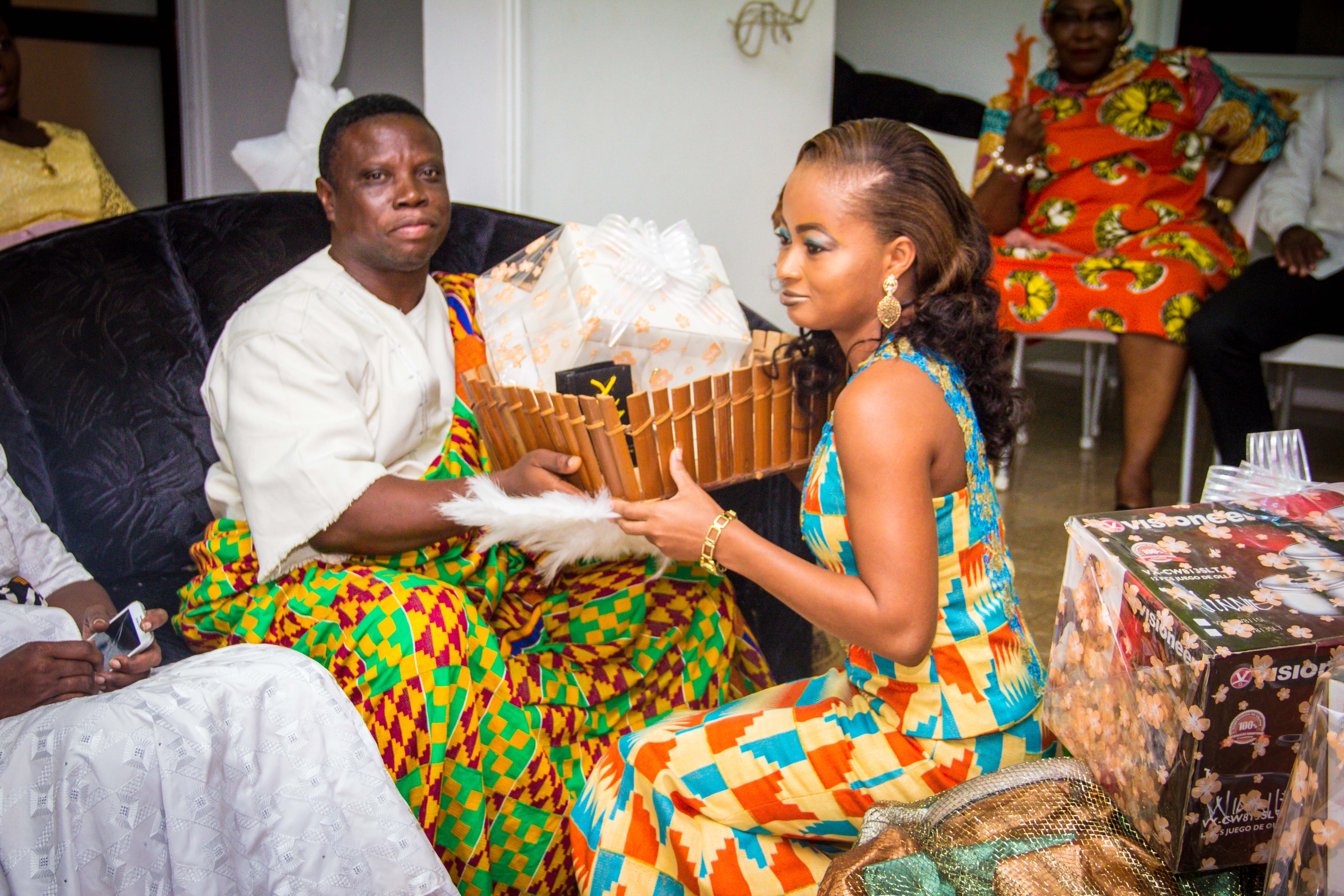
Photo: "Ghanaian Engagement Ceremony 13.jpg" by Quami43, via Wikimedia Commons, licensed under CC BY-SA 4.0.
The Traditional Marriage: The Main Event
This is where it gets grand. The traditional marriage ceremony combines the formal bride price exchange with a celebration that includes drumming, Adowa dancing (for Akan families), kente cloth in full display, and a reception with more food and music than you thought possible.
The Bride Price List
Weeks before the ceremony, the bride's family provides the groom's family with a list of items that must be presented on the day. This list varies significantly by family and ethnic group, but a typical Akan engagement list includes:
Multiple bottles of Schnapps and assorted drinks (soft drinks, wine, beer). An envelope with a cash bride price (the amount is negotiated between families; in the US, this is often a symbolic but meaningful sum, ranging from $500 to $5,000 depending on the family). Fabric and clothing for the bride's parents and key family members (kente cloth for the mother, fabric for the father, etc.). A Bible or religious text. Jewelry for the bride. Toiletries and personal care items for the bride (a symbolic gesture of the groom's intention to care for her). Money for the bride's brothers (called Akonta Sekan, for "protecting their sister"). Food items in some traditions.
The total cost of the engagement list in the US typically runs $3,000 to $10,000+ depending on the family's expectations and the groom's capacity. It's important to have open, respectful conversations about the list early. Some families present modest lists; others present extensive ones. Negotiation is expected and normal. It's part of the process, not a sign of conflict.
The Ceremony Flow
The traditional marriage ceremony is typically emceed by a designated elder or professional MC who understands the cultural protocols. The ceremony follows a call-and-response pattern between the two families, with formal speeches, prayers, and the presentation of the bride price items.
Key moments include the bride's entrance (often in her most stunning kente outfit, sometimes carried in on a palanquin or walking under an umbrella held by attendants), the formal inspection and acceptance of the bride price items by the bride's family, the exchange of rings, and prayers or blessings from both families.
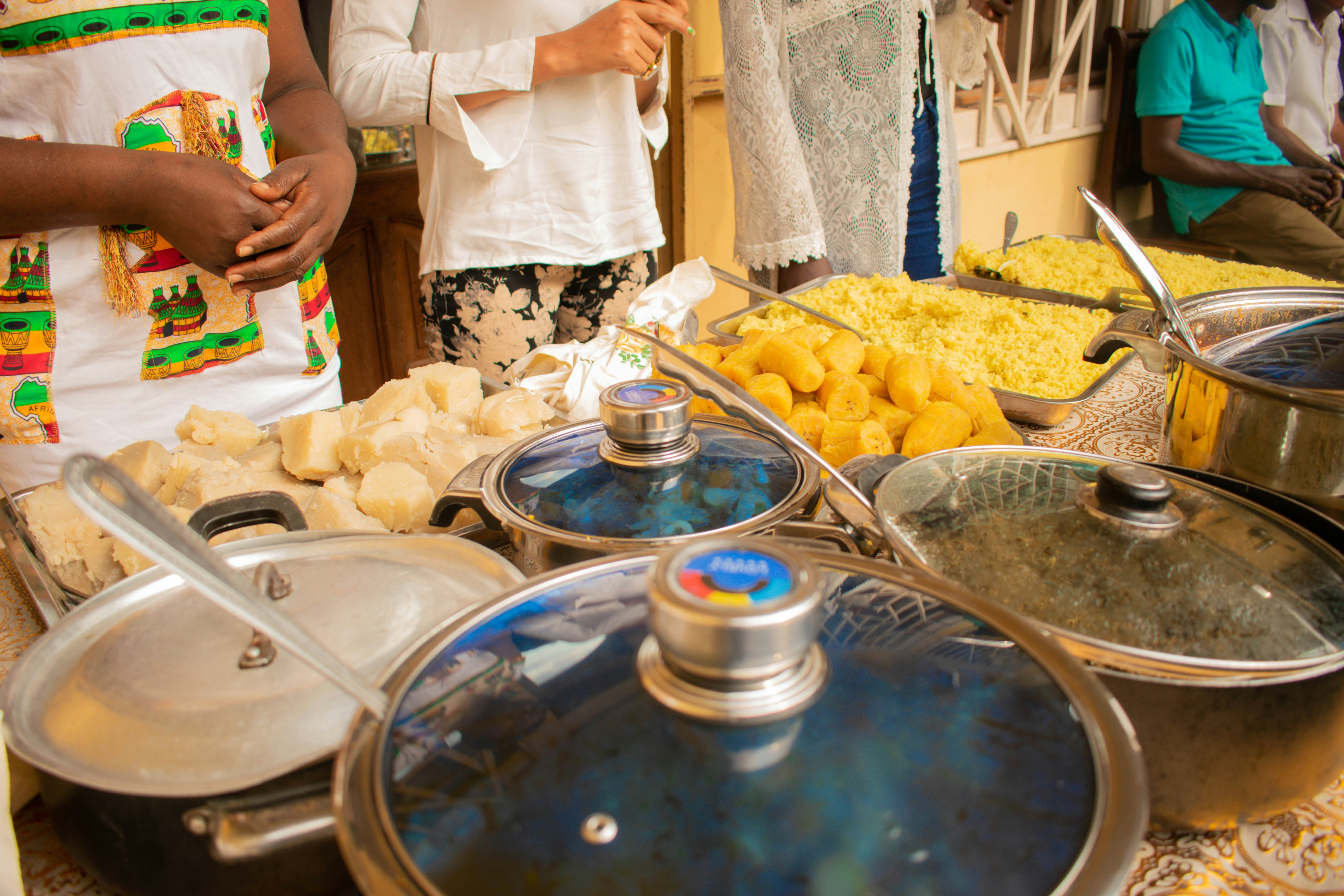
After the formal ceremony, the reception begins. Traditional Ghanaian food is served: jollof rice, waakye (rice and beans), banku with okro stew, kelewele (fried plantains), and an assortment of other dishes depending on regional preferences. Ghanaian wedding receptions feature drumming, Adowa or other traditional dances (depending on the ethnic group), and plenty of highlife and Afrobeats music. The money spraying tradition is also common; as the couple dances, guests approach and toss or place money on them as a blessing.
Kente: What to Know
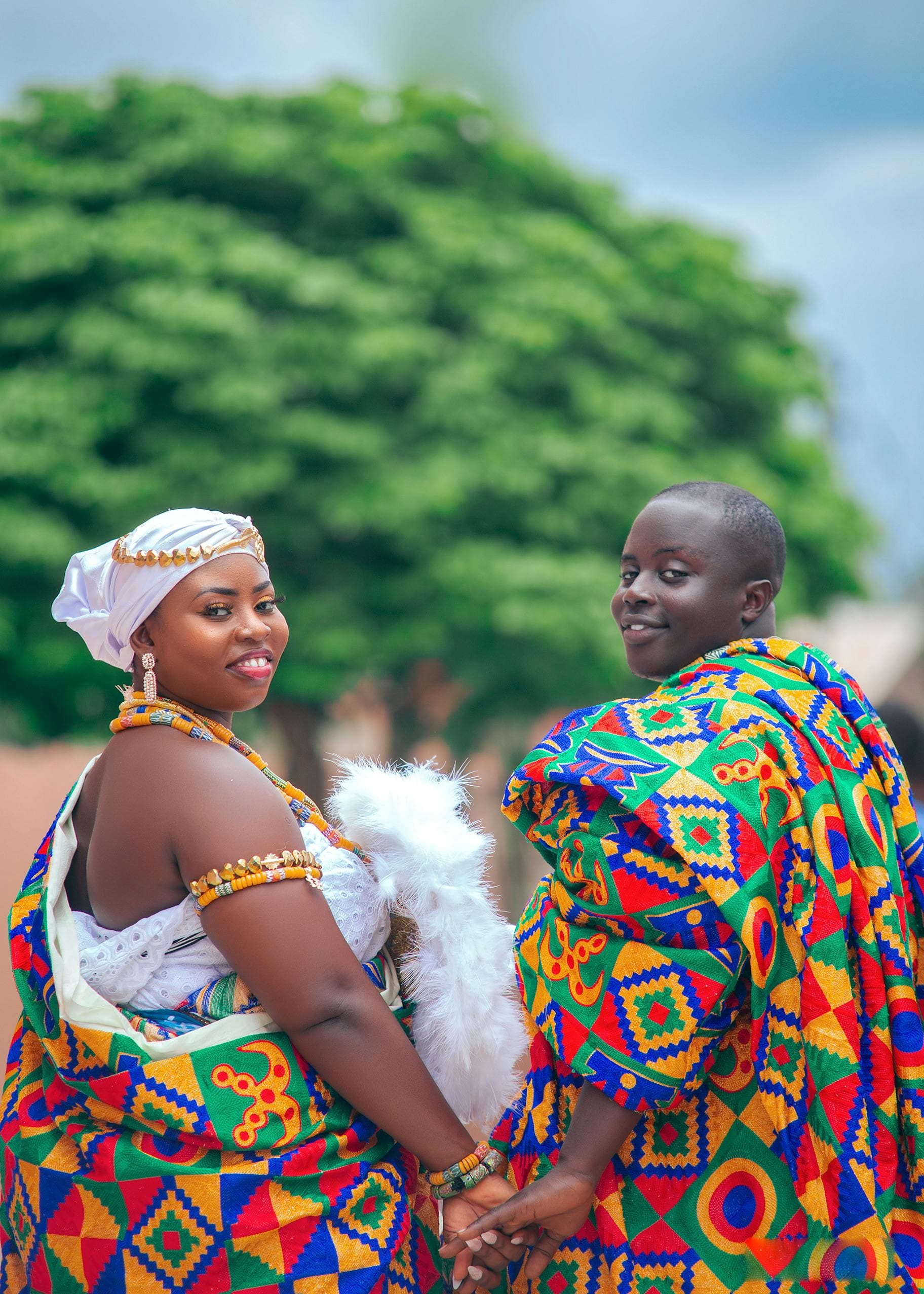
Kente cloth is the visual centerpiece of a Ghanaian wedding. Originating from the Ashanti people, kente is hand-woven in narrow strips and stitched together into larger pieces. Each pattern has a name and meaning: "Eban" symbolizes security, "Sika Futuro" represents gold dust and prosperity, and "Adwinasa" (meaning "all motifs are used up") is one of the most prestigious and complex patterns.
For the bride, a kente bridal gown from a Ghanaian designer runs $800 to $5,000+ depending on the designer, embellishments (beadwork, crystals), and complexity. MG Kente (mgkente.com), based in Wilmington, Delaware, is one of the largest US-based kente retailers, offering kente cloth, traditional clothing, and wedding dresses. They source directly from Ghana and ship within the US.
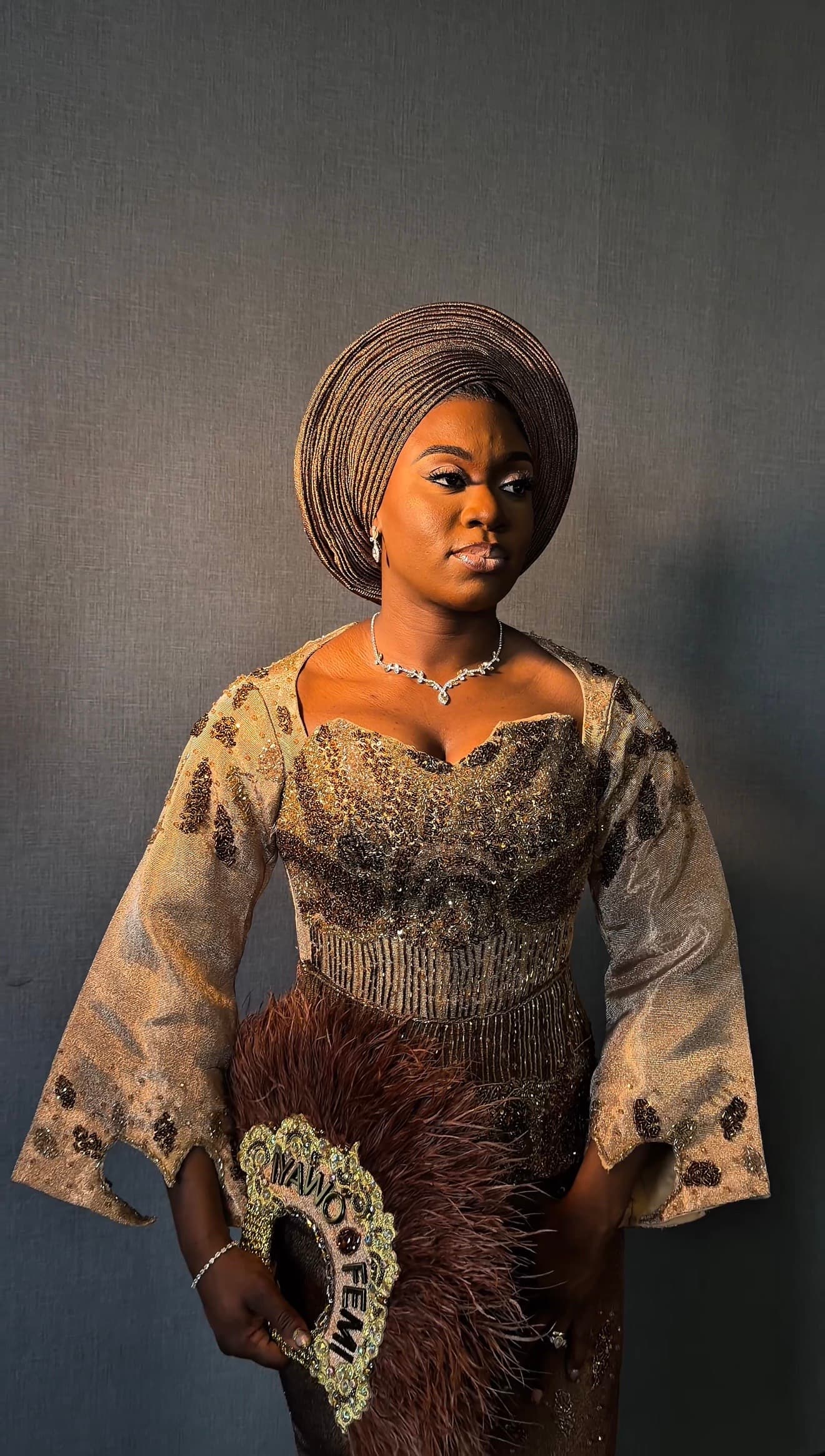
For the groom, a traditional kente cloth draped over one shoulder with matching trousers and a shirt is the standard look. Some grooms opt for a full agbada-style outfit in kente. Groomsmen and family members also wear kente, often in coordinating but distinct patterns.
If you're ordering kente from Ghana, start 3 to 6 months before the wedding. Authentic hand-woven kente takes time to produce, and shipping from Ghana adds 2 to 4 weeks. Machine-printed kente is significantly cheaper and faster but lacks the texture, weight, and cultural prestige of hand-woven fabric.
🇬🇭Ghanaian Vendors on EventAtlas


Join the growing Ghanaian vendor community on EventAtlas. with a vendor.
Adapting the Ceremony for the US
The biggest logistical challenge for diaspora families is space. In Ghana, the knocking and traditional marriage often happen at the family compound, where there's outdoor space, a natural gathering area, and a community kitchen. In the US, you're working with different constraints.
For the knocking: A family home works perfectly. The living room or backyard of the bride's parents is the traditional location, and it translates well to a US home. Keep it intimate: 20 to 40 people, chairs arranged facing each other for the two families, a table for the gifts, and a small catering setup or potluck for the gathering after the formalities.
For the traditional marriage: You'll likely need a rented space. Banquet halls, community centers, and hotel event rooms all work. In cities with large Ghanaian communities (the DMV area, New York/New Jersey, Columbus, Houston, Dallas, Minneapolis), there are venues that have hosted Ghanaian weddings before and understand the requirements: space for the formal ceremony, a separate or connected area for the reception, a sound system for the MC and music, and kitchen access for the catering.
Budget $5,000 to $20,000+ for the traditional marriage event in the US, depending on guest count, venue, catering, and the bride price list. This does not include the white wedding if you're having one.
Involving elders from Ghana. If key family elders can't travel to the US, many diaspora families set up video calls during critical moments of the ceremony (the bride's consent, the bride price acceptance) so elders in Ghana can witness and participate. It's not ideal, but it's a practical adaptation that most families accept.
Finding an MC. The ceremony MC needs to know the cultural protocols for your specific ethnic group. In the US, experienced Ghanaian MCs are available in cities with established communities. Ask your local Ghanaian church, community association, or family network for recommendations. An MC who gets the protocols wrong can derail the ceremony's flow and offend elders.
We’re growing the Ghanaian event-planning community on EventAtlas.
Food and Catering
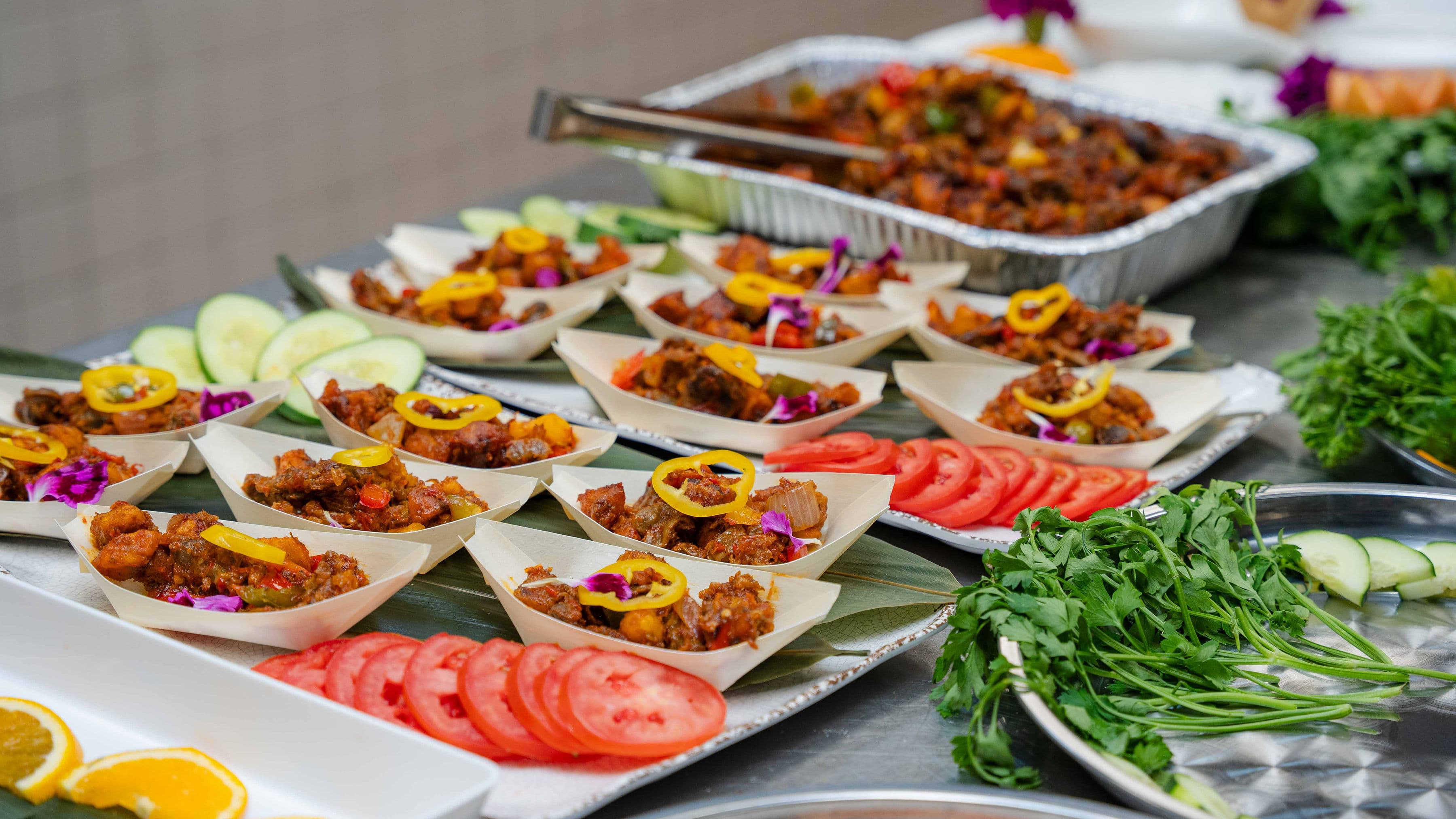
Ghanaian wedding food is hearty, flavorful, and served generously. For the traditional marriage reception, expect to serve jollof rice (yes, Ghanaian jollof, which is a different recipe from Nigerian jollof, and if you're reading this article alongside our Nigerian catering guide, you know the rivalry is real), waakye, banku with soup, fried rice, grilled tilapia, and an assortment of sides.
In the DMV, Columbus, and New York metro areas, Ghanaian caterers and restaurants that handle event catering are available. Search your local Ghanaian community Facebook groups for recommendations, as the best caterers are almost always found through word of mouth.
For smaller events (the knocking, for instance), a family-prepared spread is traditional and expected. Multiple family members each contribute dishes, creating a communal table that's as much about the cooking as the eating.
The White Wedding
If your family includes a white wedding as the final stage, it typically follows the traditional marriage by a few weeks or months (or, in the compressed US schedule, the following day). The white wedding is a standard Christian church ceremony with Western elements: the white gown, the walk down the aisle, the exchange of vows, and a reception with a multi-tiered cake.
Many Ghanaian couples blend both worlds at the white wedding reception. The bride might change from her white gown into a kente outfit midway through the reception. The DJ plays a mix of gospel, highlife, Afrobeats, and Western pop. The Adowa dance circle that spontaneously forms when the right song comes on is one of the most joyful sights at any Ghanaian wedding.
Making It Work from Abroad
Planning a Ghanaian wedding in the US is an exercise in cultural translation. You're keeping the heart of every tradition, the respect between families, the public affirmation of the bride's consent, the generosity of the bride price, the community's blessing, while adapting the logistics to fit a country where your family compound is a split-level in Bowie and your village elders are on WhatsApp.
Start with the elders. Ask them what matters most. Build from there. The traditions are strong enough to survive the translation, and your wedding will be proof.
For help finding Ghanaian event vendors, kente suppliers, caterers, and wedding planners who understand the culture, visit EventAtlas or reach out at hello@tryeventatlas.com.
Related Posts
More reading on themes you might be exploring.
Planning a Pakistani Wedding in the US: What to Know and How It Differs from an Indian Wedding
So is it basically the same as an Indian wedding?" No, not really. Here's the full structure of a Pakistani wedding in the US: from the dholki's geet circles to the nikah contract, the baraat procession, the emotional rukhsati, and the walima. Plus how to budget for 300+ guests across multiple events and where to find vendors who actually know the difference.

How to Plan a Sangeet Night That Your Guests Actually Enjoy
Fifteen choreographed performances, a stage that needs pro lighting, a sound system that can handle Bollywood and your uncle's acoustic number, and a dinner that feeds 200 without interrupting the show. Here's how to plan a sangeet that's a night, not just a three-hour talent show with awkward gaps between acts.
How to Plan a Mexican Wedding in the US That Honors Your Family's Traditions
Your mom claimed the mole recipe, your tía is asking about the mariachi, and your American college roommate just texted asking what she should wear. Here's how to pull off a Mexican wedding in the US that gets the lazo, arras, and víbora de la mar right while keeping your abuela happy and your non-Mexican guests included.
Planning a Cultural Celebration?
Find vendors who understand your traditions and can make your event truly special.
Find Vendors