
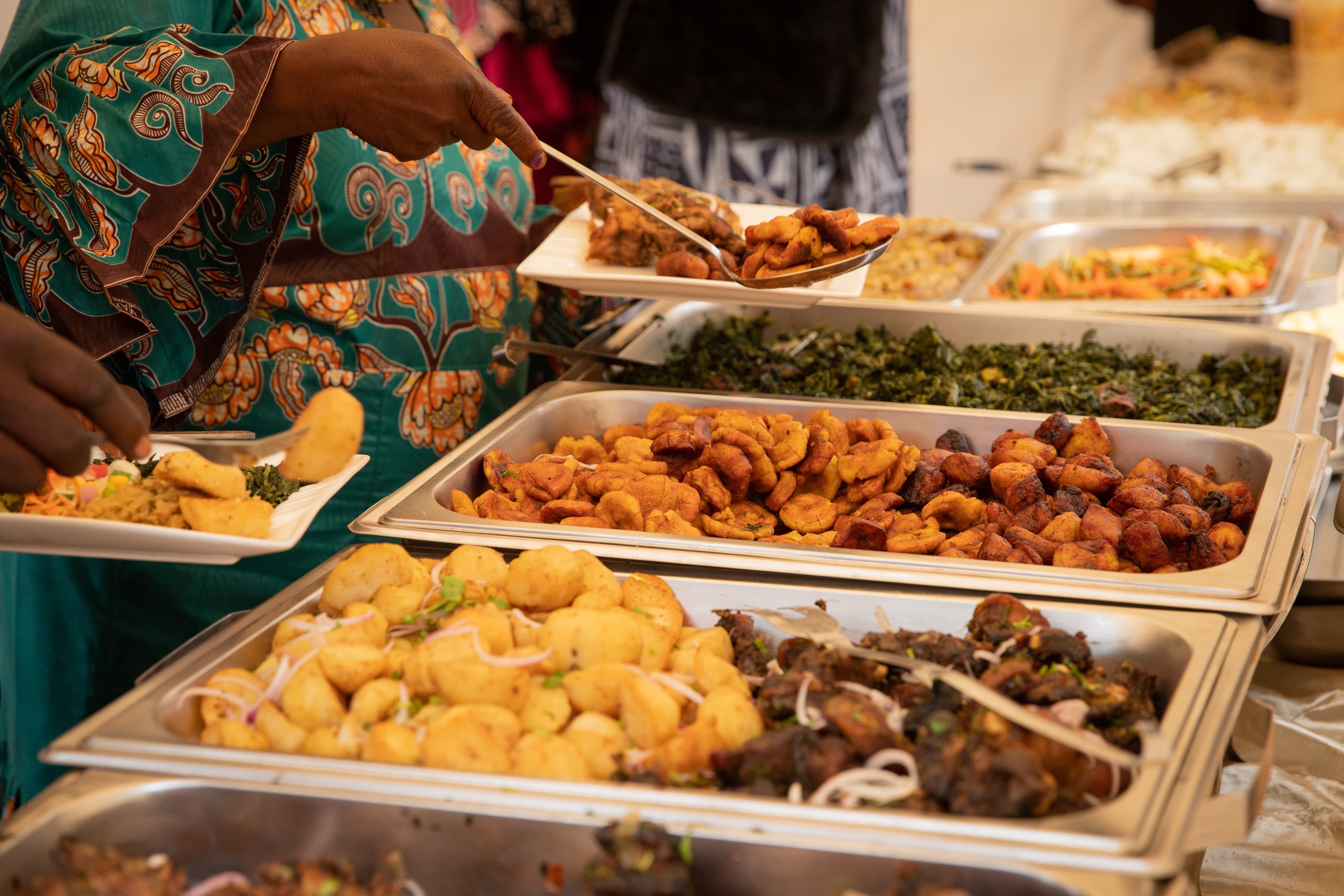
Nigerian Wedding Catering in the US: What to Serve, How Much to Budget, and How to Find the Right Cook
Party jollof that actually tastes like party jollof, enough protein so your auntie doesn't side-eye the serving line, and a realistic budget for 300 guests. Here's everything you need to plan Nigerian wedding catering in the US, from $25-per-head cook setups to $120+ full-service operations.
If you've ever been to a Nigerian wedding and left without eating jollof rice, something went terribly wrong. Food isn't a footnote at a Nigerian celebration. It's the thing your guests will talk about for months, either because it was incredible or because the caterer ran out of protein before the B-list tables got served.
Planning Nigerian wedding catering in the US comes with a specific set of challenges that a generic wedding caterer won't understand. The portion expectations are different. The flavor standards are non-negotiable. The menu has to balance what your Yoruba auntie considers a proper spread with what your American coworkers will actually eat. And the logistics of cooking jollof rice for 300 people in a venue kitchen designed for Caesar salads? That's a real problem you'll need to solve.
This guide covers everything: the menu, the portions, the budget, the questions to ask, and how to find a caterer who won't embarrass you.
The Nigerian Wedding Menu: What Actually Needs to Be There
Let's start with the non-negotiables. Every Nigerian wedding reception, regardless of tribe, has a core set of dishes that guests expect. Skip any of these and people will notice.
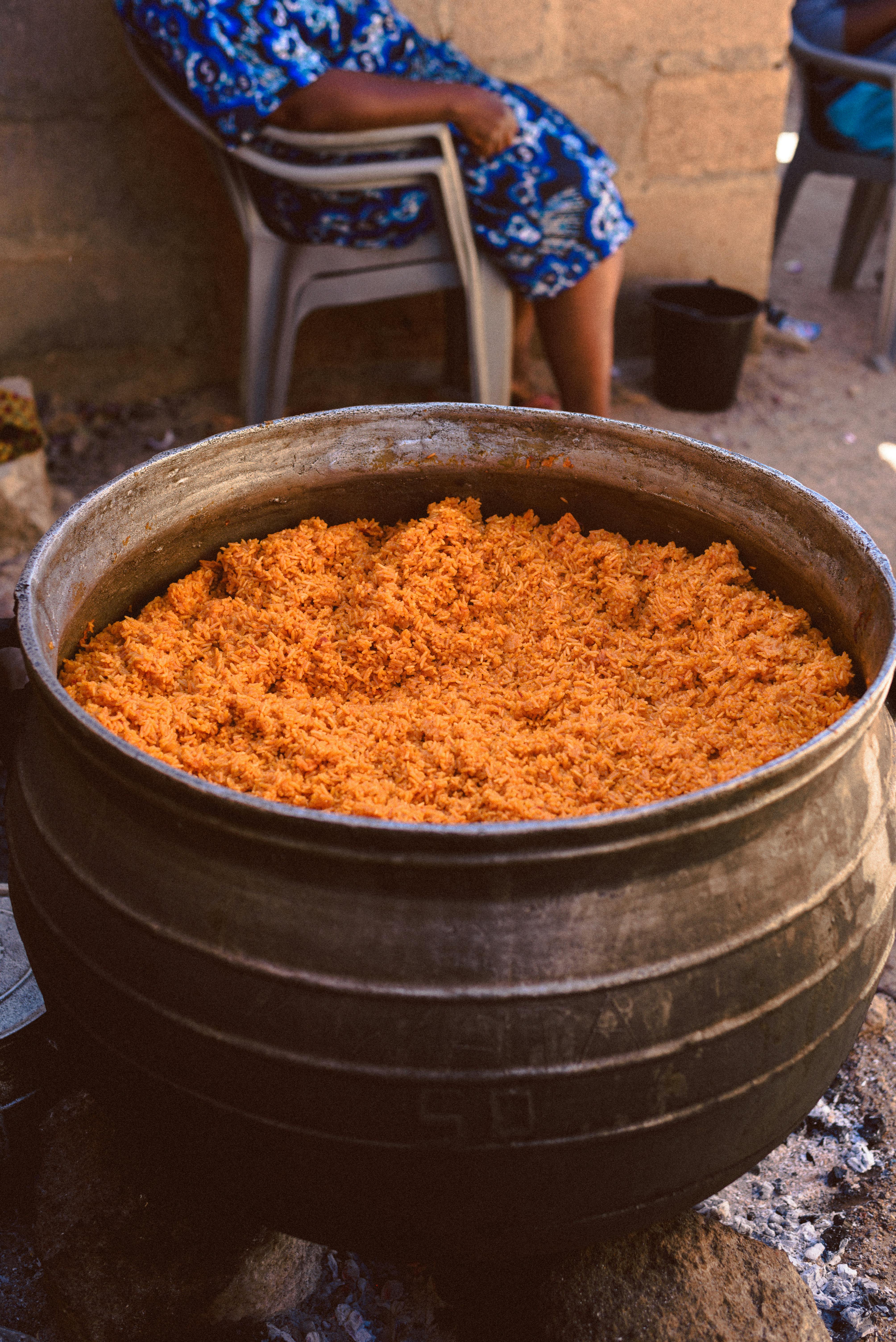
Jollof rice. This is the main event. Party jollof, specifically, has a smoky, slightly charred flavor that's different from everyday home-cooked jollof. It's cooked in large batches over high heat, often in wide aluminum pots, and that scale is part of what gives it the distinctive taste. Your caterer needs to know the difference between regular jollof and party jollof. If they don't, keep looking.
Fried rice. Nigerian fried rice is not the same as Chinese fried rice. It's typically made with mixed vegetables (green beans, carrots, green peas, sweet corn), seasoned with curry powder and thyme, and cooked with shrimp, liver, or both. It's served alongside the jollof as the second rice option.
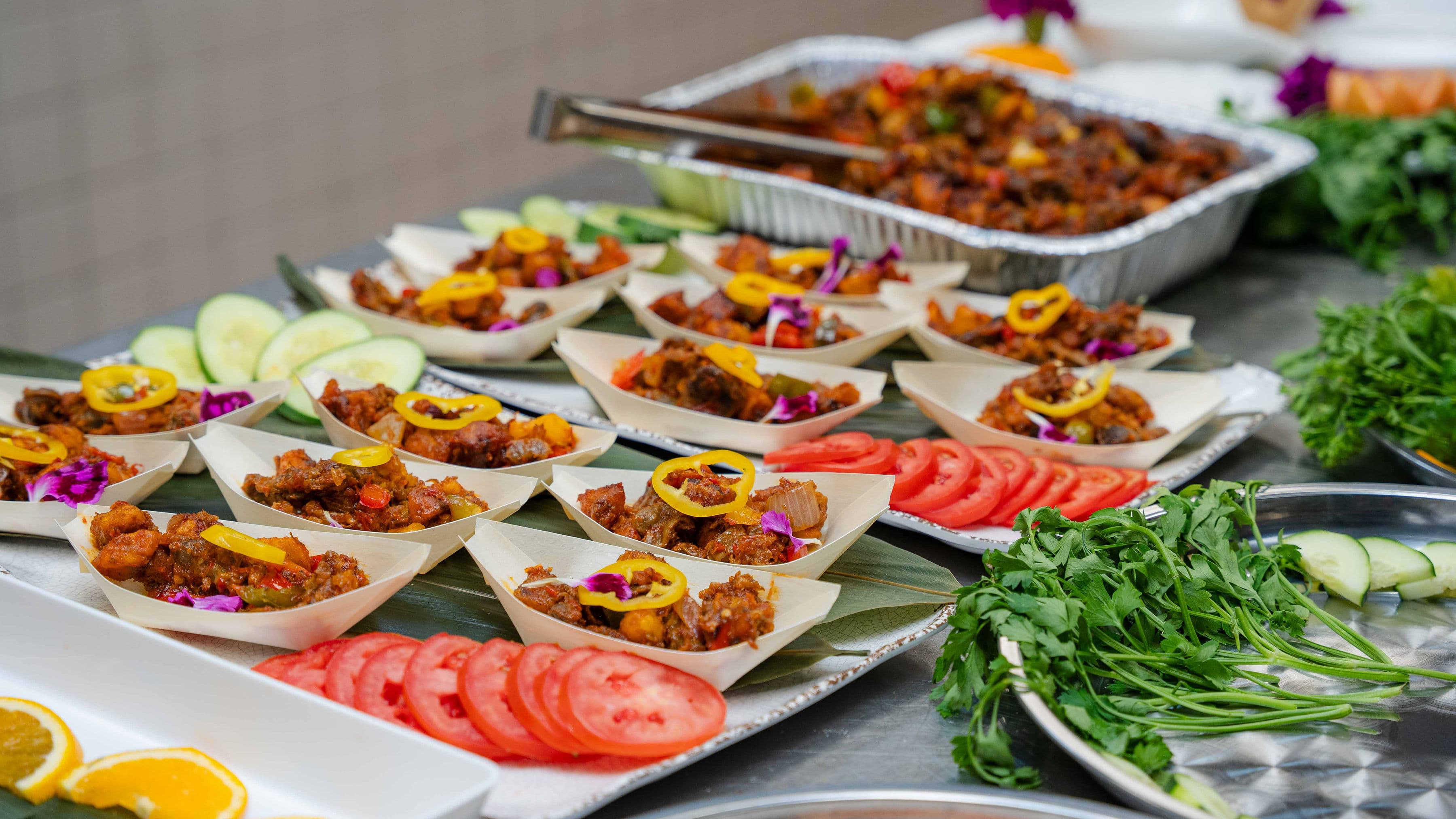
Assorted proteins. Here's the part that trips up non-Nigerian caterers: at a Nigerian event, protein is not an afterthought. You need multiple protein options, and they need to be generous. A standard spread includes fried or grilled chicken, peppered beef (sometimes called peppered meat or asun if it's goat), fried or grilled fish (often croaker or tilapia), and peppered turkey. Some weddings add goat meat pepper soup, peppered snails, or suya.
The golden rule at any Nigerian event is this: when the protein runs out, the party is functionally over. Even if there are entire trays of rice left, guests will stop eating if there's no meat to go with it. Budget your proteins generously and tell your caterer to hold back reserves for late arrivals.
Small chops. These are the appetizers served during cocktail hour or passed around on trays during the reception. A standard small chops plate includes puff-puff (fried dough balls, sometimes filled), spring rolls, samosas, peppered gizzard, and sometimes chicken strips or mini meat pies. Small chops set the tone for the event. They're usually the first food guests encounter, and a weak small chops spread signals budget problems.
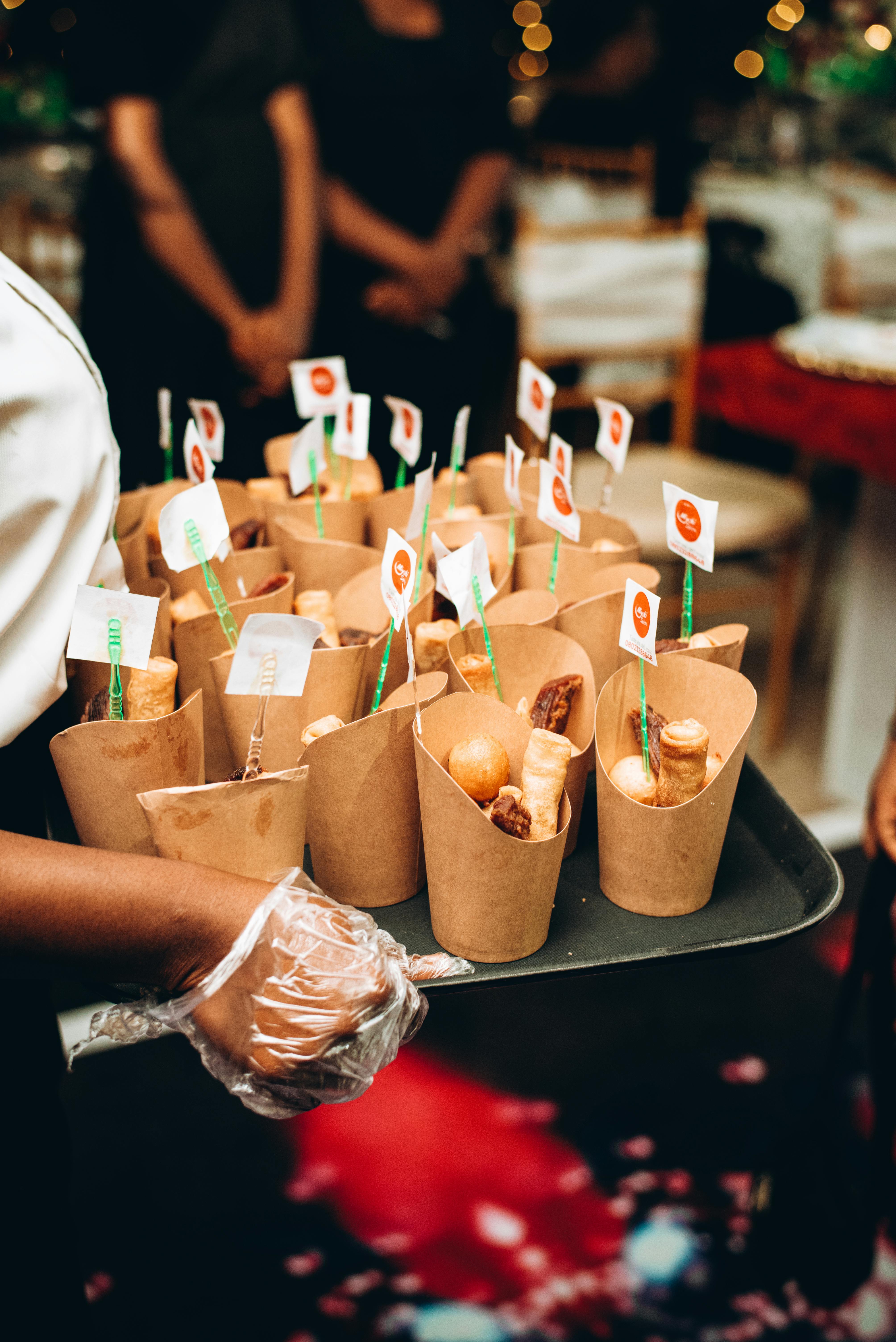
Building Out the Full Menu
Beyond the core dishes, your menu depends on your background, your budget, and your guest mix.
Yoruba weddings often feature ofada rice with ayamase (designer stew), a spicy green pepper sauce served on banana leaves. Amala with ewedu and gbegiri soup is another traditional option, though it's more common at traditional engagement ceremonies than at the reception. Moi moi (steamed bean pudding) wrapped in banana leaves is a popular side dish served alongside the rice.
Igbo weddings might include abacha (African salad), jollof spaghetti, or native rice with palm oil stew. Soups like oha, egusi, or ofe nsala (white soup) paired with pounded yam or fufu are typically reserved for the traditional ceremony but can make an appearance at the reception as a separate station.
Cross-cultural or mixed weddings benefit from a dual-menu approach: a full Nigerian buffet alongside a smaller continental or American station. This works especially well when one partner isn't Nigerian or when the guest list includes a lot of non-Nigerian colleagues and friends. The continental side can be simple: grilled chicken breast, steamed vegetables, dinner rolls, and a pasta dish. It doesn't need to compete with the Nigerian spread; it just needs to exist so non-Nigerian guests have familiar options.
Drinks deserve their own plan. The standard bar at a Nigerian wedding includes soft drinks, bottled water, Chapman (a Nigerian mixed drink with Fanta, Sprite, grenadine, and Angostura bitters), zobo (hibiscus drink), and alcohol. Beer is typically Nigerian brands like Star, Gulder, or Heineken if you can't source them. Many US-based Nigerian weddings also include a full bar with spirits, though this depends on family and religious preferences.
How Much Food Do You Actually Need?
This is where Nigerian weddings diverge sharply from standard American wedding planning guides. The rule of thumb for American weddings is to plan for exactly your RSVP count. For a Nigerian wedding, plan for your RSVP count plus 15 to 25%.
Why? Because Nigerian weddings rarely stick to a strict guest list. Family friends bring plus-ones who bring their own plus-ones. People show up who weren't formally invited but are connected to the family. Your parents will tell you the guest list is 250 and then 320 people show up. This is normal. Planning for it is not being wasteful; it's being realistic.
For portion planning on the rice dishes, most caterers work with a formula of roughly one-third to one-half cup of dry rice per person. For a 300-person wedding with two rice options (jollof and fried rice), you'd need approximately 50 to 75 pounds of raw rice total. Your caterer will have their own formulas, but make sure they've worked Nigerian events before, because the portions are larger than what a typical American caterer plans for.
For proteins, plan for at least one to two pieces of meat per person per protein type. If you're serving chicken, beef, and fish, that's three to six pieces of protein per plate. Nigerian guests expect hearty portions, and skimping on protein is the fastest way to get your wedding talked about for the wrong reasons.
The Budget: Real Numbers
Nigerian wedding catering in the US is more expensive than standard American wedding catering for a few reasons: the ingredient list is more specialized (sourcing palm oil, crayfish, locust beans, and specific cuts of goat or beef), the cooking is more labor-intensive, and the portions are larger.
Here's what to expect in major US metro areas with significant Nigerian populations:
Budget-friendly (cook/chef model): $25 to $40 per head. This typically means hiring an independent Nigerian cook or small catering operation. They handle the cooking, and you handle (or separately hire) the serving, setup, chafing dishes, and cleanup. This is the most common model for budget-conscious couples. For 300 guests, you're looking at $7,500 to $12,000 for food alone.
Mid-range (full-service Nigerian caterer): $45 to $75 per head. This includes food, servers, chafing dish setup, and sometimes small chops as a separate course. Many Nigerian caterers in Houston, Atlanta, the DMV, and Dallas operate in this range. For 300 guests: $13,500 to $22,500.
Premium (established catering company): $80 to $120+ per head. This is a full-service operation with professional presentation, uniformed servers, plated options, and gourmet twists on traditional dishes. This tier includes companies like Chopnblok in Houston, which has built a reputation for high-end Nigerian event catering with polished presentation. For 300 guests: $24,000 to $36,000+.
These numbers cover food and basic service. They don't include alcohol (budget separately, typically $15 to $30 per person for a full bar), rentals (tables, chairs, linens if not provided by your venue), or the wedding cake.
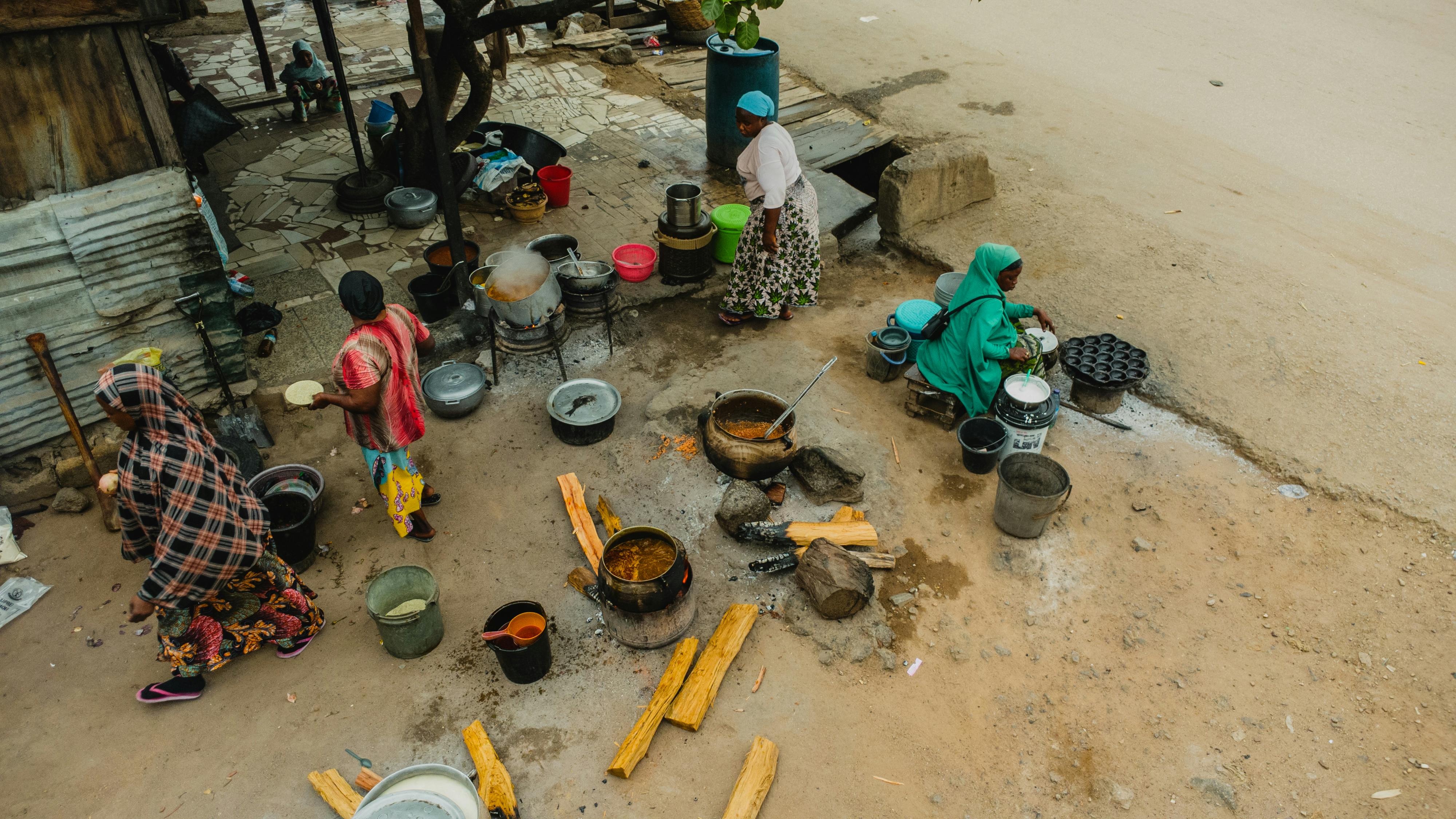
Cook vs. Caterer: Understanding the Difference
In the Nigerian-American community, there's a meaningful distinction between hiring a "cook" and hiring a "caterer," and understanding it will save you headaches.
A cook (sometimes called a chef-for-hire) is an individual, often someone known within the community, who prepares Nigerian food for events. They're typically hired to cook the food and deliver it, or cook it on-site. They don't usually provide serving staff, chafing dishes, table setup, or cleanup. The food is often exceptional because these are cooks who've been making party jollof for decades. But you'll need to separately arrange serving, presentation, and logistics.
A caterer is a full-service operation that handles food preparation, serving staff, setup, presentation, and breakdown. They're more expensive but remove the coordination burden from you. Some caterers are specifically Nigerian-owned and specialize in Nigerian cuisine. Others are general caterers who can execute a Nigerian menu if properly briefed.
If you go the cook route, you'll also need to figure out: who's renting the chafing dishes and serving equipment? Who's managing the serving line? Who's replenishing trays when they run low? Who's handling cleanup? These logistics add up in both cost and stress, so factor them into your decision.
🇳🇬Nigerian Catering & Food on EventAtlas

Join the growing Nigerian catering community on EventAtlas. with a vendor.
How to Find the Right Person
Start with the community. The best Nigerian caterers in any US city are usually found through word of mouth. Ask recently married couples in your local Nigerian community. Check Nigerian community Facebook groups for your city (there are active ones in Houston, Atlanta, DMV, Dallas, New York, and most major metros). These groups are goldmines for honest vendor recommendations and warnings.
Check Instagram and TikTok. Nigerian caterers in the US market heavily on social media. Search hashtags like #NigerianCateringHouston, #NigerianWeddingFood, #JollofCatering, or #NaijaFoodInUS. Look at the actual food photos and videos, not just the follower count. You want to see large-event setups, not just small dinner plates.
In Houston, which has one of the largest Nigerian communities in the US, vendors like Chopnblok, 9ja Food Pot (@9jafoodpot), and Oriri's Catering have built followings specifically around Nigerian event catering. In Atlanta, look for vendors connected to the Asoebi Bar network or through the active Nigerian community there. In the DMV area (DC, Maryland, Virginia) and New Jersey, the Nigerian caterer market is competitive and you'll find multiple options at every price point.
For couples who want to search across categories and locations, EventAtlas is building a directory of cultural event vendors, including Nigerian caterers, that you can filter by location and specialty.
Questions to Ask Before You Book
Don't hire any caterer, Nigerian or otherwise, without asking these questions:
Have you catered a Nigerian wedding before, and how many guests? There's a big difference between cooking for a birthday party of 50 and a wedding reception of 300. Ask for references from past wedding clients.
Can I do a tasting? This is non-negotiable. You need to taste the jollof, the fried rice, and at least one protein before you commit. Some caterers charge a small fee ($50 to $150) for a tasting session; others include it free with booking. Either way, do it.
What's included in your per-head price? Get a detailed breakdown. Does it include small chops? Drinks? Serving staff? Chafing dishes? Setup and cleanup? You need to know exactly what you're paying for so you can budget for everything else separately.
How do you handle protein portioning? Ask specifically how many pieces of chicken, beef, or fish each guest gets. If the answer is vague ("we make sure everyone eats"), push for specifics. You want numbers.
What's your policy on extra guests? Since Nigerian weddings almost always exceed the RSVP count, ask how the caterer handles overflow. Do they cook extra as standard practice? Can you pay for a buffer of 10 to 15% additional portions? What happens if 50 more people show up than planned?
Do you provide your own serving equipment, or do I need to rent? This is especially important if you're hiring a cook rather than a full-service caterer.
Common Mistakes That Ruin the Food Experience
Trusting a non-Nigerian caterer to execute jollof rice without supervision. Unless your caterer has specifically made party jollof for Nigerian events before, don't assume they can figure it out from a recipe. Jollof is technique, not just ingredients. The smoky flavor, the tomato-to-rice ratio, the spice balance: these come from experience, not a Google search.
Underbudgeting on proteins. Guests will forgive many things at a wedding. They will not forgive running out of meat. If you have to cut costs somewhere, trim the drink menu or the decor before you touch the protein budget.
Not planning for service logistics. Beautiful food means nothing if the serving line is chaotic, trays aren't replenished, and half the room is eating while the other half is still waiting. If you're hiring a cook instead of a full-service caterer, assign someone (ideally a paid coordinator or a very organized family member) to manage the serving flow.
Ignoring the venue kitchen. Some venues have commercial kitchens that can accommodate large-scale Nigerian cooking. Others have tiny warming kitchens that can barely reheat a casserole. If your caterer needs to cook on-site (which produces the best results for jollof), confirm the kitchen setup before you sign any contracts.
Making It All Come Together
The food at your Nigerian wedding carries weight that goes beyond nutrition. It's a statement about your family, your generosity, and your connection to culture. Getting it right means starting early (book your caterer 3 to 6 months out for popular wedding weekends), being specific about what you want, tasting before you commit, and budgeting honestly for the guest count you'll actually have, not the one on the RSVP cards.
If you're still searching for the right caterer, start with community recommendations, verify on social media, and always, always do a tasting. Your guests are going to remember the food long after they forget the centerpieces.
For help finding Nigerian caterers and other cultural event vendors near you, visit EventAtlas or email us at hello@tryeventatlas.com.
Related Posts
More reading on themes you might be exploring.
The Aso Ebi Tradition: How to Coordinate Fabric for Your Nigerian Wedding Guests
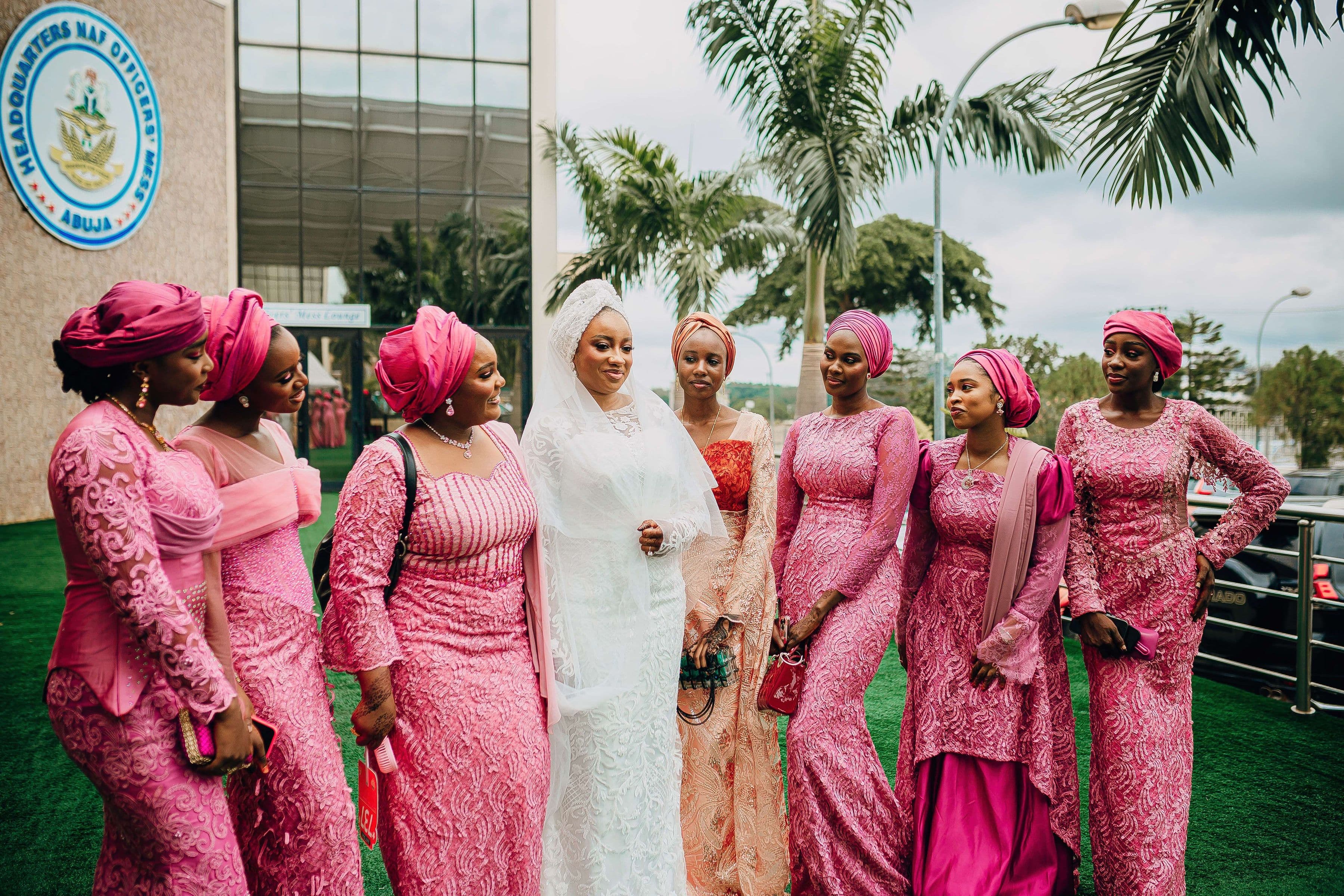
Coordinating matching fabric for dozens of guests scattered across Houston, Atlanta, the DMV, and Lagos is a logistics project that generates more WhatsApp messages than every other wedding decision combined. Here's how to choose the fabric, set pricing, handle distribution, and deal with the sensitive parts like guests who can't afford it.
Indian Wedding Catering in the US: Menu Planning, Pricing, and Finding the Right Caterer
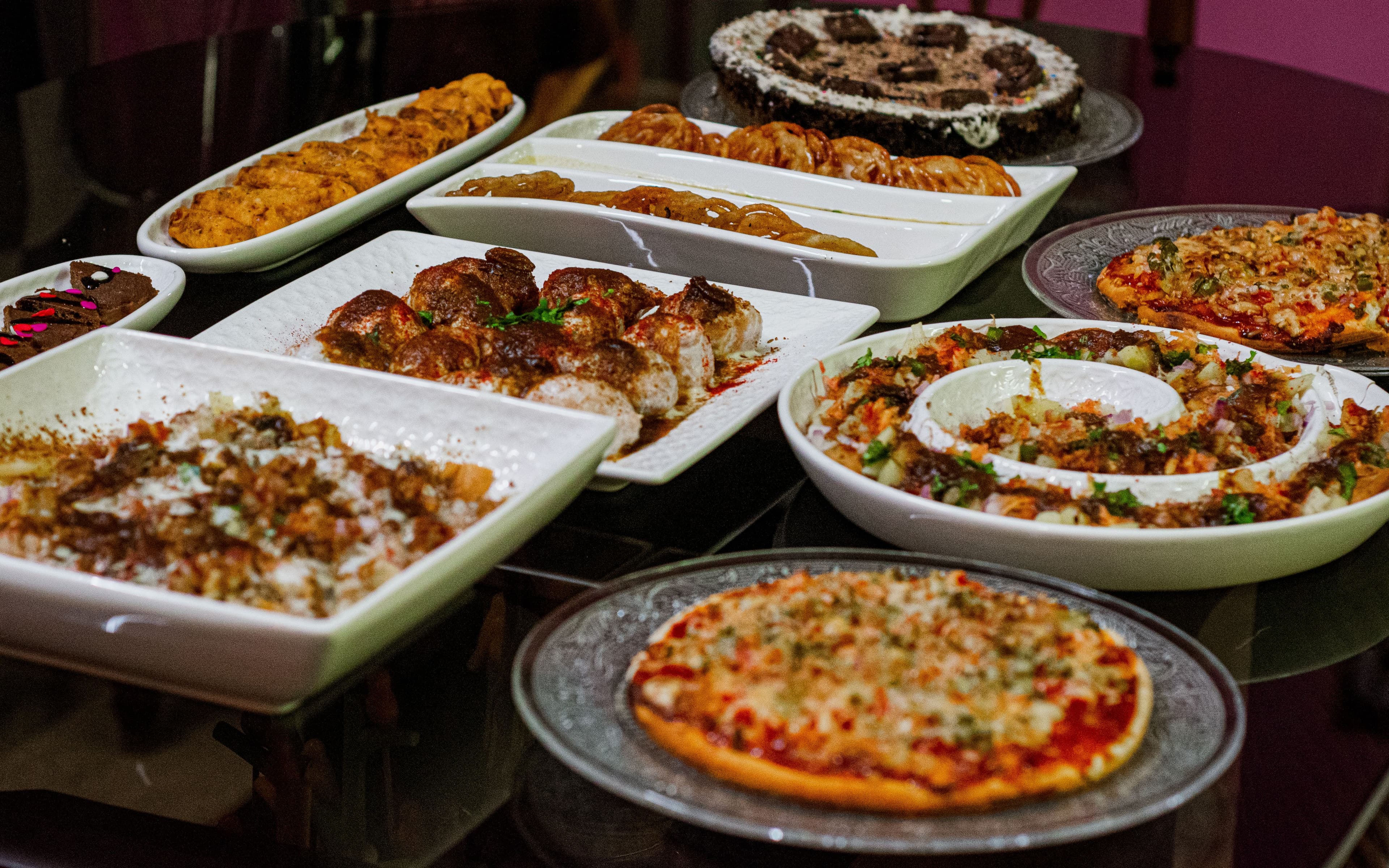
Your guests will forget the centerpieces by next week, but they'll remember whether the biryani was properly layered or a glorified pulao. Here's the full breakdown of Indian wedding catering in the US: regional menu differences, live dosa and chaat station pricing, the hotel kitchen problem nobody warns you about, and real per-plate costs from $30 to $150+.
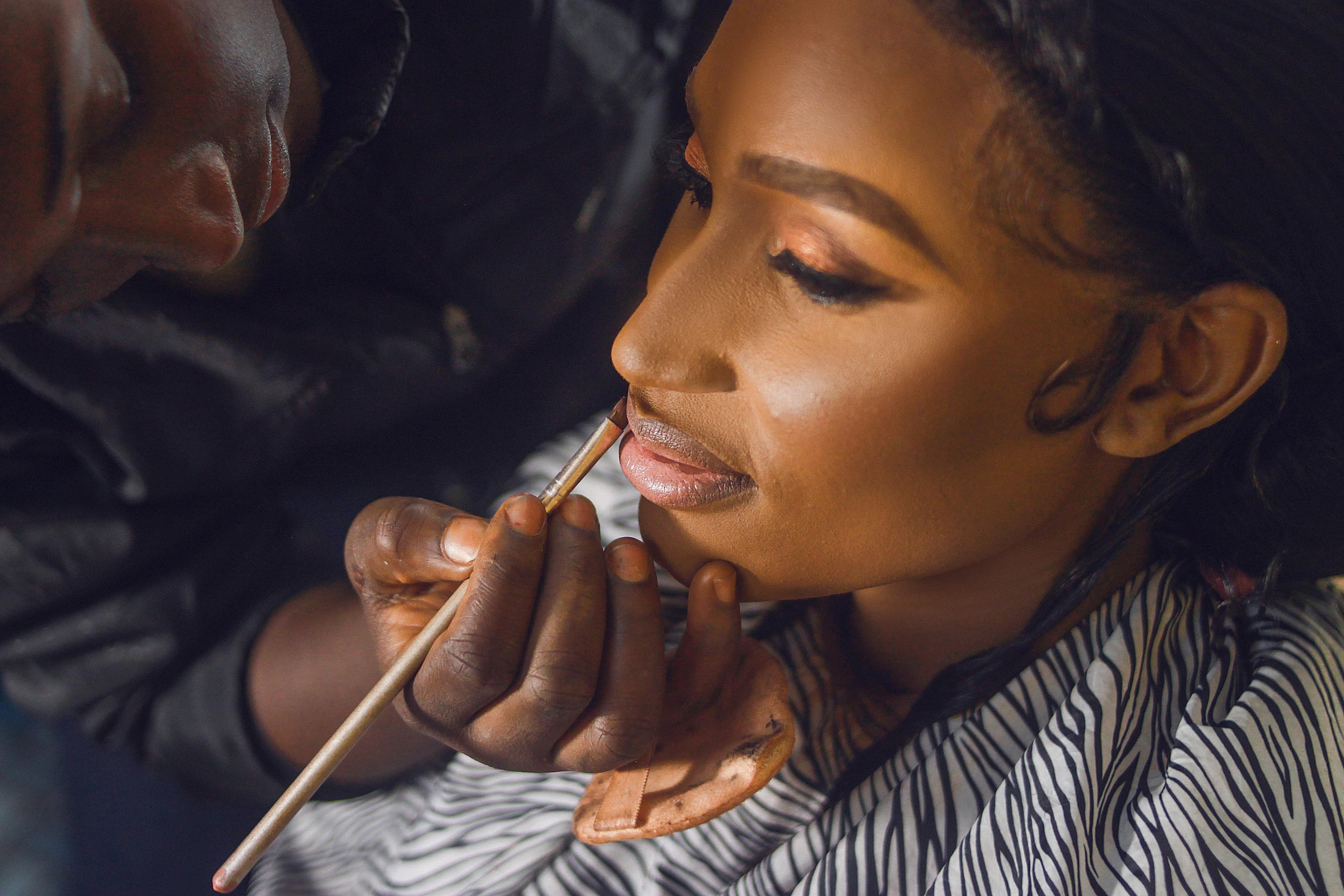
Bridal Makeup for Dark Skin Tones: How to Find an Artist Who Gets It Right
You showed up to the trial and the foundation was two shades too light, the setting powder left white cast in every flash photo, and the artist said "don't worry, it'll look fine." It did not look fine. Here's how to find a makeup artist who actually knows how to work with deep skin tones, what to demand at the trial, and the flash test that reveals everything.
Planning a Cultural Celebration?
Find vendors who understand your traditions and can make your event truly special.
Find Vendors