
Traditional Greeting
新年快乐 (Xīn Nián Kuài Lè), "Happy New Year" — also 恭喜发财 (Gōng Xǐ Fā Cái), "wishing you prosperity"; in Cantonese, 恭喜發財 (Gong Hei Fat Choy)
sheen-nyen KWHY-luh (Gōng Xǐ Fā Cái: gong-shee fah-TSAI)
The Spring Festival
Chinese New Year, or Chūnjié (Spring Festival), is the most important holiday in the Chinese calendar, the moment the whole family is expected to come home. It falls on the first new moon of the lunisolar year, usually between late January and mid-February, and runs a full fifteen days, ending with the Lantern Festival. Each year carries one of the twelve zodiac animals: 2026 is the Year of the Horse (a Fire Horse, the first since 1966), and 2027 is the Year of the Goat.
So much of the celebration runs on wordplay and symbolism. Foods are eaten because their names sound like words for luck, wealth, or longevity, and colors, gifts, and even cleaning all follow rules meant to set the tone for the year. The deepest theme is renewal and family: clearing out the old, settling debts, and gathering everyone under one roof.
How It's Celebrated
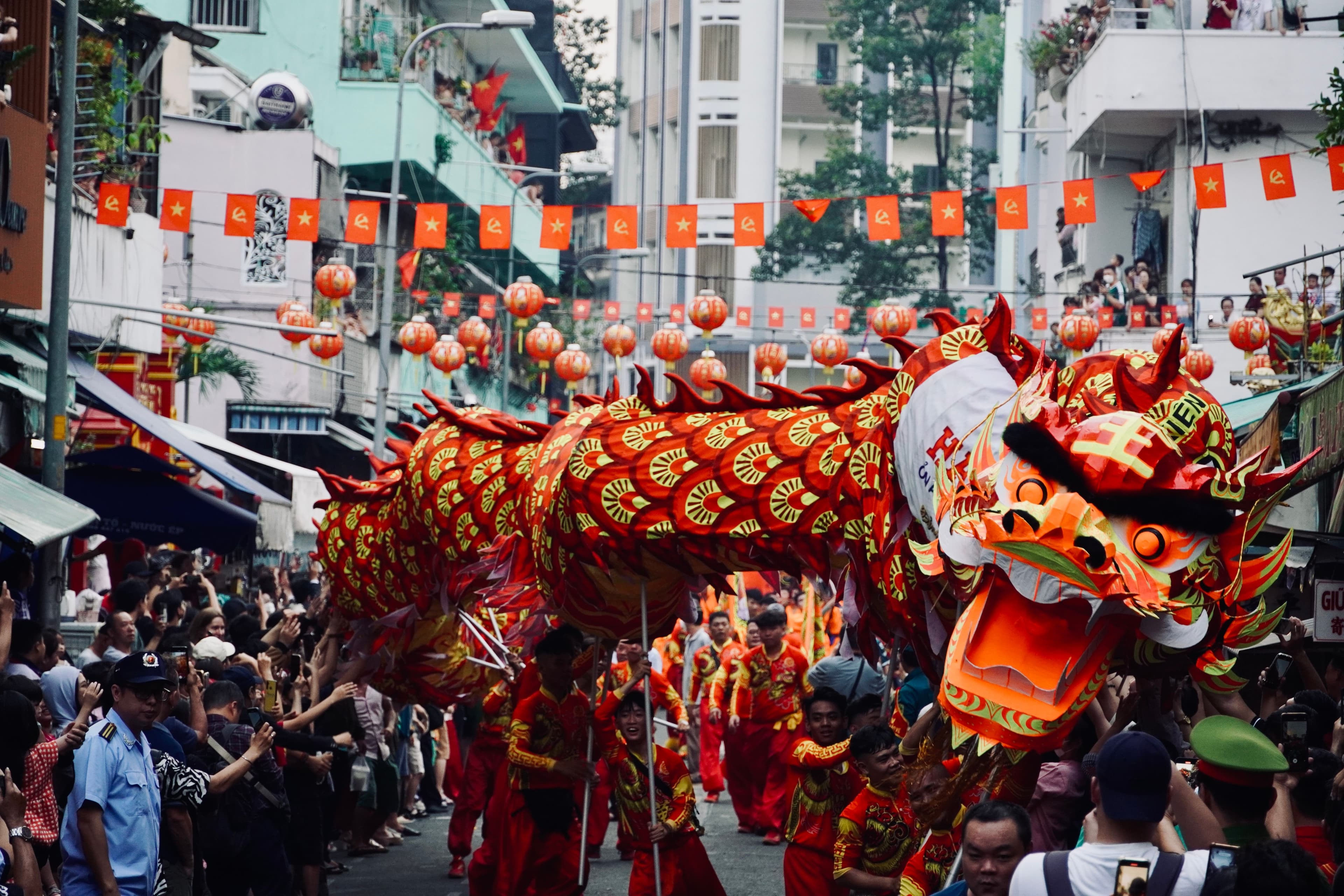
The lead-up means a thorough house cleaning to sweep out the old year's bad luck, then decorating in red and gold: chunlian (couplets pasted around doorways), upside-down fu characters (the inversion is a pun on "luck arrives"), and red lanterns. Crucially, you don't clean or sweep on New Year's Day itself, or you'd sweep the new luck right back out.
The centerpiece is the nián yè fàn, the reunion dinner on New Year's Eve, often a hot pot or a multi-course spread loaded with meaning: a whole fish (yú, a homophone for "surplus"), dumplings shaped like old gold ingots, spring rolls like gold bars, and nián gāo (sticky rice cake), whose name sounds like "higher year." Families stay up late (shou sui) to welcome the new year.
On New Year's Day and after, elders give children hóngbāo, red envelopes of money meant to ward off bad spirits, and families visit relatives in a set order. Lion and dragon dances, drums, and firecrackers fill public spaces, scaring off the mythical beast Nian and any lingering misfortune.
Lunar New Year in the US
In the US, Chinese New Year became more visible after several states and big-city school districts began recognizing it; California made it a state holiday, and New York City public schools close for it. Major Chinatowns, San Francisco, New York, Los Angeles, host parades with lion dances and, in San Francisco, one of the largest night parades outside Asia.
For families, the biggest adaptation is timing. With the holiday usually falling on a workday and no national day off, the reunion dinner often shifts to the nearest weekend, and the fifteen-day arc compresses into a single big gathering. Hongbao still flow (increasingly via apps alongside the paper envelopes), and Asian supermarkets stock nian gao, whole fish, and decorations weeks ahead. Lion dance troupes book up fast, performing at restaurants, businesses, and association banquets through the season.
If You're Invited
Wear red or something festive, and avoid all-black or all-white, which carry funeral associations. Bring a gift in an auspicious pairing (fruit like oranges and tangerines is classic, symbolizing luck and wealth) and present it with both hands; skip clocks, sharp objects, and anything in sets of four. If you're given a hongbao, receive it with both hands and don't open it in front of the giver. "Gōng Xǐ Fā Cái" (wishing you prosperity) is the phrase everyone loves to hear. Expect a lot of food and a warm, loud, multi-generational table.
What Families Hire For
Larger New Year banquets often mean a caterer for the reunion-style feast, a decorator for the red-and-gold setting, and, for businesses and big parties, a lion dance troupe to bring luck and a crowd. The red-envelope etiquette and symbolic gifting overlap with Chinese wedding customs, and our Chinese wedding tea ceremony guide covers where to buy red-and-gold sets and the red-envelope amounts nobody quite explains.
Traditions & Customs
- hongbao
- reunion dinner
- lion dance
- nian gao
- chunlian
Vendors You Might Need
Browse Chinese vendors who specialize in the services this event usually calls for.

Join the growing Chinese vendor community on EventAtlas. with a vendor.
Related Guides
Planning tips and inspiration from the EventAtlas blog.
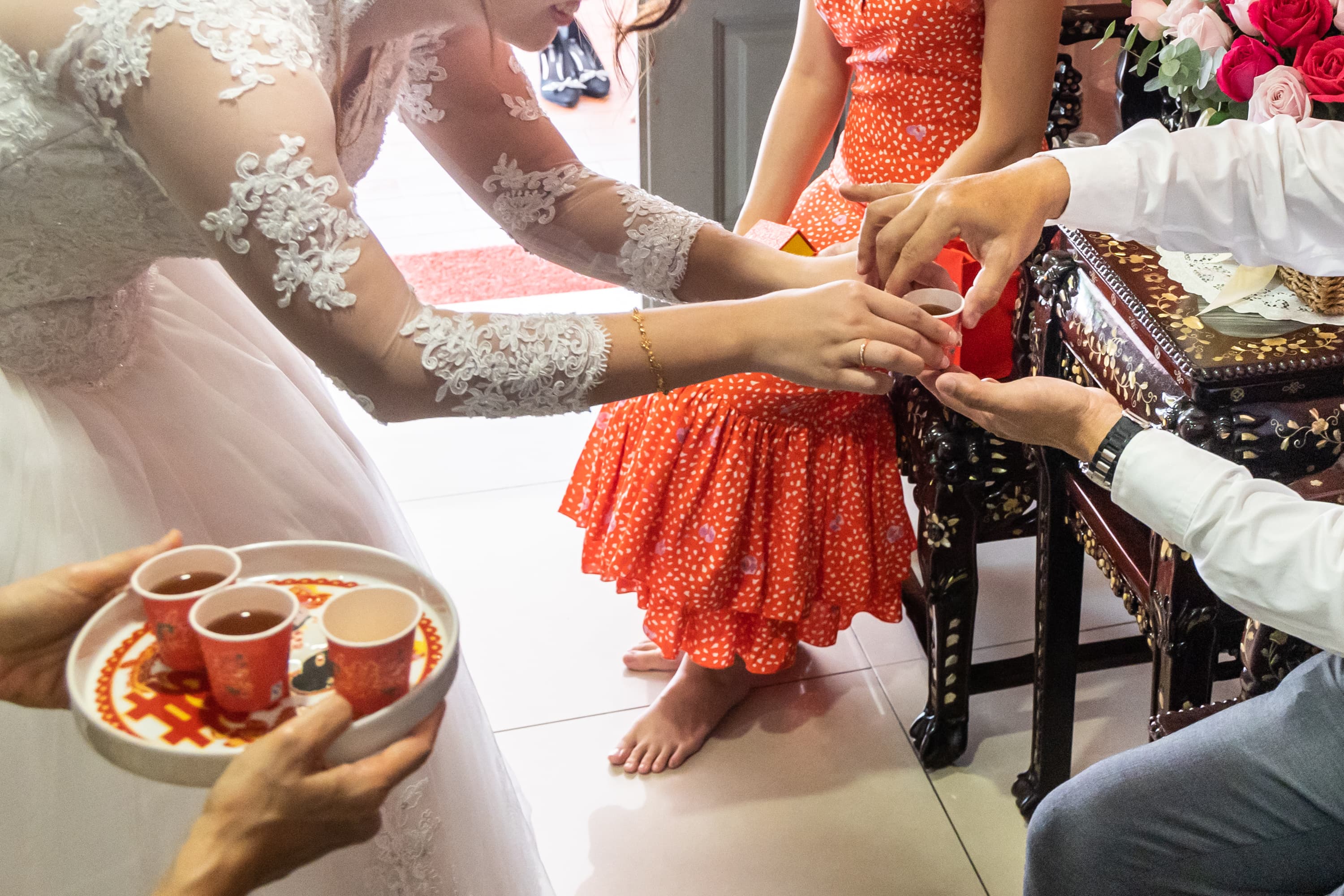
What Goes Into a Traditional Chinese Wedding Tea Ceremony (And How to Set One Up in the US)
Your mom vaguely remembers her own tea ceremony from the '80s and your grandma's instructions are all in rapid-fire Cantonese. Here's exactly how to do it right: who gets served first, what tea and symbolic ingredients to use, where to buy the Double Happiness set, and the red envelope amounts nobody tells you about.