
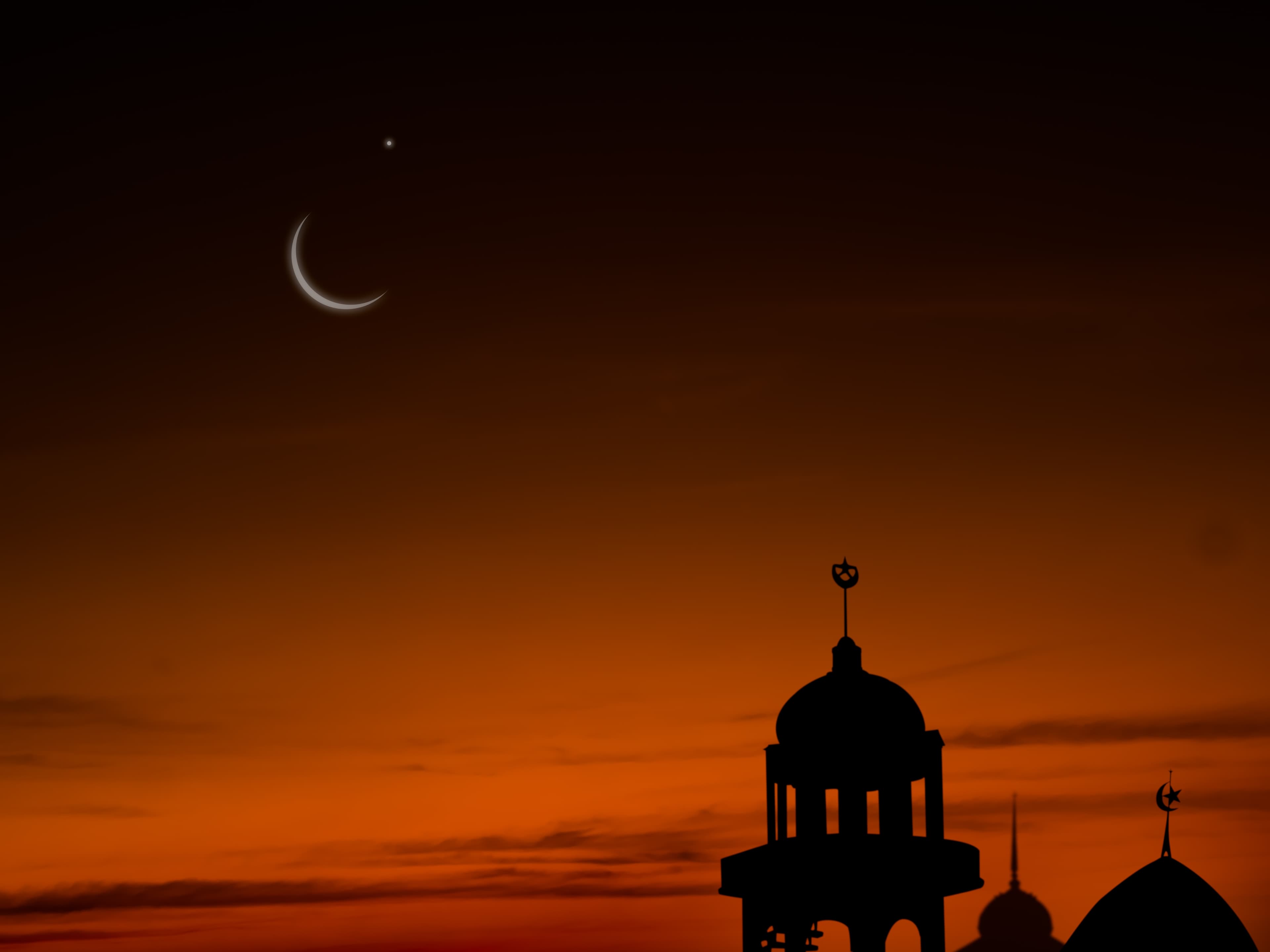
Traditional Greeting
عيد مبارك (Eid Mubarak), "Blessed Eid"; also the Gulf عساكم من عواده (Asakom min 'uwwadah), "may you witness it again"
eed moo-BAH-rak (Asakom min 'uwwadah: ah-SAH-kom min oo-WAH-dah)
Eid in the Gulf
Eid al-Fitr, the festival that ends the fasting month of Ramadan, is one of the two great Islamic celebrations, and across the Arab Gulf, the UAE, Saudi Arabia, Qatar, Kuwait, Bahrain, and Oman, it carries a distinctly Khaleeji (Gulf) character. The faith and the core, the dawn prayer, the charity, the joy of breaking a month's fast, are shared with Muslims everywhere, but the foods, the dress, and the rhythm of hospitality are unmistakably Gulf.
How It's Celebrated
The day begins before sunrise. Muslims pay Zakat al-Fitr (a charity ensuring the less fortunate can celebrate), eat a few dates, and head to the Eid prayer (Salat al-Eid) at mosques and large open-air grounds, the takbeer chants echoing through neighborhoods. Men wear crisp white kanduras (or thobes), women colorful traditional dresses and abayas.
After prayer, the celebration turns to food and family. The Gulf Eid table is generous and specific: harees (a smooth porridge of wheat and slow-cooked meat), machboos (spiced rice with meat or fish), thareed, and ouzi, with sweets like luqaimat (crisp fried dough balls drenched in date syrup), balaleet, khabeesa, and trays of dates, nuts, and chocolates. Guests are received in the majlis, the sitting room where hospitality reigns, and served gahwa (Arabic coffee scented with cardamom) poured from a dallah into small cups, always with dates.
Children are the day's biggest winners, receiving Eidiyah, money tucked into crisp envelopes, from elders during the rounds of family visits. Hospitality stretches late, with households keeping open doors for relatives, neighbors, and friends across the multi-day holiday.
Eid al-Fitr in the US
Gulf Arab communities in the US, including students, professionals, and families across cities like Houston, the DC area, and parts of California, gather for Eid prayers at mosques and large rented halls, then recreate the Gulf hospitality at home: the majlis-style welcome, gahwa and dates for every visitor, and a table of harees, machboos, and luqaimat. Middle Eastern groceries and Gulf home cooks make the specialty ingredients findable, and luqaimat in particular has become a beloved, shareable Eid sweet.
The familiar adaptation is the calendar, with the prayer early and visiting shifted around the US workday. The Eidiyah-in-envelopes tradition holds for the children, the new Eid clothes remain a must, and for many families the majlis hospitality, receiving guests with gahwa and generosity, is the piece of home they most want to keep alive.
If You're Invited
Accept the gahwa and dates; receiving them is part of the welcome, and it's polite to take the coffee with your right hand (a small shake of the cup signals you've had enough). Come hungry for the harees, machboos, and luqaimat. "Eid Mubarak" is the greeting, and in the Gulf you'll also hear "Asakom min 'uwwadah." Dress nicely and modestly, and if there are children, a little Eidiyah in an envelope is in keeping with the day. Expect warm, lingering hospitality.
What Families Hire For
A larger Gulf Eid gathering often calls for caterers comfortable with harees, machboos, and a Khaleeji spread, attire shops for the kanduras and abayas, gifts and envelopes for the Eidiyah, and event planners for the bigger family hospitality.
Traditions & Customs
- harees
- machboos
- luqaimat
- Eidiyah
- gahwa
Vendors You Might Need
Browse Gulf Arab vendors who specialize in the services this event usually calls for.
Join the growing Gulf Arab vendor community on EventAtlas. with a vendor.