
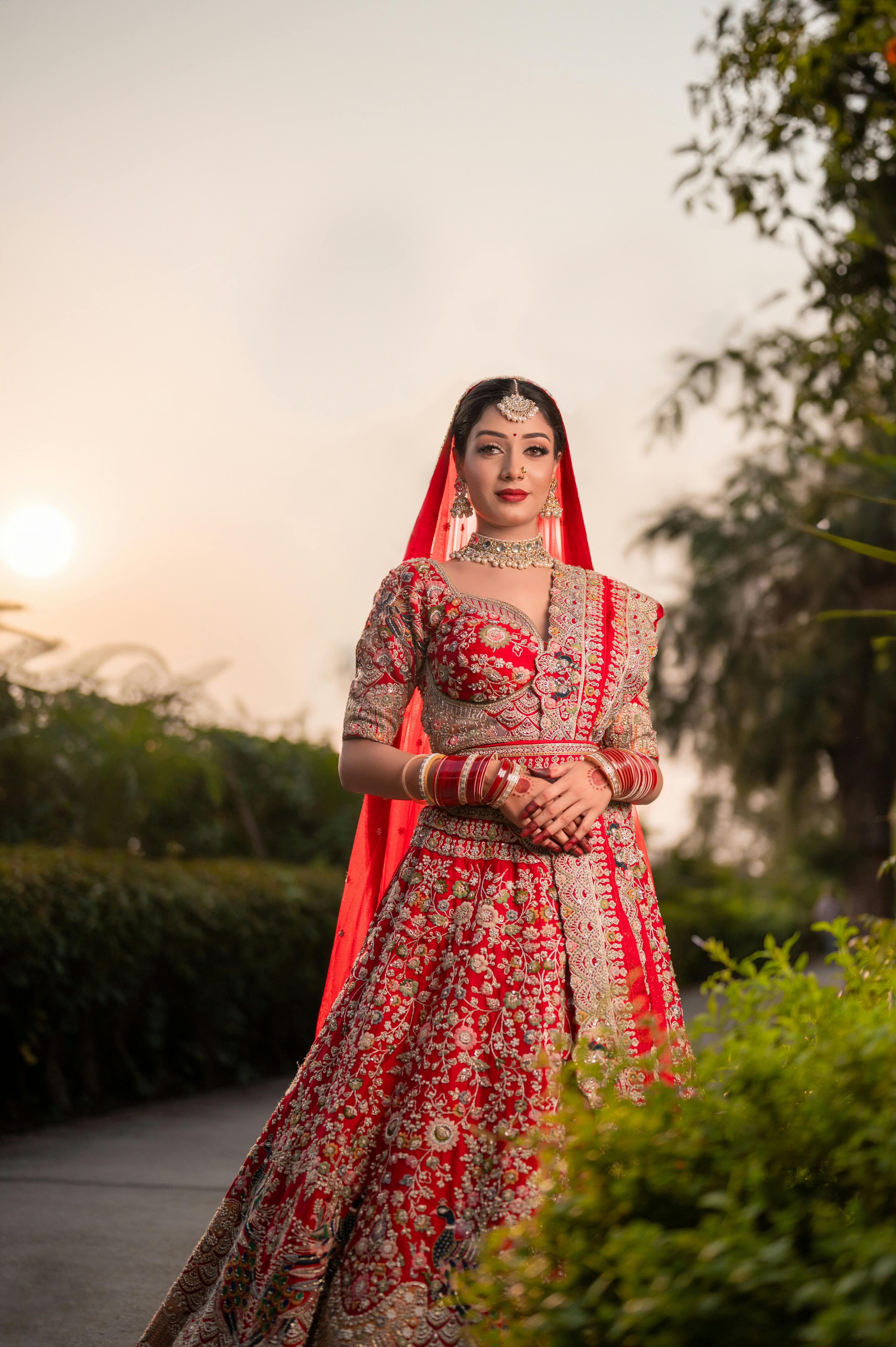
How to Find the Right Lehenga as an Indian Bride in the US
You're in New Jersey, not Chandni Chowk, but you still want a bridal lehenga that makes you cry when you see yourself in the mirror. Here's where US-based brides actually shop, what each route costs from $500 to $15K+, and how to get the fit right when you're ordering from 8,000 miles away.
You've seen the Pinterest boards. You've saved 47 Instagram reels of brides twirling in red and gold. You know exactly what you want your bridal lehenga to look like. The problem? You're in New Jersey, not Chandni Chowk, and figuring out where to actually find, try on, and buy a bridal lehenga in the US feels like a project in itself.
The good news is that the options for US-based Indian brides have expanded dramatically. Between local South Asian boutiques, online retailers that ship from India, designers with US stockists, and the growing pre-loved market, you can find a stunning bridal lehenga without booking a flight to Mumbai. But each route has tradeoffs in terms of price, selection, customization, and convenience. This guide breaks down your options so you can make the choice that fits your budget, timeline, and vision.
Understanding What You're Looking For
Before you start shopping, it helps to know the basics of what differentiates one bridal lehenga from another. The price and quality come down to three things: fabric, embroidery, and construction.
Fabrics determine how the lehenga falls, how it photographs, and how comfortable you'll be wearing it for 6 to 8 hours. Raw silk and Banarasi silk are traditional, heavier choices with a rich drape and natural sheen. Velvet is stunning for winter weddings but adds weight. Georgette and net are lighter, more breathable options popular for summer or destination weddings. Organza has become a favorite for modern brides who want volume without bulk; it catches light beautifully. Most bridal lehengas combine multiple fabrics, like a silk skirt with a net dupatta and a velvet blouse.
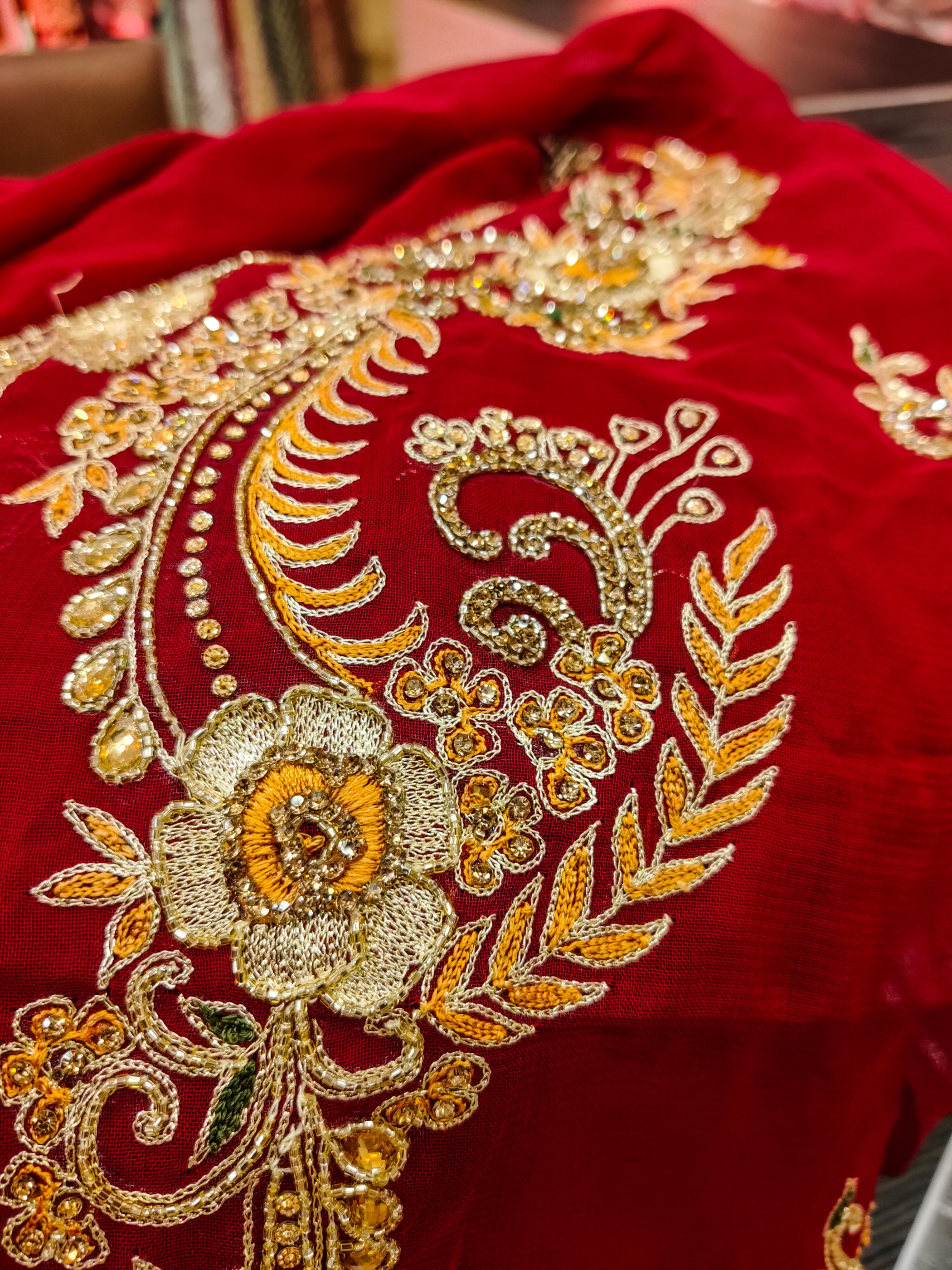
Embroidery is where the real artistry and cost lives. Zardozi is heavy, raised embroidery done with metallic gold or silver threads, often combined with sequins, beads, and stones. This is the classic "heavy bridal" look, and a zardozi lehenga can weigh 3 to 5 kilograms. Gota patti uses small pieces of gold or silver ribbon stitched into patterns, lighter than zardozi but still rich. Resham (thread work) is embroidery done with colored silk threads, creating a more textured, artistic feel. Mirror work features small mirrors stitched into the fabric, common in Gujarati and Rajasthani bridal wear. Sequin and bead work is modern, sparkly, and lighter than traditional zardozi, popular for reception lehengas.
Construction matters more than most brides realize. A well-constructed lehenga has a structured waistband with a drawstring and hooks, a cancan (stiff net underskirt) for volume, and a lining that prevents embroidery from scratching skin. The blouse fit is critical. South Asian blouse tailoring is very specific, and the difference between a lehenga that looks stunning and one that looks off is almost always the blouse.
Your Shopping Options
Option 1: Shop at a US-Based South Asian Boutique
This is the most hands-on experience. Major Indian population centers in the US have dedicated South Asian bridal boutiques where you can touch fabrics, try on styles, and get expert guidance.
New Jersey (especially Oak Tree Road in Edison and Iselin) is the epicenter of Indian bridal shopping on the East Coast. Nazranaa is one of the most recognized names, with a full custom design service and a TV show (Nazranaa Diaries) that has drawn over 32 million viewers. They carry lehengas, sarees, and sherwanis and can design fully custom bridal pieces. Fashion Queen, Pure Elegance, and Khajana Boutique are other strong options on Oak Tree Road, each carrying curated collections from Indian manufacturers and designers.
The Bay Area has TC Urban in Cupertino (the primary US stockist for Papa Don't Preach) and Vama Designs, which offers customization for brides and bridal parties. Houston has Panache by Sharmeen, carrying multiple major South Asian designers under one roof. New York has Bombay Bridal (expanding to their Aura Designs location on Long Island) with 40+ years of experience. Boston has Terra Inde, carrying designers like Falguni Shane Peacock.
Prices at US boutiques typically range from $500 to $3,000 for off-the-rack or semi-custom lehengas, with designer pieces running $3,000 to $8,000+. The advantage is trying before buying, local alterations, and no international shipping risk. The tradeoff is a smaller selection than what you'd find in India.
🇮🇳Indian Attire & Fashion on EventAtlas
Join the growing Indian fashion community on EventAtlas. with a vendor.
Option 2: Order from India
If you want a specific designer or access to the full range of Indian bridal fashion, ordering from India opens up everything.
Top-tier designers like Sabyasachi Mukherjee, Manish Malhotra, and Anita Dongre operate in the luxury segment. A Sabyasachi bridal lehenga starts around $2,500 to $3,500 for lighter pieces and goes up to $18,000 to $20,000+ for heavy bridal work. These designers have flagship stores in Mumbai and Delhi, and some have official US stockists. The Grand Trunk in California is an official Sabyasachi retailer with prices guaranteed to match India stores.
Shopping with a top designer typically requires two trips to India: the first for selection and measurements, the second for fittings. Total timeline is 3 to 6 months. If you can't travel, some designers work remotely with detailed measurements and video consultations, but fit is always riskier without in-person fittings.
Mid-range designers and custom tailors in Chandni Chowk (Delhi), Shahpur Jat (Delhi), and Mumbai markets offer bridal lehengas in the $500 to $3,000 range with excellent craftsmanship. If you have family in India who can coordinate fittings, this is often the best value. Many brides plan a pre-wedding trip specifically for outfit shopping.
Online retailers shipping from India like KALKI Fashion, Koskii, Panash India, and Andaaz Fashion offer bridal lehengas at a wide range of price points with international shipping. Several offer made-to-measure services. Quality varies, so read reviews carefully and understand that returns on international orders are complicated.
Option 3: US-Based Online Brands
A growing category: US-based brands designing for the diaspora market with American sizing and domestic shipping.
RAAS The Global Desi, designed in Chicago, offers fully stitched lehengas in US sizing (XS to XXL) with detailed size guides. Prices range from under $500 for festive pieces to $900+ for bridal-tier work with hand embroidery. Everything ships domestically. Lashkaraa and Banu Designs serve similar markets. The advantage is convenience and easy returns; the tradeoff is that selections tend toward mid-range rather than heavy bridal.
Option 4: Pre-Loved and Rental
Bridal lehengas are typically worn once, creating a strong secondhand market. Facebook groups like "South Asian Bridal Resale" and "Desi Bride Closet" have active listings for designer lehengas at 30 to 60% off retail. You can find pre-loved Sabyasachi and Manish Malhotra pieces in pristine condition.
Rental is also emerging as an option. A rental typically costs 15 to 25% of retail and includes the full set. This is a smart choice for brides who'd rather invest their budget elsewhere or who feel uncomfortable spending thousands on a single-wear garment.
Getting the Fit Right
Lehenga fit is different from Western formalwear, and understanding this prevents a lot of frustration.
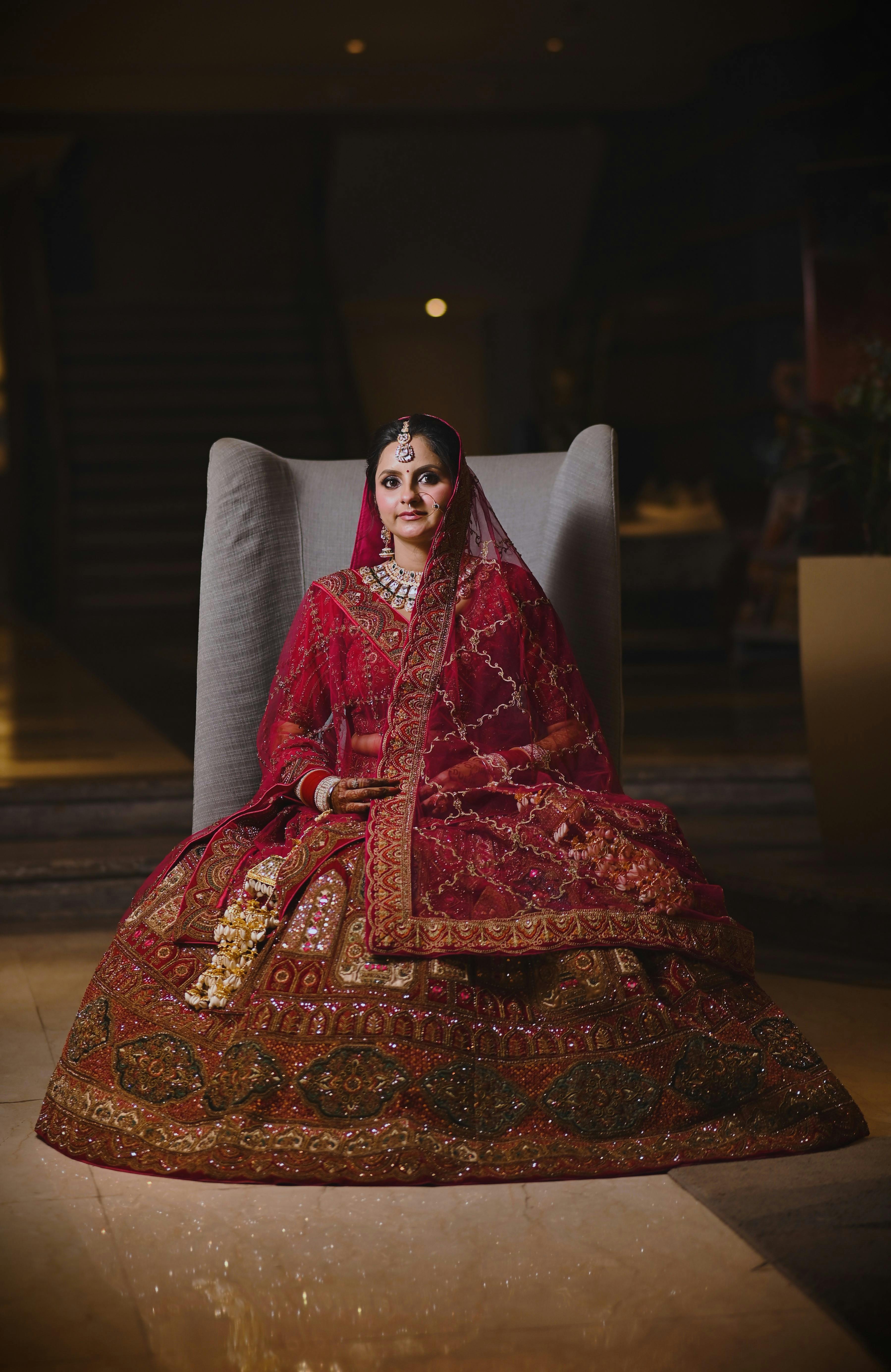
The lehenga skirt is adjustable at the waist via drawstring and hooks, which is forgiving. But the length matters: too long and it bunches at the floor, too short and the cancan peeks out. If the border has heavy embroidery, altering the hem is expensive and sometimes impossible without ruining the design. Get the length right at ordering.
The blouse (choli) is the most fit-sensitive piece. Measurements typically needed: bust, underbust, waist, shoulder width, arm circumference, sleeve length, back length, and front length. If ordering remotely, get professionally measured at a local tailor before submitting numbers. A badly fitted blouse ruins the entire look, and alterations on heavily embroidered pieces are delicate.
The dupatta doesn't need tailoring, but weight and drape matter. Heavier dupattas (silk, heavily embroidered) stay in place better. Lighter dupattas (net, organza) look ethereal but may need pins to stay put during the ceremony.
Leave at least 4 to 6 weeks for alterations after the lehenga arrives. Find a tailor experienced with Indian formalwear. In Edison NJ, the Bay Area, Houston, and Chicago, finding specialized tailors is easy. In other areas, ask your local South Asian boutique for referrals.
Pricing at a Glance
Under $500: Online retailers from India, lighter embroidery. Good for sangeet, mehendi, or reception. Usually not heavy enough for a traditional ceremony look.
$500 to $2,000: Mid-range US boutiques, online made-to-measure from India, pre-loved designer pieces. Solid embroidery, good fabrics. This is where most US-based brides land for their ceremony lehenga.
$2,000 to $5,000: Higher-end US boutique pieces, custom orders from established Indian markets, entry-level named designers. Excellent craftsmanship.
$5,000 to $15,000+: Top Indian designers. Heritage craftsmanship, the most intricate hand embroidery, the lehenga that gets its own Instagram post.
Remember: you need multiple outfits for a multi-day Indian wedding. The ceremony lehenga is the star, but you also need looks for sangeet, mehendi, haldi, and reception. Budget for the full set, not just one piece.
Timeline: When to Start
8 to 10 months before: Start browsing and researching. Book a trip to India if that's your plan.
6 to 8 months before: Begin trying on at US boutiques or finalize your India order. Custom and designer pieces need 3 to 6 months.
4 to 6 months before: Ceremony lehenga should be ordered or purchased. Start shopping for remaining outfits.
2 to 3 months before: Lehenga in hand. Begin alterations. Schedule blouse fittings.
1 month before: Final fitting. Steam, press, and store properly. Break in your wedding shoes.
What Brides Wish They'd Known
Weight matters more than you think. A 5-kilogram lehenga feels manageable for the first hour. By hour four, your shoulders and hips are feeling it. If you're planning a long ceremony followed by a reception, consider weight when choosing between heavy zardozi and lighter alternatives like sequin or thread work. Some brides opt for a heavier lehenga for the ceremony pheras and change into a lighter outfit for the reception dancing.
The blouse makes or breaks everything. Spend extra time and money on blouse fit. A perfectly fitted blouse on a mid-range lehenga will look better in photos than a poorly fitted blouse on a designer piece. Every time.
Color looks different in person. A "maroon" lehenga on your screen might look burgundy, wine, or almost brown in person depending on the fabric and lighting. If you're ordering online, request fabric swatches if possible. If you're shopping in a boutique, look at the fabric in both natural light and indoor lighting, since your ceremony and reception may have very different light conditions.
Don't forget the dupatta draping plan. How your dupatta is draped changes the entire look. Practice with your makeup artist or a friend before the wedding day. There are multiple traditional draping styles (over one shoulder, over the head, pinned at the waist), and each creates a very different silhouette.
We’re growing the Indian fashion community on EventAtlas.
For help finding South Asian bridal boutiques, designers, and attire vendors near you, EventAtlas lets you filter vendors by culture, category, and location. Visit us or reach out at hello@tryeventatlas.com.
Related Posts
More reading on themes you might be exploring.
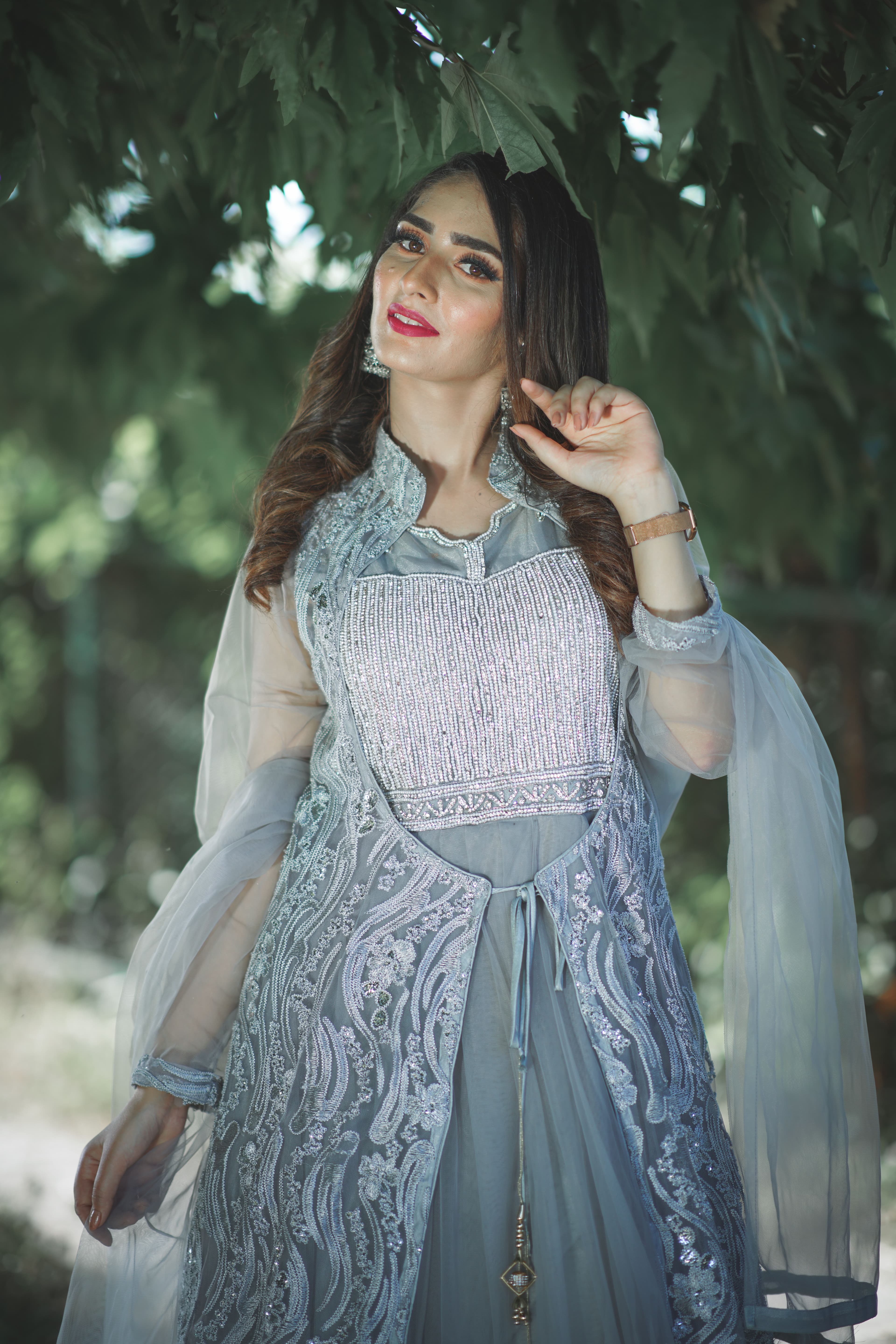
What to Wear to an Indian Wedding as a Non-Indian Guest
You own exactly zero Indian outfits and your entire frame of reference is Instagram. Here's what you actually need to know: the three colors to avoid (red, white, black), what to wear to each event from the mehndi to the reception, why wearing Indian clothing is welcomed and not appropriation, and where to find a stunning anarkali for under $150 in the US.
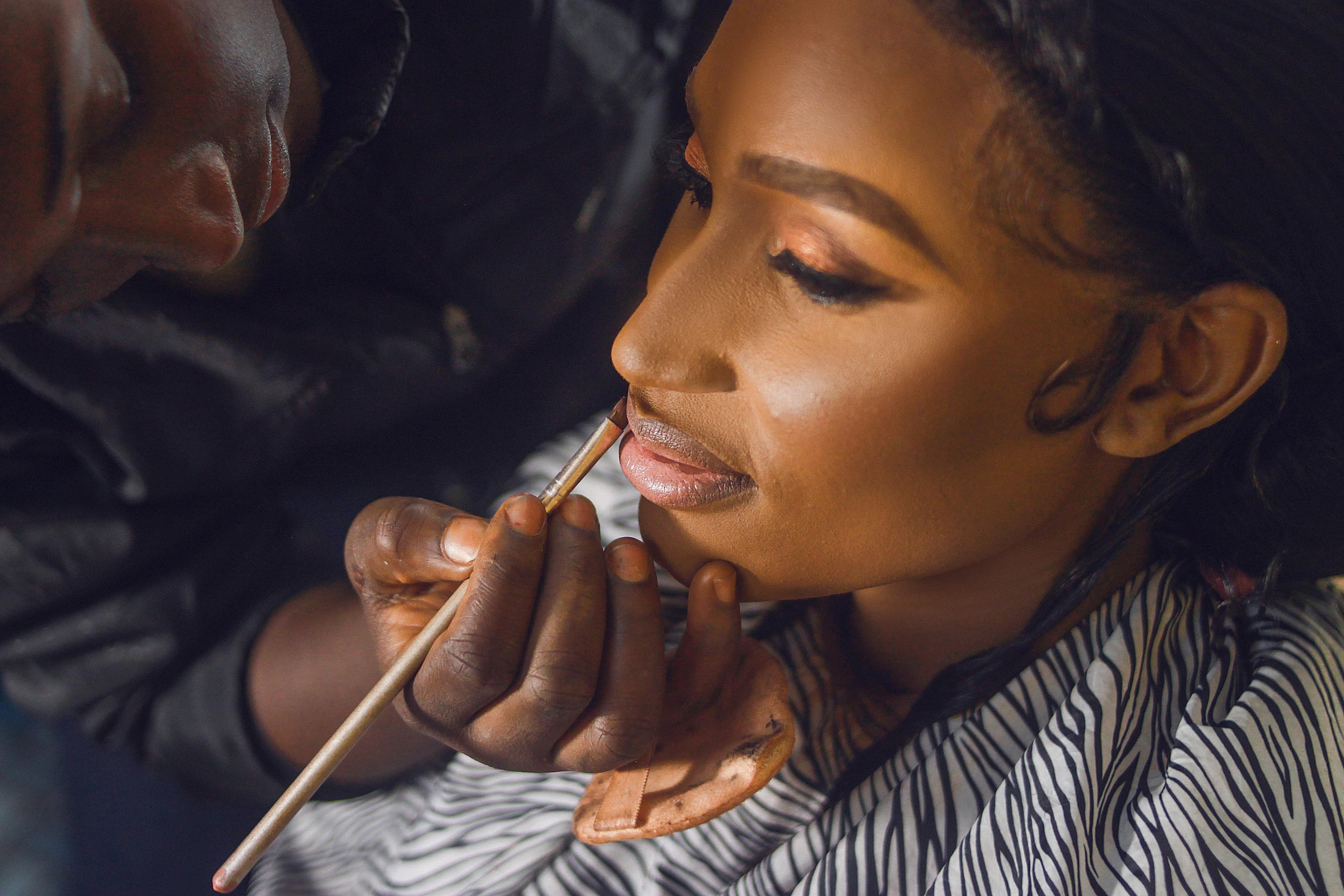
Bridal Makeup for Dark Skin Tones: How to Find an Artist Who Gets It Right
You showed up to the trial and the foundation was two shades too light, the setting powder left white cast in every flash photo, and the artist said "don't worry, it'll look fine." It did not look fine. Here's how to find a makeup artist who actually knows how to work with deep skin tones, what to demand at the trial, and the flash test that reveals everything.
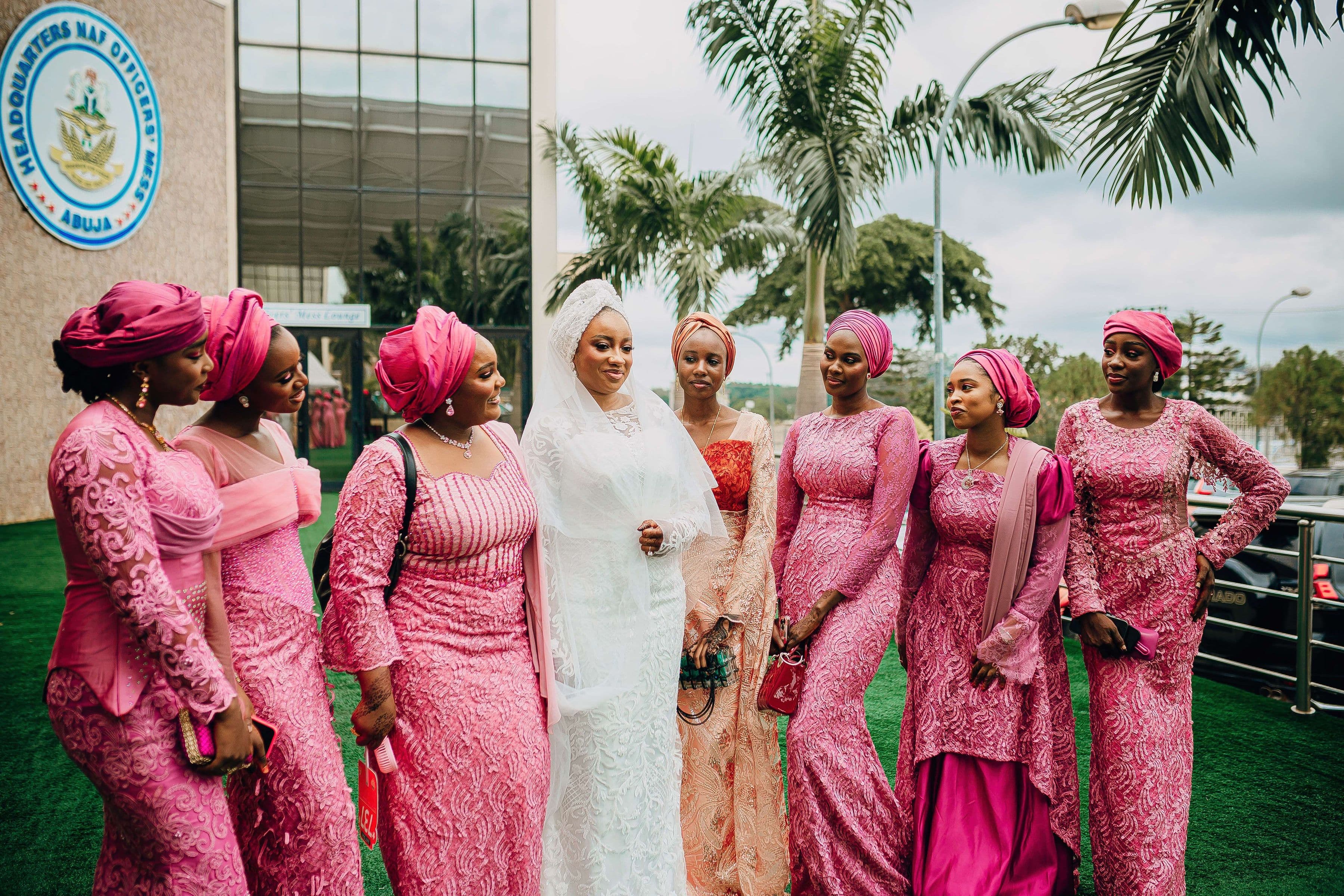
The Aso Ebi Tradition: How to Coordinate Fabric for Your Nigerian Wedding Guests
Coordinating matching fabric for dozens of guests scattered across Houston, Atlanta, the DMV, and Lagos is a logistics project that generates more WhatsApp messages than every other wedding decision combined. Here's how to choose the fabric, set pricing, handle distribution, and deal with the sensitive parts like guests who can't afford it.
Planning a Cultural Celebration?
Find vendors who understand your traditions and can make your event truly special.
Find Vendors